
In recent years, the implementation of civilized funeral practices has always been a focus of attention and direction from Hanoi City, yielding many positive results and contributing to the establishment of a healthy and progressive cultural environment.
In 2012, after four years of implementing Directive No. 27-CT/TW dated January 12, 1998, from the Politburo, and Directive No. 14/1998/CT-TTg dated March 28, 1998, from the Prime Minister on practicing civilized conduct in weddings, funerals, and festivals, the Vietnam Fatherland Front Committee of Hanoi City launched a campaign encouraging the people of the capital to adopt civilized funeral practices. The campaign emphasized four main points: organizing funerals in a cost-effective manner without offering food to guests; gradually eliminating backward customs and superstitions incompatible with civilized lifestyles; promoting cremation and reducing traditional burial practices; and planning public cemeteries to ensure cleanliness, environmental protection, space-saving, and a dignified, scientific layout. These efforts have raised awareness and brought about significant changes among party members, officials, and the general public, contributing to the implementation of civilized funeral practices, overcoming shortcomings, and criticizing and eliminating outdated customs, superstitions, and the exploitation of funerals for personal gain.
The implementation of civilized funeral practices has achieved remarkable results. Outdated funeral practices, such as throwing dirt on the road, hiring mourners, gambling, hiring bands, and excessive offerings, have nearly disappeared. In 100% of funerals in Hanoi, there is no tobacco or alcohol, no playing of funeral music after 10 PM or before 6 AM, and no food is served to guests on the day of the funeral, during memorial services, or during the 35th, 49th, and 100th-day rites or reburials. Local authorities, along with the Vietnam Fatherland Front Committee at the city, district, and town levels, have played a strong role in promoting and encouraging the public to adopt civilized funeral practices, contributing to the progress in this area.
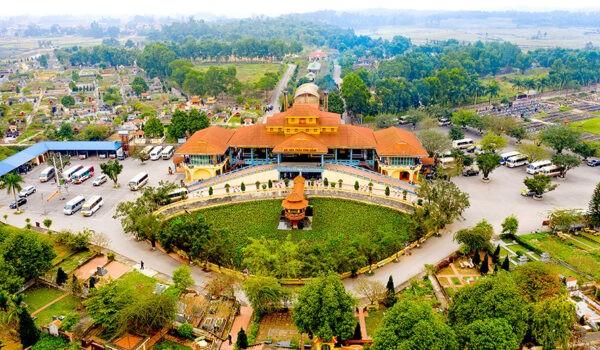
Vinh Hang Park in Hanoi
Throughout the process of implementing civilized and progressive funeral practices in Hanoi, many exemplary models have emerged. Dong Anh District is a leader in adopting civilized funeral practices. Since 2008, the District People’s Council passed a resolution on civilized and progressive funeral practices, which includes four key aspects: reducing lavish feasts, eliminating outdated customs, planning cemeteries, and promoting cremation. In 155 villages and 40 residential groups in Dong Anh, outdated customs have been eliminated. In 100% of funerals, there are no tobacco offerings, and no funeral music is played after 10 PM or before 6 AM. The cremation rate in Dong Anh has reached 98%, with some communes achieving 100%. The district aims for 100% of public cemeteries in communes, villages, and residential groups to be upgraded with all necessary infrastructure, and 50% of communes to establish cremation facilities based on 4.0 technology.
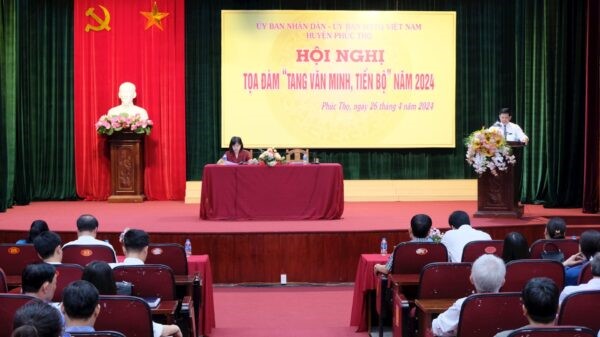
Panel discussion on civilized and progressive funeral practices
In Phuc Tho District, 100% of funerals follow civilized practices, ensuring the deceased is not kept for more than 24 hours and that loud music is not played after 10 PM.
In Phu Xuyen District, all funerals are carried out with civilized practices, ensuring that the deceased is not left for more than 24 hours and loudspeakers are not used after 10 PM.
Civilized funeral practices are also being implemented in various districts such as Long Bien, Hai Ba Trung, Dong Da, and in rural areas like Dan Phuong and Quoc Oai, each with its own form of execution.
Thanh Anh