

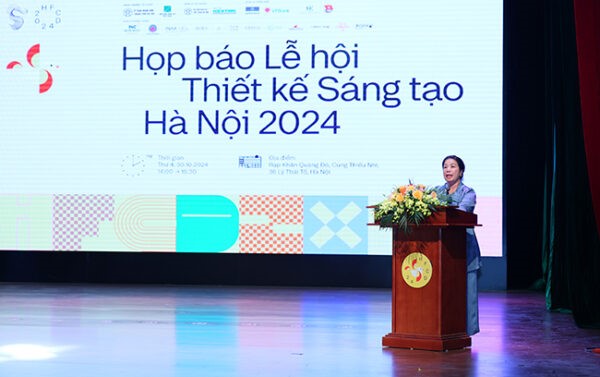
Deputy Director of Hanoi Department of Culture and Sports Tran Thi Van Anh speaks at the press conference on October 30, 2024 – Photo: Organizing Committee
The Hanoi Creative Design Festival 2024, themed “Creative Crossroads,” will take place from November 9 to 17, 2024. The event is directed by the Hanoi People’s Committee and the Vietnam Association of Architects, organized by the Hanoi Department of Culture and Sports and Architectural Magazine, with the collaboration and support of UNESCO’s Hanoi Office, Hoan Kiem District People’s Committee, Hanoi Youth Union, various units, enterprises, community groups, experts, and creative talents.
The main festival venues will span August Revolution Square and the “Heritage Quintessence Axis” connecting Ly Thai To and Le Thanh Tong Streets, and the “Creative Economy Axis” from Bac Co Slope to Trang Tien Street. Prominent architectural landmarks in these areas include Hanoi Children’s Palace, the Government Guesthouse (formerly Bac Bo Phu), the Hanoi Opera House, the National Museum of History, and the University of Natural Sciences (formerly Hanoi General University), along with five gardens: Ly Thai To, Dien Hong, Co Tan, August 19, and Tao Dan.
Over 100 Dynamic Creative Activities
Speaking at the press conference, Deputy Director Tran Thi Van Anh highlighted that entering its fourth year, the Hanoi Creative Design Festival 2024 continues to focus on three core pillars: Design, Community, and Creativity. For the first time, the “Creative Crossroads” concept will be piloted along seven iconic heritage sites in Hanoi, featuring over 100 vibrant creative activities spanning 12 cultural and creative industries, including architecture, design, fine arts, performance, cinema, and advertising. “Creative Crossroads” not only offers a preview of future creative economy experiences for the city but also serves as a platform to showcase Hanoi’s creative potential. It aims to foster synergy, attract creative resources, and awaken the spirit of innovation among generations of Hanoians. Creative activities will engage in dialogue with heritage sites, intertwining community memory with new creative ideas, emphasizing the role of youth in preserving and enhancing national values to propel the development of Hanoi’s creative industries. The festival’s creative spirit will radiate throughout cultural heritage spaces, creative hubs, and traditional craft villages across the city’s streets and districts. The Organizing Committee calls upon organizations, individuals, businesses, and institutions across the city to collaborate, display, and present their “innovative initiatives.”
The opening ceremony of the Hanoi Creative Design Festival 2024 is scheduled for 7:30 p.m. on November 9, 2024, at August Revolution Square, in front of the Hanoi Opera House.
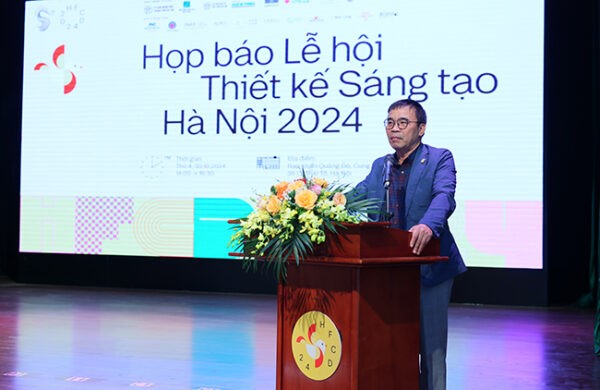
Dr. Architect Phan Dang Son, President of the Vietnam Association of Architects, speaks at the press conference – Photo: Organizing Committee
Cultural, Artistic, and Exhibition Highlights
The Hanoi Creative Design Festival 2024 will feature three symbolic installations (Pavilions): “The Innocent Corridor” at Hanoi Children’s Palace, “Flow” at Dien Hong Garden and Bac Bo Phu, and “The Dragon and Snake Rise” at the National Museum of History. These Pavilions are thoughtfully integrated with heritage sites to foster dialogue with their surroundings, breathing life into these historic landmarks. Through these installations, creators seek to extend the narrative of creativity that bridges the past and present, achieving a harmonious balance between tradition and modernity while facilitating intergenerational conversations.
“The Innocent Corridor” Pavilion at Hanoi Children’s Palace symbolizes a connection between nostalgic childhood corridors and contemporary pathways, blending past innocence with present and future imaginings.
The “Flow” Pavilion, a dual architectural installation at Bac Bo Phu and Dien Hong Garden, takes visitors on a journey from an “open” space (Dien Hong Garden) to an “enclosed” space (inside Bac Bo Phu), culminating in an artistic garden that reflects a seamless historical flow from heritage to the present.
“The Dragon and Snake Rise” Pavilion within the National Museum of History does not aim to create a standalone architectural highlight but instead blends into and dialogues with the museum’s landscape. This installation conveys a message to the public about preserving cultural heritage and memories for future generations.
In addition, the festival will feature various cultural and artistic activities, exhibitions, and displays that attract the participation of young creative minds, showcasing many remarkable works. Among these are pieces inspired by the ideas and materials of predecessor artists, reimagined and developed by young artists to reflect contemporary sensibilities. This creative process bridges tradition and modernity. Many exhibitions and displays are held directly within heritage spaces, creating unique exhibition complexes.
The Hanoi Children’s Palace is positioned as the “heart” of the festival route under the theme “Hanoi Children’s Palace: Nostalgia for the Future.” It serves as the focal point for numerous key activities and nurtures the spirit of creativity in childhood. Through this “crossroad,” the creative energies of generations of Hanoi residents converge. The venue will host over 30 activities, including exhibitions, film screenings, architectural installations, performing arts, workshops, experiential journeys, discussions, and other events, all aimed at proposing ways to inherit and build upon the values of previous generations. These efforts foster an intergenerational dialogue that connects past and present creative spirits.
The VNU University of Science (formerly Hanoi General University) will showcase the interactive art exhibition complex “Indochina Sensibilities.” This exhibition evokes nostalgic sentiments about Indochinese architecture and fine arts through the diverse perspectives of contemporary architects, painters, and artists. It features over 20 unique interactive artworks that harmonize creativity with heritage, reflecting a deep respect for cultural legacies. The exhibition aspires to inspire future generations to continue creating cultural memories and establishing a foundation for living in harmony with heritage.
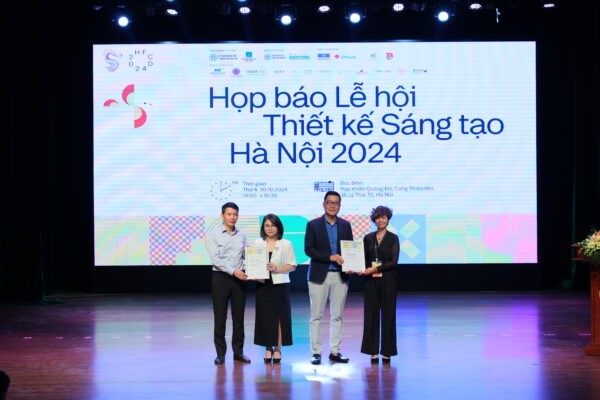
The Organizing Committee expresses gratitude to the festival sponsors – Photo: Organizing Committee
Trang Tien Street, the starting point of the “Creative Economy Axis,” will host the Creative Design Ideas Exhibition at the Exhibition Center at 93 Dinh Tien Hoang Street, Hoan Kiem District.
Other displays will be featured at the Exhibition House (45 Trang Tien) and the Exhibition Room (61-63 Trang Tien). The Cong Nhan Theater will host events such as plays, folk performances, and a creative products fair. Street activities like circus shows, art performances, fashion displays, and community engagement will take place along Trang Tien Street and nearby areas, including Nguyen Xi and Dinh Le streets. Additionally, exhibition spaces, diplomatic missions, businesses, and commercial establishments along the festival route will add to the vibrant decorations and events, enhancing visitor attraction.
The Ly Thai To and Le Thanh Tong Streets will feature street activities such as circus performances, art and music shows, fashion displays, and art installations. Spaces for children’s activities will be set up in the gardens of Bac Bo Phu and parks like Ly Thai To, Dien Hong, Co Tan, 19/8, and Tao Dan.
Domestic and International Conferences and Seminars
The Hanoi Creative Design Festival 2024 will host over 20 conferences and seminars covering topics such as design, art, cinema, photography, fashion, technology, publishing, and other creative industries. These discussions aim to provide systematic insights from cultural, historical, artistic, and architectural researchers, fostering a new intellectual community and significantly impacting the younger generation.
Additionally, travel agencies will organize cultural and creative tourism tours integrated with festival activities. These tours will bring visitors closer to heritage sites, highlighting their cultural, historical, and architectural values. Participants can enjoy traditional arts and other festival-related activities.
Moreover, the festival will see the participation of creative organizations and districts across Hanoi. These activities include showcasing innovations in handicrafts, culture, and art, as well as offering creative experiences. These initiatives aim to spark creativity, producing high-quality cultural products with innovative designs that support the development of cultural industries based on the unique strengths of each locality.
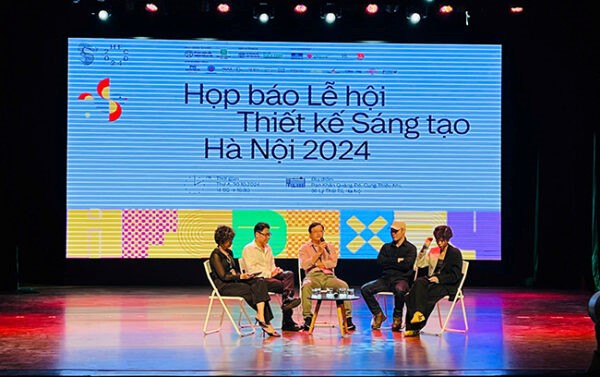
The Organizing Committee representatives and creators exchange with the press.
500 Creators, Designers and Artists Contribute to the Festival
The Hanoi Creative Design Festival 2024 brings together nearly 500 creative minds, including designers, architects, contemporary artists, performers, cultural-art researchers, and other dedicated experts. Their contributions aim to celebrate the beauty of innovation and foster a bold spirit of creativity to advance Hanoi’s cultural industry as a UNESCO Creative City.
For the first time, the festival introduces an event route experience, requiring participants to familiarize themselves with activity schedules and locations before choosing preferred events and planning their visits accordingly. This approach enhances engagement by encouraging exploration and personal choice.
Given the dense schedule and cross-disciplinary nature of the festival’s activities, along with the layered meanings conveyed through each event, visitors may find navigating the festival’s information maze challenging. To assist, nearly 300 enthusiastic and well-trained young volunteers are stationed across festival sites to offer information and support to attendees.
The Hanoi Creative Design Festival 2024 stands as a meaningful initiative to strengthen Hanoi’s brand as a creative city. With expanding themes and scale each year, the festival has evolved into a major cultural celebration for both the creative community and culture enthusiasts in the capital. As an annual event, it supports Hanoi’s participation in UNESCO’s Creative Cities Network, fostering inspiration and community-driven creativity. The festival also propels the development of a network for young designers, supports creative spaces, and paves the way for the launch of a Creative Activities Coordination Center in the near future.
Reporter