

Hanoi is home to 5,922 cultural and historical relics, including one UNESCO World Heritage Site, 21 nationally significant relics, and 1,793 recognized intangible cultural heritages. Many of these sites have become iconic destinations for both domestic and international tourists, such as Hoan Kiem Lake, Ngoc Son Temple, the Thang Long Imperial Citadel, the Temple of Literature – Quoc Tu Giam, and the Hoa Lo Prison Relic.
Set to take place from November 9 to 17, the Hanoi Creative Design Festival 2024 will center around the theme “Creative Crossroads.” For the first time, this crossroad will be symbolically created along seven exemplary heritage sites, featuring hundreds of creative activities spanning 12 cultural industry sectors. The event not only showcases the city’s creative potential but also fosters collaboration and engagement, inspiring Hanoi’s residents to embrace innovation across generations.
Three Iconic Installations Engaging Heritage
The festival will feature three iconic pavilion installations: The Innocent Corridor at the Hanoi Children’s Palace, The Flow at Dien Hong Garden and Bac Bo Phu, and The Dragon and Snake Rise at the National Museum of Vietnamese History. These installations are designed to engage directly with the heritage environment, sparking dialogues between the past and present while breathing new life into historic spaces.
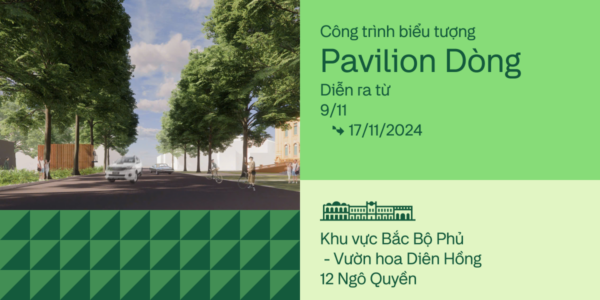
Through this interaction, creators aim to continue Hanoi’s story of creativity, forging a seamless blend of tradition and modernity. These installations not only highlight generational dialogues but also promote continuity and growth.
The Innocent Corridor stretches endlessly through a series of hallways leading to the courtyard at the Hanoi Children’s Palace. The crossroads along the corridors become focal exhibition points and reflective spaces that intertwine old and new pathways.
The Dragon and Snake Rise blends seamlessly into the museum landscape rather than dominating it architecturally, fostering a dialogue with its surroundings. Through this perspective, the festival invites the public to reflect on cultural heritage and the memories they wish to preserve for future generations.
Two Major Exhibitions within Heritage Spaces
The historically significant building at 19 Le Thanh Tong Street, now a part of the Vietnam National University, stands as a rare and near-intact example of Indochinese architecture. Meanwhile, the Hanoi Children’s Palace is a harmonious blend of French colonial buildings and modern architecture, embodying the creative legacy of generations of Hanoi’s youth. This year, for the first time, both heritage sites will open their doors to the public, hosting over 50 creative art experiments during two major exhibitions.
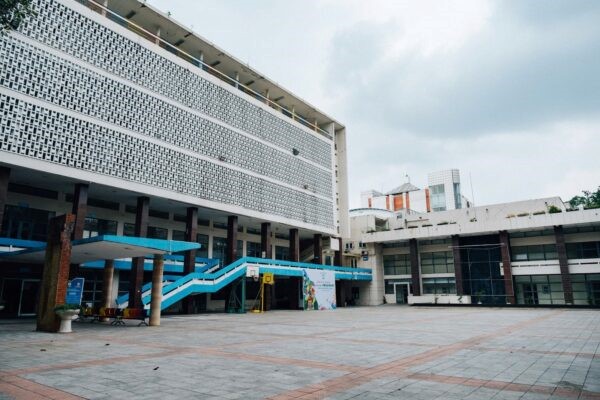
Hanoi Children’s Palace where the exhibition Hanoi Children’s Palace: Nostalgia for the Future takes place.
Photo: Organizing Committee
At the Hanoi Children’s Palace, the exhibition Hanoi Children’s Palace: Nostalgia for the Future will feature more than 30 activities, including exhibitions, film screenings, theater performances, playgrounds, and architectural installations. The program also incorporates satellite events such as workshops, experiential journeys, seminars, and community activities.
A diverse group of artists, architects, filmmakers, and cultural researchers will participate, sharing a common sensitivity to the historical and cultural essence of the Hanoi Children’s Palace. The selected works resonate with the unique spatial context and invite intergenerational dialogues that awaken both tangible and intangible heritage elements, offering fresh perspectives on the past while envisioning the future.
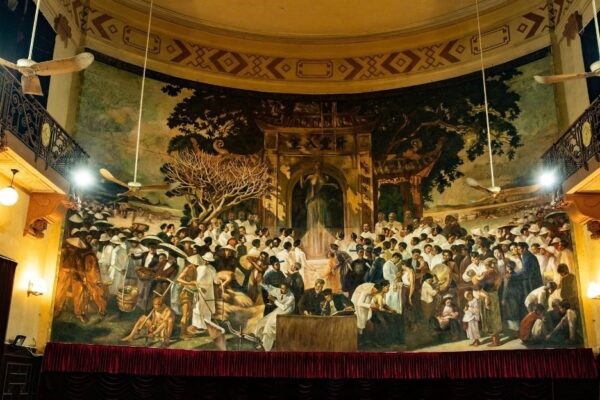
At the former General University building is the exhibition “Indochina Aesthetics.”
Photo: Organizing Committee
At the former General University building – originally the main campus of the Indochinese University – the interactive art exhibition Indochina Aesthetics will present 22 unique pieces that evoke the timeless beauty of Indochinese architecture and art. The works reflect the creative visions of contemporary architects, painters, and artists, covering every corner of the building from its grand hall and lecture rooms to corridors and window arches.
Modern installation technologies will help narrate stories of the past, offering audiences a multi-dimensional sensory experience of Indochinese art and architecture. The installation promises to be a profound highlight, blending architecture, art, imagery, and sound to explore the beauty of heritage while harmoniously integrating creativity and history.
Both exhibitions operate as dynamic “living” entities where space itself becomes a collaborator in art, rather than merely a display venue. Through these efforts, the festival not only reimagines heritage structures but also strengthens community connections. The creative community’s work demonstrates both reverence for heritage and a commitment to fostering cultural memories, laying the groundwork for a future where living with heritage becomes a shared way of life.
Nguyen Tam