
Hoan Kiem is a representative area rich in the urban cultural identity of Thang Long – Hanoi. The district currently preserves approximately 190 historical and cultural relics, including many notable works that exemplify historical, architectural, and artistic values, such as: Hoan Kiem Lake complex – Ngoc Son Temple – Ba Kieu Temple, Kim Ngan Communal House, Bao An Pagoda (Lien Tri), Bao Thien Tower, King Le Temple, O Quan Chuong Gate, Hanoi Opera House, Hoa Lo Prison, 19/8 Square, St. Joseph Cathedral, 48 Hang Ngang Street (where President Ho Chi Minh drafted the Declaration of Independence), the National Museum of History, the Vietnam Revolutionary Museum, Ly Thai To Monument, Hanoi Post Office, Dong Xuan Market…
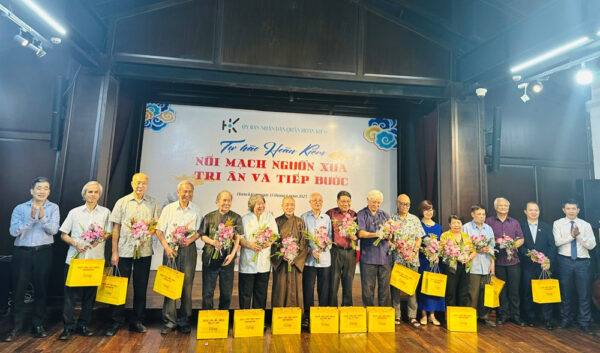
In the work of preserving and promoting heritage values in Hoan Kiem District, architects, researchers, artists, and folk artisans have made significant contributions…
Hanoi’s Old Quarter, comprising 36 streets, is regarded as a “living museum” reflecting the formation and development of the Thang Long capital. Ancient houses, characteristic architecture, temple and pagoda systems, communal houses, along with the lifestyle and traditions of residents tied to numerous traditional craft villages, all contribute to the unique cultural identity of the area. This zone not only vividly reflects the geography, daily life, and beliefs of Hanoi’s historic population but also serves as a crossroads of Eastern and Western cultures, making it an attractive destination for both domestic and international tourists.
Hoan Kiem is also home to a rich and distinctive intangible cultural heritage. Many traditional art forms, such as ca tru (ceremonial singing), hat xam (blind singing), and hat van (ritual singing), are still preserved, revived, and promoted in contemporary life.
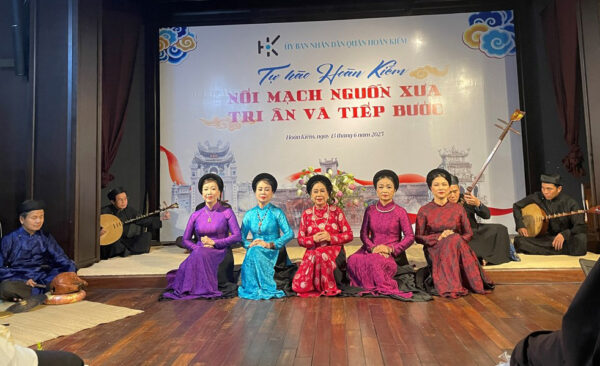
The living environment of Hoan Kiem residents also bears strong cultural imprints, manifested in everyday activities such as folk-art performances on pedestrian streets, distinctive street food, and traditional street corners associated with old craft villages. These elements create a vibrant cultural ensemble, where past and present intertwine in daily life.
In recent years, the preservation and promotion of heritage values in Hoan Kiem have consistently received attention from the city, district authorities, and local government. By effectively preserving these values, Hoan Kiem has developed strong service and commercial activities, generating significant economic benefits. In the efforts to preserve and promote heritage values, architects, researchers, artists, and folk artisans have played a crucial role.
On the occasion of the 64th anniversary of the district’s establishment (May 31, 1961 – May 31, 2025), Hoan Kiem District organized a tribute to 3 collectives and 64 individuals who have made substantial contributions to the preservation, promotion, and dissemination of cultural heritage values in the area.
The support and dedication of these organizations and individuals have not only helped safeguard traditional values but also enhanced community awareness, fostered national pride, and contributed to the district’s “soft power”, thereby elevating the image, status, and appeal of Hoan Kiem on the national and international cultural-tourism map.
H.A