
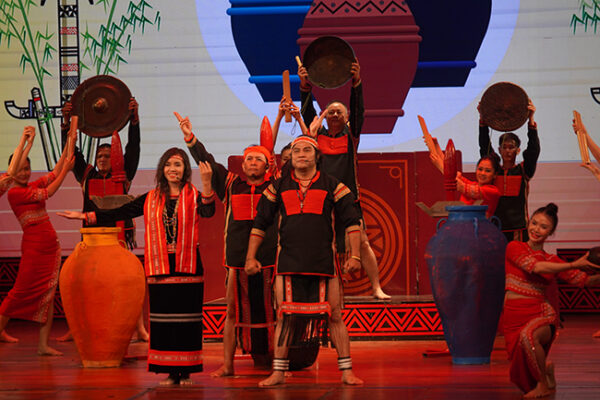
This performance was part of the program to promote the culture and arts of the Central Highlands in Hanoi, jointly organized by the Department of Culture and Sports of Dak Lak Province and the Department of Culture and Sports of Hanoi.
The event was attended by many delegates who are leaders and former leaders of central, Hanoi, and Dak Lak provincial agencies: Mr. Dang Xuan Phuong – Party Secretary of the National Assembly; People’s Artist Nguyen Xuan Bac – Director General of the Performing Arts Department; Mr. Ha Minh Thang – Deputy Director General of the Performing Arts Department; Mrs. Tran Thi Thu Dong – Vice President of the Vietnam Association of Literature and Arts; Mr. Tran Hong Tien – Director of the Department of Culture and Sports of Dak Lak Province; Mrs. Le Thi Anh Mai – Deputy Director of the Department of Culture and Sports of Hanoi…
Located in the heart of the Central Highlands, Dak Lak is home to 49 ethnic groups living together. The indigenous ethnic communities such as Ede, M’nong, and Jarai possess an extraordinarily unique folk culture, including the longhouse culture, matrilineal culture, festival culture, gong culture, and epic culture. These have been collected and published by both domestic and international researchers in many valuable works. Dak Lak is known for its grand epics about the development history of ancient Central Highlands societies, such as Khing Ju and Xinh Nha, among which the epic of Dam San is particularly notable.
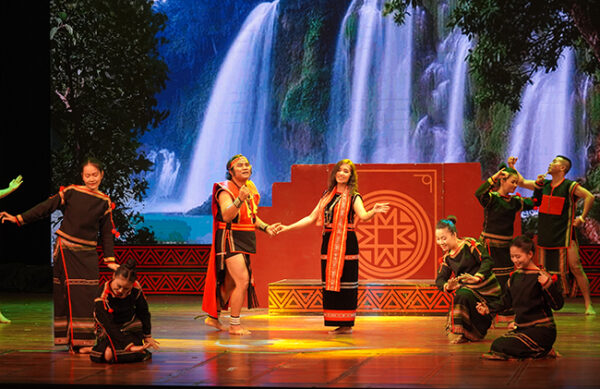
The musical play “The Aspiration of Dam San” was adapted from the epic of Dam San – a work collected by French ethnologist Sabatier in Dak Lak and published in Ede–French bilingual form in Paris in 1927. It created a stir among Western folklore scholars, who considered the Dam San epic to be on par with Europe’s renowned heroic poems such as the Iliad and the Odyssey of Greece and “The Song of Roland” of France. In Vietnamese literature, the Dam San Epic is one of the most representative works – a literary genre born from the rich, romantic, and imaginative creativity of the ancient Ede people of the Central Highlands. Through the work, readers and audiences encounter heroic chieftains, with Dam San standing out as the hero who fought and subdued enemies to protect his village and tribe.
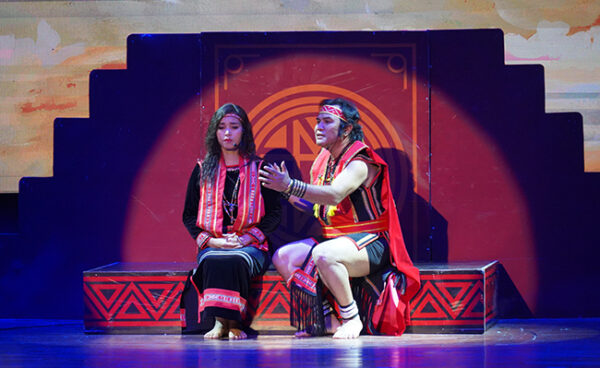
The musical play “The Aspiration of Dam San” is structured into five main chapters. Chapter 1: Dam San and H’Nhi and their wedding. H’Nhi is a beautiful female chieftain of the most prestigious tribe in the region, and she wishes to take Dam San as her husband. H’Nhi desires Dam San not only because he is a brave chieftain but also to fulfill her grandfather’s instruction to maintain and nurture the traditional kinship bonds of the ancient Ede people. Chapter 2: The Trial of Mtao Msei. By defeating Mtao Msei, Dam San expands his village and becomes the mightiest chieftain in the region. Chapter 3: The Dependent Village. Longing for Dam San, the Sun Goddess plunges the village into darkness. Chapter 4: The Bright Land. Facing the threat of destruction, Dam San overcomes dangers to find and marry the Sun Goddess. Ultimately, he wins her heart, and she bestows upon him a magical light to bring back to his village. Chapter 5: The Sun Rises Over the Vast Highlands. Dam San brings light back to the village; his aspiration becomes a flame that ignites love and vitality across the majestic mountains and forests of the Central Highlands.
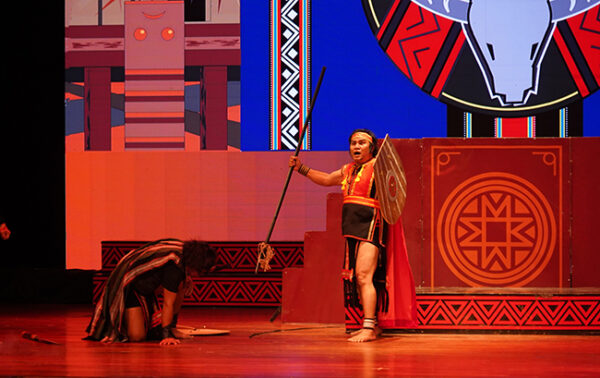
Though based on the Dam San epic, in the script, “The Aspiration of Dam San” features many newly added details by playwright Hong Hoa to celebrate the beauty of love in harmony with nature, especially the romantic yet heroic aspirations and spirit of the Ede people of the Central Highlands. These include the longing of the Sun Goddess for Dam San, the village’s risk of destruction while engulfed in darkness, and Dam San’s aspiration to protect his village, which moves the Sun Goddess to compassion. She then grants him the mystical sunlight that blesses the land with endless fertility. H’Nhi (Dam San’s wife), in the sacred moment of welcoming light back to the village and reuniting with Dam San, also the moment of his eternal departure, bites her hand in a desperate attempt to save him. From her hand gushes a crimson waterfall, the waterfall of the Central Highlands mountains, on the eternally magnificent basalt land.
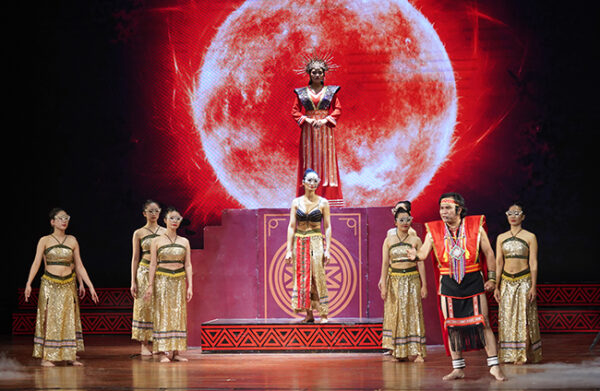
The musical play “The Aspiration of Dam San” was written by composer Nguyen Cuong; screenplay and general director: Hong Hoa; chief choreographer: People’s Artist Y San Alio; traditional orchestra: composer Nguyen Cuong; international orchestra: composer Minh Dao, with the participation of artists from the Dak Lak Provincial Ethnic Song and Dance Ensemble, including Meritorious Artist Y Joel Knul, Y Ko Nie, H’Lueng Nie, Y Moan Hmok, and Hoang Duyen…
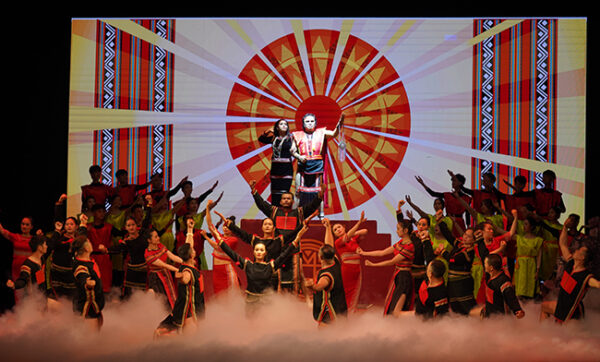
“The Aspiration of Dam San” was approved for production by the People’s Committee of Dak Lak Province with the goal of creating a major work in Vietnamese music, contributing to the restoration and preservation of Ede culture through music and stage imagery. The work is also expected to become a distinctive and unique cultural tourism product of the Central Highlands regio.
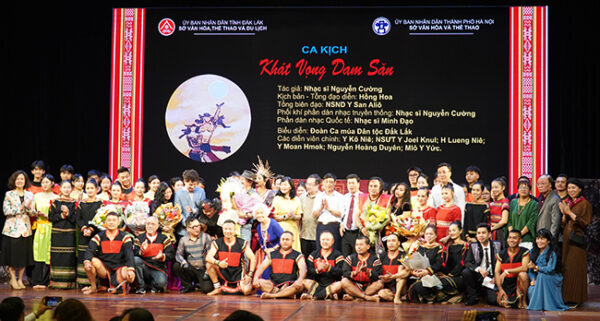
It is known that before coming to Hanoi audiences, the musical play “The Aspiration of Dam San” had also been successfully performed at many cultural events in the Central Highlands provinces as well as in Ho Chi Minh City. According to the plan, “The Aspiration of Dam San” will continue to be staged in various localities to promote the unique cultural features of the Central Highlands to people across the country.
Reporter