
On the evening of December 19, the pedestrian zone along Tran Nhan Tong Street and Thong Nhat Park glowed with aromas and colors as the Hanoi Food and Culture Festival 2025 officially opened.
Under shimmering lights and amid bustling crowds, the Capital’s cuisine emerged not merely as familiar dishes, but as a vivid cultural journey where memory, tradition, and creativity move in harmony. Within this journey, older generations appear as quiet yet steadfast “keepers of the flame,” patiently passing down culinary essence through each dish and each treasured craft secret.
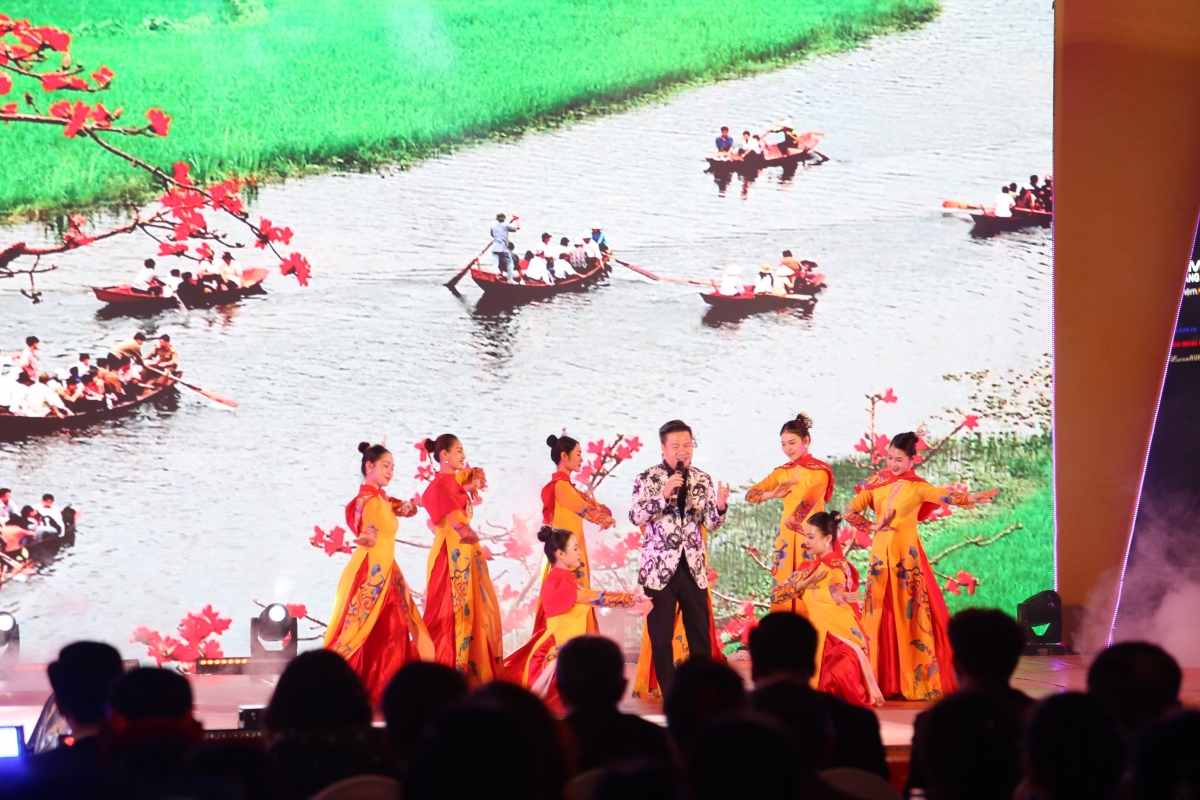
Art performances celebrating the opening ceremony
Held under the theme “Hanoi – A Culinary Journey Connecting Creativity,” the festival, organized by the Hanoi Department of Culture and Sports, attracted large numbers of residents and domestic and international visitors. Once again, the event affirmed Hanoi cuisine’s status as a living heritage, where folk knowledge and collective memory are preserved not in museums, but within contemporary life itself, thanks in large part to the dedication of artisans, many of whom are of advanced age.
 Delegates press the button to officially launch the Hanoi Food and Culture Festival 2025.
Attending the opening ceremony were People’s Artist Nguyen Xuan Bac, Director General of the Performing Arts Department (Ministry of Culture, Sports and Tourism); Ms. Bach Lien Huong, Director of the Hanoi Department of Culture and Sports; representatives of embassies, departments and agencies, culinary artisans, and a wide audience of food and culture enthusiasts.
Cuisine – From Heritage to Cultural “Asset”
Speaking at the ceremony, Ms. Le Thi Anh Mai, Deputy Director of the Hanoi Department of Culture and Sports, emphasized that in 2022 the Hanoi Party Committee issued Resolution No. 09-NQ/TU on the development of cultural industries, identifying cuisine as a key sector requiring systematic investment to transform heritage values into “assets” and resources for sustainable development. The Hanoi Food and Culture Festival, she noted, stands as a vivid testament to this policy.
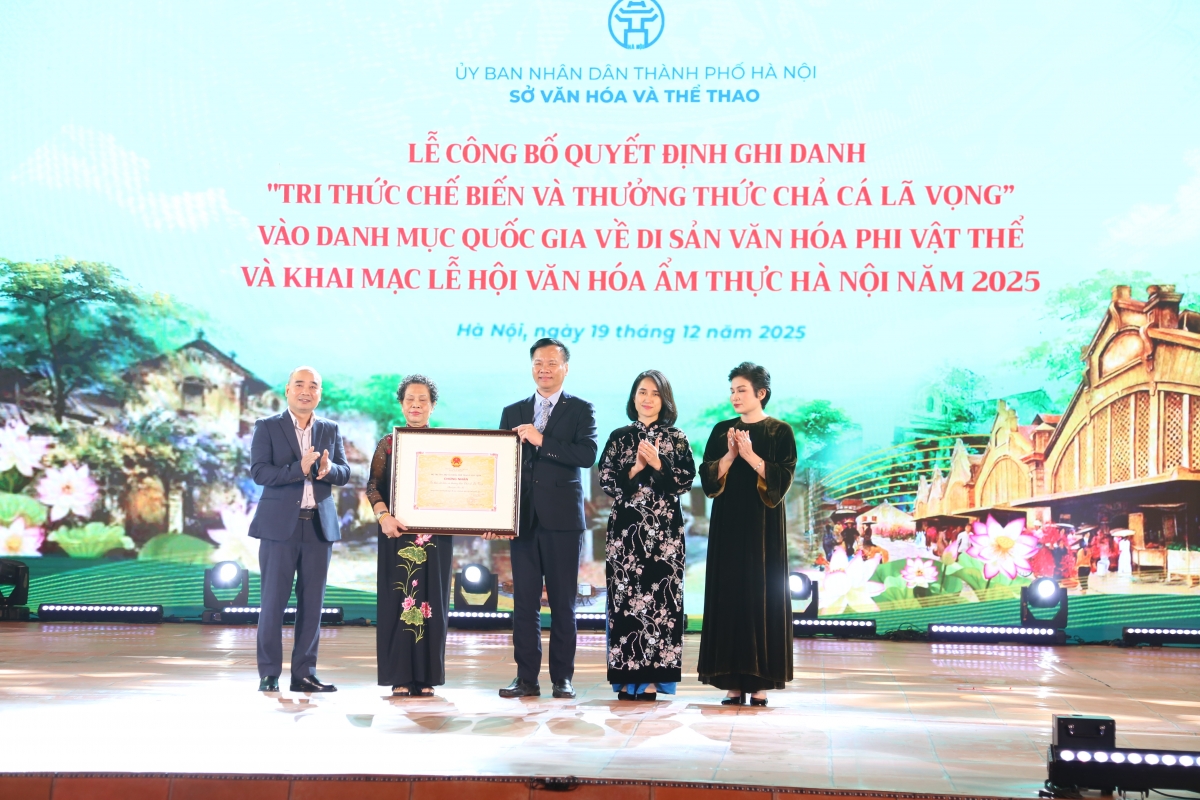
Leaders of the Ministry of Culture, Sports and Tourism present the certificate recognizing Cha Ca La Vong as a national intangible cultural heritage
“From the historic 36 streets of Hanoi to an expanded Capital enriched by the cultural convergence of Xu Doai and many other regions, Hanoi’s cuisine has become increasingly diverse, both refined and standardized, yet rich in creativity. Hundreds of intangible cultural heritages related to cuisine have been identified, inventoried, and preserved, with elderly artisans playing a particularly vital role as custodians of knowledge, skills, and professional memories accumulated over decades,” Ms. Le Thi Anh Mai underscored.
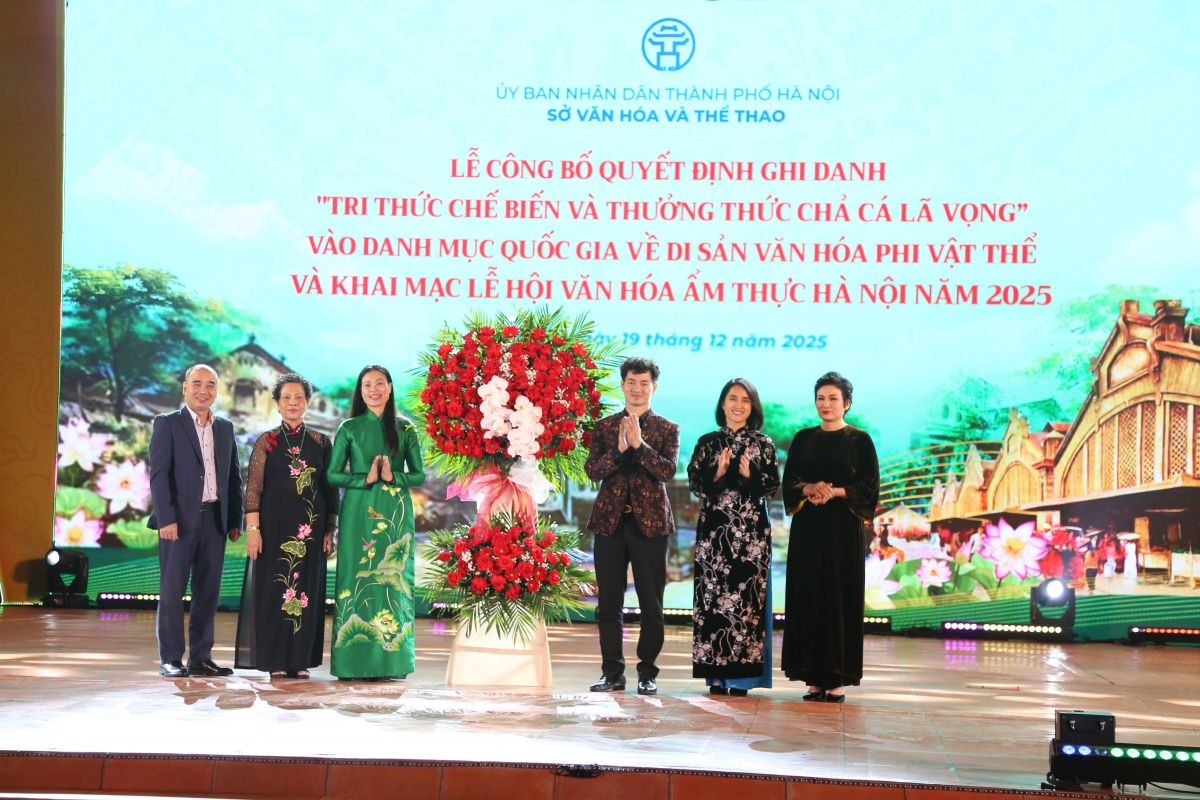
People’s Artist Nguyen Xuan Bac presents flowers in congratulations to the family of the Cha Ca La Vong artisan
Currently, Hanoi has seven culinary heritages inscribed on the National List of Intangible Cultural Heritage, including Hanoi pho; the craft of making Me Tri young green rice (com); Quang An lotus tea processing; Phu Thuong sticky rice; Thanh Tri steamed rice rolls; and the traditional knowledge of preparing ceremonial feasts in Bat Trang.
Cha Ca La Vong – A Culinary Symbol of Thang Long
One of the most special moments of the opening ceremony was the announcement of the decision to inscribe “The knowledge of preparing and enjoying Cha Ca La Vong” on the National List of Intangible Cultural Heritage. The heritage’s creative subject is the Doan family at 14 Hang Son Street (now 14 Cha Ca Street, Hoan Kiem District), where the traditional recipe has been preserved across six generations.
Over time, Cha Ca La Vong has transcended the confines of a single family to become a culinary symbol of Hanoi. Behind this widespread recognition lies the quiet dedication of earlier generations, elderly artisans who safeguarded the craft, from selecting fish and marinating techniques to the proper way of savoring the dish in its full Thang Long flavor. The heritage inscription not only honors tradition but also provides a foundation for safeguarding authenticity while linking preservation with contemporary development.
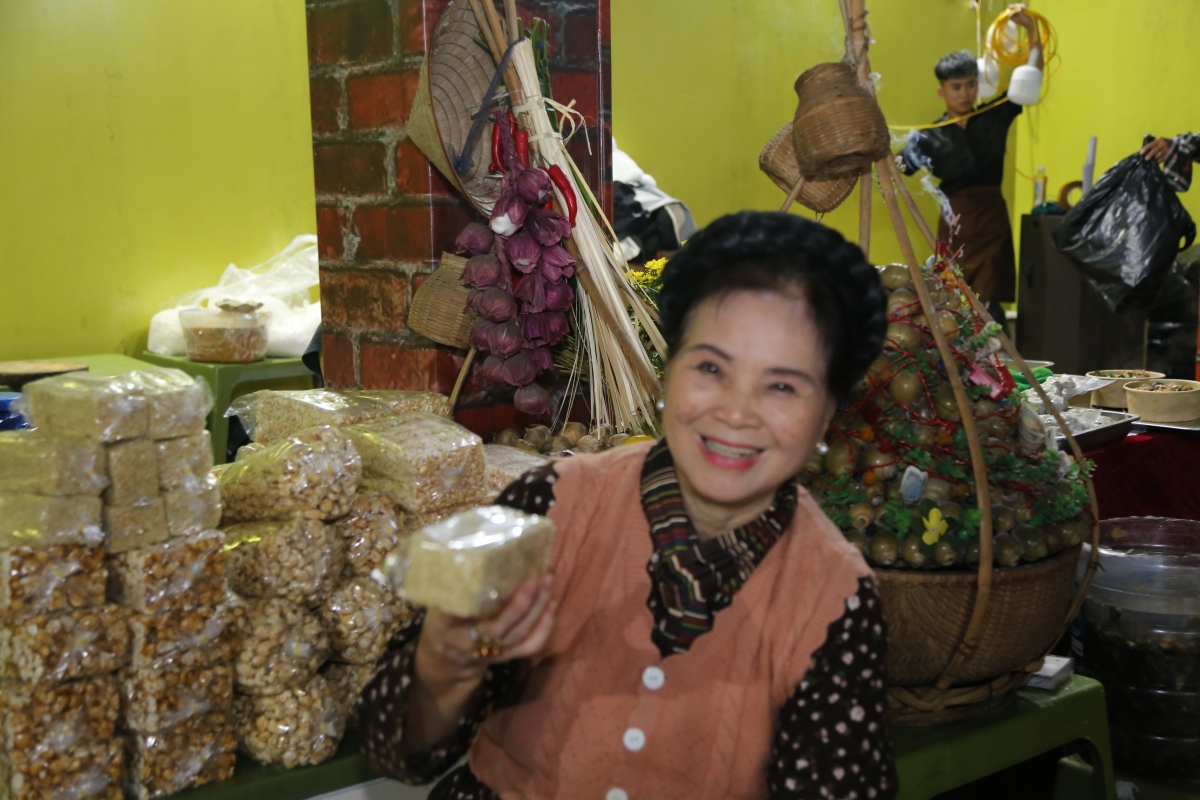
Artisan Nguyen Thi Hien of the “Ba Ngoai” snail noodle stall introduces her products, like a ticket back to childhood.
Strolling Through a Living Heritage Space
Immediately after the opening ceremony, delegates visited the booths, interacted with artisans, and sampled traditional dishes from craft villages and regions across the country. Within the festival’s 60 culinary spaces, each booth told a story – a slice of memory conveyed through flavor, bearing the clear imprint of older generations as living witnesses to the history of their crafts.
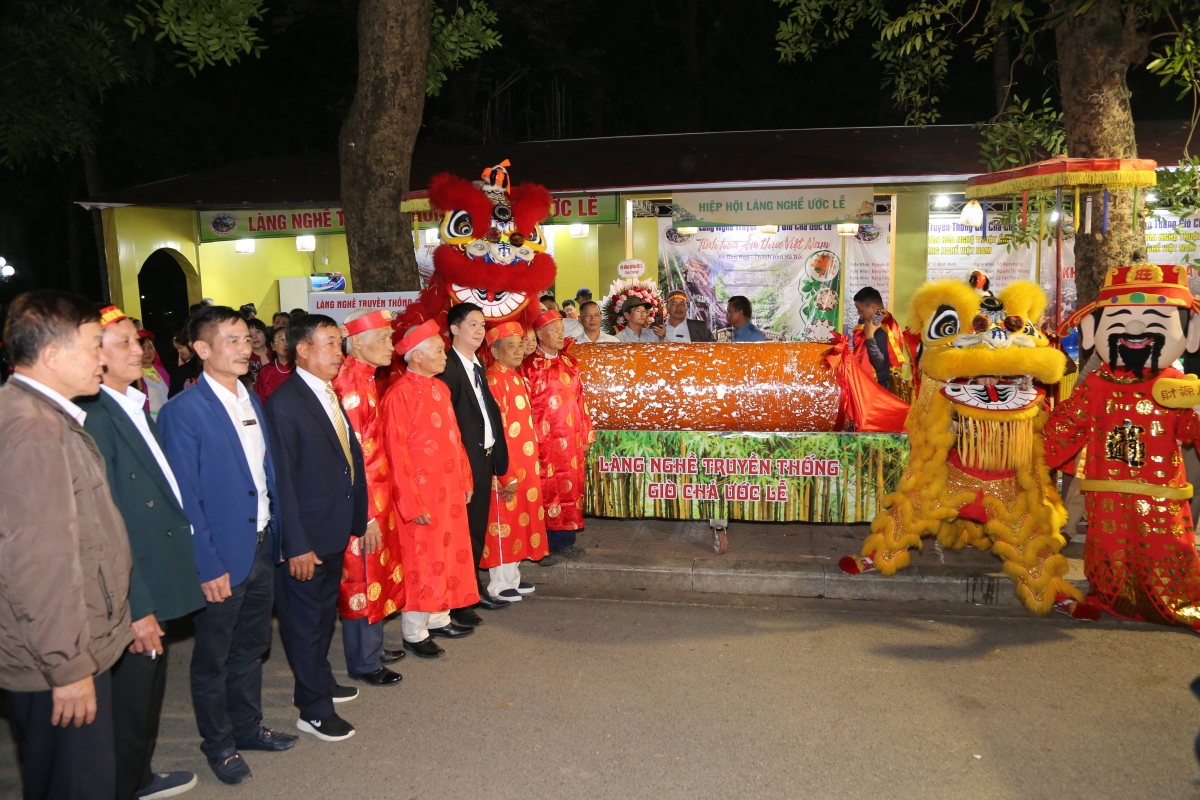
Elderly artisans and delegates at the Uoc Le pork roll booth, featuring a 120-kg cinnamon pork roll
At the “Ba Ngoai” snail noodle booth, 72-year-old artisan Nguyen Thi Hien enthusiastically shared her 54-year journey with the craft. For her, Hanoi-style snail noodles are not merely food, but memories of land and water, of those who have gone far yet always long for home. Her family continues to preserve the traditional taste using fermented rice vinegar and snail broth, ensuring the dish is not only delicious but wholesome, evoking the “scent of the homeland.” According to Ms. Hien, traditional cuisine must integrate and adapt, yet never lose its soul. “Heritage flavors must enter the digital era,” she said, stressing the role of older generations in teaching and connecting generations so that Vietnam’s culinary essence continues to flow uninterrupted. Her booth also offers simple countryside snacks like popcorn, evoking nostalgia – a ticket back to childhood for both young and old.
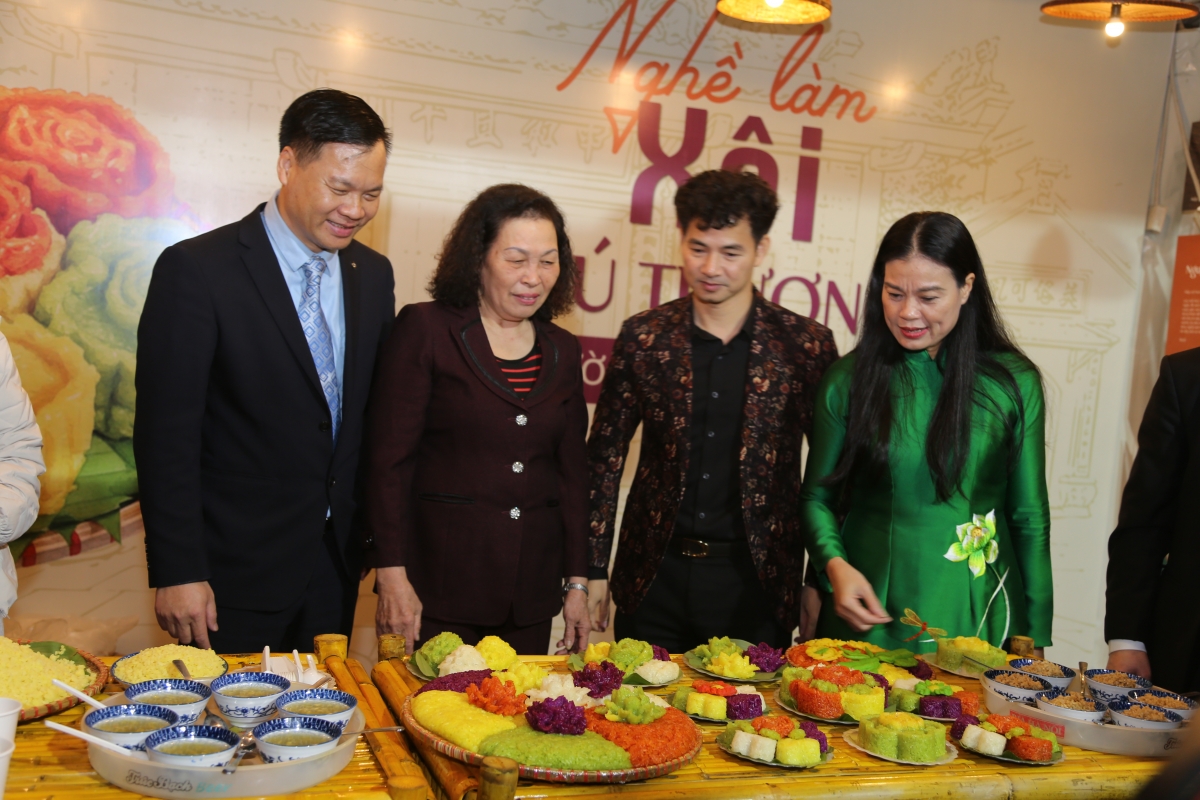
Delegates visit and sample dishes at the Phu Thuong sticky rice booth.
Bat Trang Ceremonial Feasts – Essence Shaped by Women’s Hands
At another booth, young artisan Pham Thi Dieu Hoai from Bat Trang village introduced the art of preparing Bat Trang ceremonial feasts – a nationally recognized heritage. According to her, these feasts are not only offerings to ancestors but an indispensable part of village festivals and major community events. Each festival season, hundreds of trays are prepared by the skillful, meticulous hands of Bat Trang women, many of whom have devoted their entire lives to the craft. Elder artisans serve as “guardians of standards,” ensuring each dish adheres to traditional flavors and ritual norms, thereby preserving the village’s cultural identity. Through the festival, Bat Trang artisans and elderly residents hope to bring their cuisine closer to the public and share it nationally and internationally.
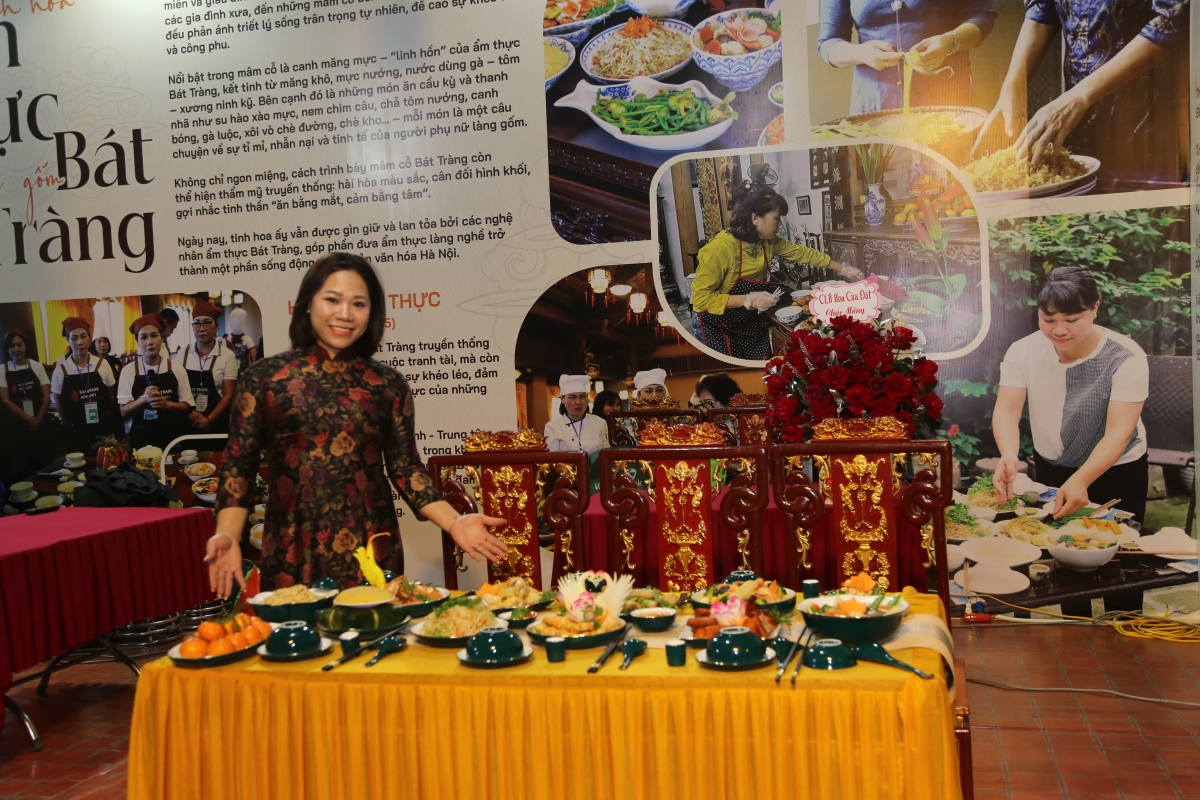
Artisan Pham Thi Dieu Hoai beside a Bat Trang ceremonial feast tray
Elderly Artisans as the “Keepers of the Flame”
Sharing the same spirit, 82-year-old Ngo Dinh Ho, a member of the Elderly Association of Xuan Hoa Ward from the Uoc Le pork roll craft village, said that older participants attend the festival with a mission to preserve, pass on, and showcase their craft. The village booth presents products such as cinnamon pork roll, gio lua, gio bi, cha com, fermented pork rolls, and banh chung, all rich in traditional Vietnamese flavors, highlighted by a massive 120-kg cinnamon pork roll. According to Mr. Ho, for traditional crafts to endure, older generations must continue passing down experience and secrets, while younger generations must inherit, preserve, and further develop them. Ensuring food safety and maintaining distinctive traditional flavors builds market trust and enables sustainable growth. Intergenerational connection, he emphasized, is the core condition for preventing culinary heritage from fading.
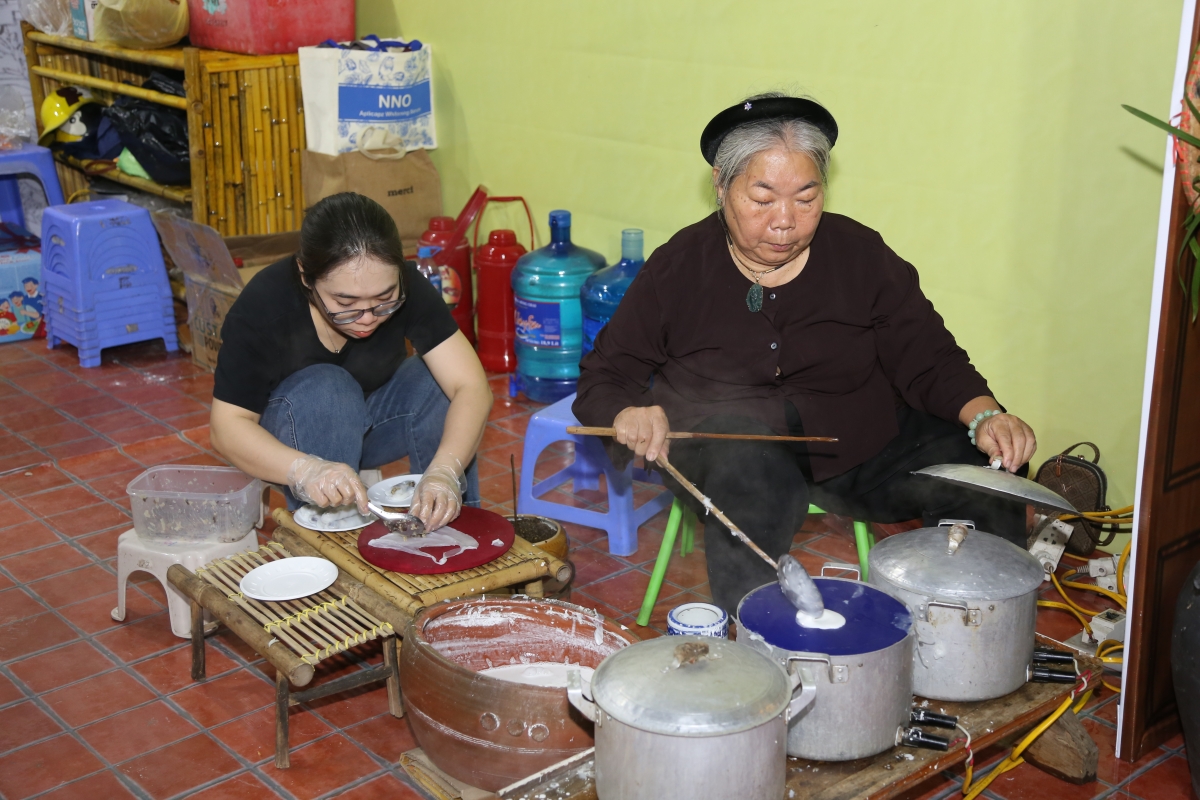
Artisan Duong Anh Tuyet demonstrates the making of Thanh Tri steamed rice rolls
Cuisine – A Bridge Between Past and Future
Beyond a venue for tasting fine food, the Hanoi Food and Culture Festival 2025 serves as a space connecting generations, where older artisans tell stories of their crafts and younger audiences listen and carry them forward. Through demonstrations, hands-on practice, and exchanges, the festival helps preserve culinary knowledge and skills while fostering creative cultural products rooted in heritage.
Running through December 21, the festival continues to affirm that Hanoi cuisine is not only an identity and a source of pride, but also a vital resource for developing the Capital’s cultural industries, where the past is cherished through the hands and memories of older generations, the present is creatively shaped, and the future unfolds from familiar flavors.
Text and photos: Thanh Ha
According to https://ngaymoionline.com.vn/le-hoi-van-hoa-am-thuc-ha-noi-2025-hanh-trinh-di-san-song-giua-nhip-tho-duong-dai