
(Dan Tri) – Beyond tasting food, young people and visitors at the Hanoi Food and Culture Festival 2025 will have the opportunity to listen to artisans recount their craft stories and watch the preparation of renowned dishes.
From December 19 to 21, at Thong Nhat Park, the Hanoi Food and Culture Festival 2025 will take place under the theme “Hanoi – A Culinary Journey Connecting Creativity.”
At the festival, artisans will share their professional journeys and connect with younger generations through live demonstrations such as making Son Tay peanut candy, pounding Uoc Le pork rolls, cooking snail noodle soup, sesame congee, and crafting Phu The (husband-and-wife) cakes, among others.
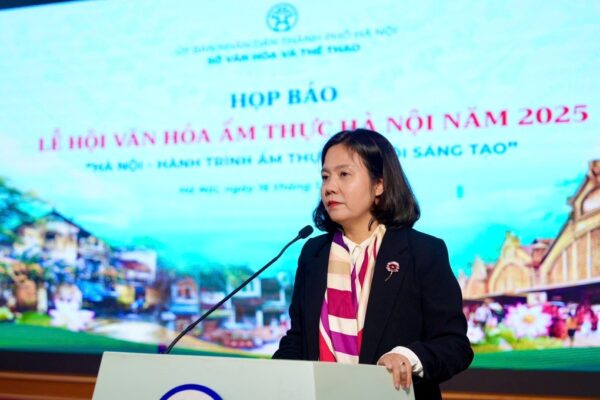
Le Thi Anh Mai, Deputy Director of the Hanoi Department of Culture and Sports, noted that cuisine is identified as one of the sectors contributing to the development of the Capital’s cultural industries (Photo: Van Trong).
Residents of the Capital and visitors will have the chance to enjoy signature dishes from Hanoi and several other localities at 60 different booths.
According to Le Thi Anh Mai, Deputy Director of the Hanoi Department of Culture and Sports, during the Hanoi Food and Culture Festival 2025, the Organizing Committee will announce the decision of the Ministry of Culture, Sports and Tourism to inscribe “Culinary Knowledge and Appreciation of Cha Ca La Vong” on the National List of Intangible Cultural Heritage.
Members of the Doan family will share the story behind Cha Ca La Vong, a dish deeply embedded in the collective memory of Hanoi residents over many generations.
Commenting on Cha Ca La Vong, Professor Dr. Dang Van Bai, former Director General of the Department of Cultural Heritage (Ministry of Culture, Sports and Tourism), stated that cha ca in particular, and culinary culture in general, constitute valuable heritage and tourism resources. Cuisine plays a vital role in shaping local and national cultural identity.
Cha Ca La Vong was created by Mr. Doan Xuan Phuc and his wife Mrs. Bi Thi Van, and has been sold since 1871 at No. 14 Hang Son Street, which was later renamed Cha Ca Street.
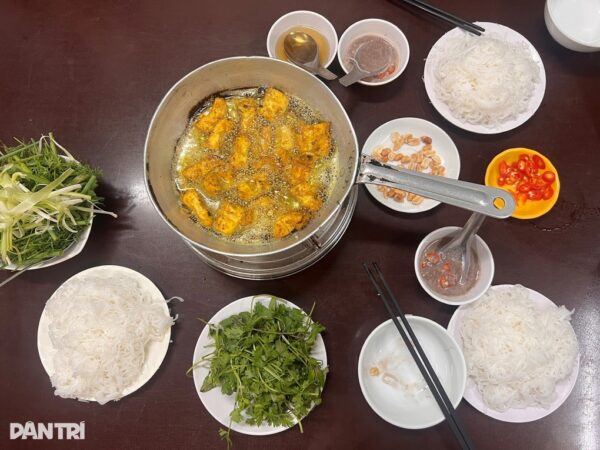
Cha Ca La Vong as prepared and served by the fourth generation of the Doan family at No. 14 Cha Ca Street, Hanoi (Photo: Tran Thanh Cong).
Despite many historical ups and downs, the fourth generation of the Doan family continues to preserve the craft and serve cha ca to both domestic and international diners.
“The dish has now spread widely. Many places have introduced adaptations and no longer strictly follow the traditional method. In the dossier submitted to the Ministry of Culture, Sports and Tourism for inscription as a National Intangible Cultural Heritage, two addresses are cited: No. 14 and No. 5 Cha Ca Street, both belonging to the Doan family,” Professor Dang Van Bai added.
Prior to the inscription of “Culinary Knowledge and Appreciation of Cha Ca La Vong,” Hanoi already had six culinary heritages recognized at the national level, including: Me Tri green rice flakes, Quang An lotus tea, Phu Thuong sticky rice, Thanh Tri steamed rice rolls, Bat Trang ceremonial feasts, and Hanoi pho.
Being listed as a National Intangible Cultural Heritage not only honors these values but also provides an effective mechanism to protect, promote, and transform heritage into a sustainable “asset” for cultural and economic development.
According to: https://dantri.com.vn/du-lich/ha-noi-sap-co-le-hoi-van-hoa-am-thuc-nghe-nhan-ke-chuyen-lam-mon-ngon-20251216202445526.htm