
Celebrating the culinary values of the Capital, the Hanoi Food and Culture Festival 2025 is not only a space to savor the flavors of Hanoi, but also a platform that helps transform culinary heritage into a driving force for the development of the cultural industry.
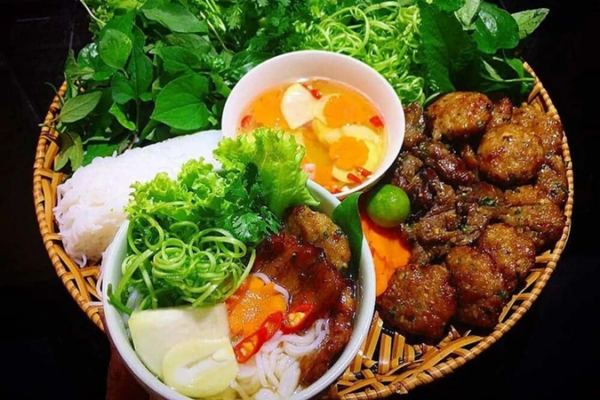
When Hanoi’s Dishes Become Symbols of Urban Culture
Honoring Heritage – Unlocking Cultural Industry Resources
With the aim of honoring Hanoi’s culinary culture, positioning cuisine as an attractive form of cultural tourism, and contributing to the development of the Capital’s cultural industry, the Hanoi Department of Culture and Sports is organizing the Hanoi Food and Culture Festival 2025 from December 19 to 21 at Thong Nhat Park, under the theme “Hanoi – A Culinary Journey Connecting Creativity.”
The festival is expected not only to be a destination for enjoying Hanoi’s distinctive flavors, but also a gathering space that spreads cultural values and helps shape the contemporary brand of “Hanoi Cuisine.”
The Hanoi Food and Culture Festival is an annual event organized by the Department of Culture and Sports under the direction of the Hanoi People’s Committee, in coordination with relevant departments, localities, and organizations. In the context of Resolution No. 09-NQ/TU (dated February 22, 2022) on cultural industry development for the period 2021–2025, with orientations to 2030 and a vision to 2045, the festival serves as a concrete step in implementing major policies, turning cuisine, a key pillar of the cultural industry, into a sustainable development resource.
According to Le Thi Anh Mai, Deputy Director of the Hanoi Department of Culture and Sports, from the historic 36 Old Streets to an expanded Hanoi shaped by the cultural essence of Xu Doai, the Capital’s culture in general and its cuisine in particular have become increasingly rich and diverse. Beyond the familiar dishes of the Old Quarter, Hanoi cuisine represents a refined convergence of multiple regional cultures, distilled over time through the elegant lifestyle of the Trang An people.
Since 2014, Hanoi has conducted inventories of intangible cultural heritage, identifying hundreds of culinary heritages and bringing them under management and protection.
“Inscribing intangible cultural heritage on the National List is not only an act of honoring traditional values, but also an effective solution to safeguard, promote, and transform heritage into assets, resources for sustainable cultural industry development, contributing to improved local livelihoods,” Le Thi Anh Mai emphasized.
To date, Hanoi has seven culinary heritages inscribed on the National List of Intangible Cultural Heritage, including: Hanoi Pho; Me Tri green rice flakes; Quang An lotus tea; Phu Thuong sticky rice; Thanh Tri steamed rice rolls; and Bat Trang ceremonial feasts. These are not merely dishes or traditional crafts, but crystallizations of folk knowledge, collective memory, and Hanoi’s lifestyle across generations.
A special highlight of the Hanoi Food and Culture Festival 2025 is the official announcement, at the opening ceremony, of the decision by the Ministry of Culture, Sports and Tourism to inscribe “Culinary Knowledge and Appreciation of Cha Ca La Vong (Hanoi)” on the National List of Intangible Cultural Heritage. This milestone not only honors a legendary dish, but also affirms the cultural and historical value of Hanoi cuisine within the broader flow of national heritage.
From Heritage Stories to Creative Experiences
At the festival, the public will have the opportunity to meet representatives of the Doan family, who have preserved the craft of Cha Ca La Vong for six generations. Their journey is not just the story of one family, but a vivid testament to the enduring vitality of Hanoi’s culinary heritage, where each dish is intertwined with urban memory and collective consciousness.
Assessing the potential of culinary heritage in cultural industry development, Assoc. Prof. Dr. Dang Van Bai, Vice Chairman of the National Council for Cultural Heritage, noted that 81% of tourists are willing to spend money to experience a destination’s culinary culture. This shows that cuisine is not only a cultural resource, but also a distinctive tourism product, playing a crucial role in destination branding and sustainable growth.
According to Dr. Dang Van Bai, cuisine today goes beyond basic sustenance to become a form of cultural heritage, shaping local identity and national branding in the context of tourism and cultural industries. With Cha Ca La Vong, the heritage value lies not only in cooking techniques or dining rituals, but also in historical narratives, collective memory, and family traditions. It is a prime example of how a dish can become an urban symbol, with its name inseparably linked to a street, leaving a deep imprint on Hanoi’s physical and cultural landscape.
Beyond display and tasting, the Hanoi Food and Culture Festival 2025 is also a space where artisans tell heritage stories and connect with younger generations. A wide range of side activities will take place, including the seminar “Enhancing Human Resource Quality – Developing Culinary Culture,” bringing together artisans, culinary associations, and community representatives. This forum enables experience sharing and discussion of solutions to improve human resources in the culinary sector, an essential factor for cultural industry development.
According to Pham Thi Lan Anh, Head of the Heritage Management Division (Hanoi Department of Culture and Sports), the festival also features artisan demonstrations and fast-paced cooking competitions for students. Through these activities, heritage is not only preserved but naturally transmitted and continued in modern life.
Visitors to the festival can directly participate in and experience demonstrations of culinary heritage such as wrapping banh chung, preparing Bat Trang ceremonial feasts, scenting West Lake lotus tea, making green rice flakes, cooking Phu Thuong sticky rice, cold snail noodle soup, making preserved fruits and jams, and cooking “chao se.”
The festival space, with around 60 food booths showcasing Hanoi cuisine and specialties from other localities, helps honor heritage values and reinforce the brand of “Hanoi Cuisine” associated with elegance and refinement.
Alongside food are diverse artistic performances, including circus acts, ritual singing, xam folk singing, and street arts, as well as creative activities blending tradition and modernity. The program also includes a photo exhibition featuring 40–50 works promoting Vietnamese culture, tourism, and cuisine, and a mobile book exhibition introducing about 200 titles on culture, arts, tourism, and gastronomy, offering visitors a multi-dimensional experience.
Notably, corporate participation also plays a role in spreading Vietnamese culinary values. Shimamura Masafumi, Marketing Director of Acecook Vietnam Joint Stock Company, stated that Acecook views the preservation and promotion of Vietnamese cuisine as a long-term commitment. At the festival, Acecook presents the “Pho De Nhat” booth along with the “A Thousand Words of Pride” check-in corner, where residents and visitors can share messages and pride in Vietnamese pho, so that pho is not only a familiar dish, but a cultural symbol collectively preserved and shared with the world.
According to:
https://thoibaonganhang.vn/am-thuc-ha-noi-tu-di-san-den-nguon-luc-cong-nghiep-van-hoa-175261.html?gidzl=aOPmHvjulHgVctP4bM6u69sSSaUFDRyUrPbtGDrZlXo4ct93WMQy7uIRSKJUOhyQqvjq5ZaypVffd7Yy7W