
The Hanoi Creative Spaces Network was officially launched with 82 members on December 10, 2025. This is considered a very concrete step toward turning the vision of building the capital’s urban creative ecosystem into reality. These creative spaces are not just physical locations; they are places that nurture ideas, foster new collaborations, and serve as meeting points for the community, contributing to the spread of a creative spirit and enhancing the quality of life for the people.
Attracting creative resources within the Community
In 2019, Hanoi was recognized by UNESCO as a member of the Global Network of Creative Cities (UNESCO Creative Cities Network – UCCN), becoming the 246th Creative City in the world and the 32nd capital acknowledged for its achievements in Creative Design. After six years of joining the UNESCO Creative Cities Network, Hanoi has actively pursued its commitments, pioneering the field of creative design, promoting the capital’s heritage values, and contributing to the development of a “Cultural – Civilized – Modern” Hanoi. Accordingly, Hanoi has encouraged creative activities across various sectors and implemented numerous innovative and integration plans based on the principle: “Putting creativity and the creative economy at the core of developing a dynamic, comprehensive, and sustainable city.” Today, Hanoi has been affirming its position as a dynamic, creative capital in Asia.
In recent years, the creative community and creative spaces in Hanoi have continuously strived for innovation, becoming bright spots in design, culture, art, handicrafts, and creative startups. Beyond incubating new ideas, creative spaces also serve as bridges between tradition and modernity, and between local and international communities. Within these spaces, creativity becomes a shared practice, where everyone participates, co-creates, and brings it into everyday life.
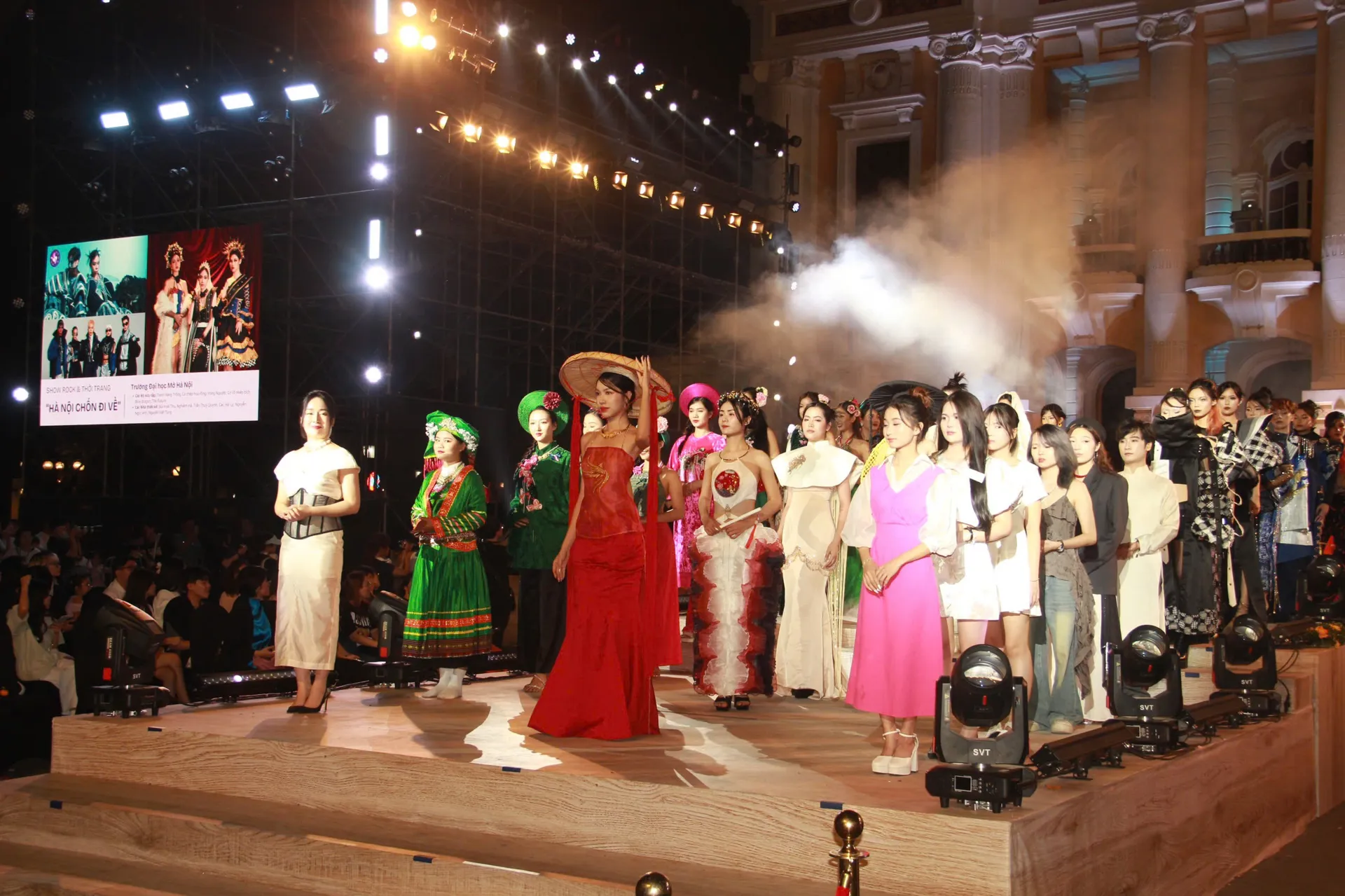
Art performance at the Hanoi Creative Design Festival 2024. Photo by: Pham Hung
Hanoi has hundreds of creative spaces, but many still lack connectivity and operate spontaneously. Therefore, the establishment of the Hanoi Creative Spaces Network on December 10 demonstrates the city’s efforts to encourage, call for, and connect creative resources in the community to maximize the potential of these spaces.
Leaders of the Vietnam Women’s Museum shared that the museum officially becoming a member of the Hanoi Creative Spaces Network from December 10, 2025, is an important milestone affirming the museum’s role in promoting creativity, spreading cultural and heritage values, and connecting communities. At the same time, it opens up many opportunities for the Vietnam Women’s Museum to collaborate, experiment with new ideas, further leverage the power of the creative community, and disseminate values related to women, culture, and heritage in the journey of building an inspiring, sustainable, and creative capital.
For many years, the Vietnam Village Communal House Club has become a familiar name to the public in the capital and nationwide, leaving a strong mark in various cultural and creative activities and heritage preservation. Notably, the “Vietnam Tet – Street Tet” project has been organized annually in Hanoi’s Old Quarter since 2016, featuring activities along streets and historical sites, including Kim Ngan Communal House (42 Hang Bac). The program reenacts many traditional Tet rituals such as offerings to the city’s guardian deity, setting up the Tet pole, folk performances celebrating the Lunar New Year, and making Banh Chung. Particularly remarkable is the parade featuring traditional Ao Dai costumes, attracting large crowds, especially young people, and becoming a cultural highlight every Lunar New Year in the capital.
The rituals and artistic programs in “Vietnam Tet – Street Tet” not only help people reconnect with traditional values but also create a space to strengthen community bonds, honor cultural roots, and share unique cultural values. The organizers hope the community will join in activities to preserve and promote traditional cultural values. Nguyen Duc Binh, Head of the Vietnam Village Communal House Club, shared that the club officially joining the Hanoi Creative Spaces Network on December 10, 2025, is a source of joy and pride. “This recognition acknowledges the continuous efforts of our members over the years in connecting, creating numerous cultural and artistic works rich in traditional identity. The establishment of the Network also reflects the efforts of the Hanoi Department of Culture and Sports over many years in building diverse creative resources for the capital,” Nguyen Duc Binh expressed.
Building an urban creative ecosystem
The 82 members recently certified as Hanoi Creative Spaces fully meet the criteria according to the Classification and Evaluation Standards for spaces participating in the Hanoi Creative Spaces Network. To form this network, earlier this year, the city organized meetings and called on cultural and creative spaces, individuals, and organizations to register as members. Cultural and creative spaces joining the network will enjoy tax incentives according to regulations, receive support for communication and promotion, as well as resources to implement exemplary creative activities.
Hanoi’s transition from a Creative Design Festival to building an entire creative ecosystem means creating sustainable opportunities for designers, artists, creative enterprises, students, and the community. It implies making creativity a part of everyday urban life, not just limited to events. UNESCO wholeheartedly supports Hanoi’s creative journey and is pleased to accompany the city on its path to becoming a space of imagination, connectivity, and innovation.
Jonathan Wallace Baker, Head of the UNESCO Office in Vietnam
Previously, Hanoi was also the first locality in the country to establish the Hanoi Creative Activities Coordination Center (December 2024). This is a coordinating agency assigned by the Department of Culture and Sports to be managed by the Hanoi Museum, with the function of promoting creative activities; connecting local and international creative resources; introducing, sharing, and supporting the pilot implementation of ideas in the field of creativity. Nguyen Thi Ngoc Hoa, Director of the Hanoi Creative Activities Coordination Center, stated that with the function of coordinating and supporting creative groups and communities operating in the fields of heritage and creativity, in 2025 the center coordinated the organization of around 100 events, many of which were organized by young people. “The youth not only have a love and passion for heritage but also possess knowledge, skills, and a sense of social responsibility to organize large-scale and meticulous events, bringing traditional art closer to the public,” said Nguyen Thi Ngoc Hoa.
According to Jonathan Wallace Baker, Head of the UNESCO Office in Vietnam, Hanoi is a city with very special energy. It is a place where history and modern life meet every day, on every street, in every neighborhood, in handicraft products, designs, and in the creativity of the people of Hanoi themselves. “Since joining the UNESCO Creative Cities Network in 2019, Hanoi has demonstrated that creativity is not only about exhibitions or performances. Here, creativity is linked to the way people live, the way communities connect, the way young people express their voices, and the way the city envisions its future,” shared Jonathan Wallace Baker.
One of Hanoi’s key highlights in the journey to realize its goal of becoming a Creative City is the organization of the Creative Design Festivals. Through four editions, continuing the creative flow from the community, the Hanoi Creative Design Festival has not only revived forgotten heritage, transformed creative spaces, and connected young people and communities, but more importantly, it has gathered resources, harnessed potential, and promoted policies for the development of the city’s creative economy.
Notably, in 2026 the Hanoi Creative Design Festival is oriented to shift from “organizing a festival” to “building an urban creative ecosystem” with an interdisciplinary mindset, connecting visual arts – design – technology – architecture – sound – data – handicrafts – performance… to create multisensory experiences, new art forms, and internationally interactive spaces.
Vu Thu Ha, Vice Chairman of the Hanoi People’s Committee, emphasized that the 2026 Hanoi Creative Design Festival will be organized as a series of diverse activities, aiming to build a strong and sustainable creative ecosystem. Creative design activities will not be limited to artworks or design products but will also include urban design, public space design, social welfare, community design, and proposing creative ideas to overcome city bottlenecks (urban order, environmental pollution, urban and suburban flooding, traffic congestion, food safety), thereby contributing to improving the quality of life with people at the center.
It is precisely through these persistent activities and meaningful projects of the creative community, forming creative spaces, that Hanoi’s cultural landscape has become increasingly diverse. Creative spaces have truly become “innovation cores,” making a strong contribution to building a distinctive creative cultural identity for the capital, developing the creative economy, and promoting the image of a youthful, dynamic, modern Hanoi while remaining rich in tradition.
Bach Lien Huong, Director of the Hanoi Department of Culture and Sports
Thien Tu
Continuing the Flow of the Capital’s Creative Culture
According to “Urban Economy”