
The resolutions and decisions of the Central authorities serve as a foundation for Hanoi to enter a new phase of development with a two-tier local government model.
Standing Deputy Secretary of the Hanoi Party Committee Nguyen Van Phong announces Resolution No. 1656/NQ-UBTVQH15. Photo: Viet Thanh
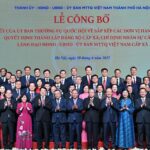
At the ceremony announcing the National Assembly’s Resolution, the Central authorities’ Decisions, and local Decisions on the merger of administrative units and the establishment of Party organizations and Fatherland Front Committees at the provincial, city, commune, ward and special administrative unit levels, held on the morning of June 30 by the Hanoi Party Committee, Standing Deputy Secretary of the Hanoi Party Committee Nguyen Van Phong announced Resolution No. 1656/NQ-UBTVQH15 on the reorganization of commune-level administrative units of Hanoi in 2025.
This is a historic resolution that marks Hanoi’s transition into a new stage of development under a two-tier local government model.
51 wards and 75 communes in Hanoi to officially operate from July 1
On April 16, 2025, the Standing Committee of the National Assembly officially issued Resolution No. 1656/NQ-UBTVQH15 on the reorganization of commune-level administrative units of Hanoi in 2025. This is a major policy aimed at streamlining the administrative apparatus, improving the effectiveness and efficiency of grassroots governance, and meeting the development requirements of the Capital in the new period.
According to the Resolution, after the reorganization, 126 new commune-level administrative units will be formed across Hanoi, including 51 wards and 75 communes.
Specifically, the wards include: Hoan Kiem, Cua Nam, Ba Dinh, Ngoc Ha, Giang Vo, Hai Ba Trung, Vinh Tuy, Bach Mai, Dong Da, Kim Lien, Van Mieu – Quoc Tu Giam, Lang, O Cho Dua, Hong Ha, Linh Nam, Hoang Mai, Vinh Hung, Tuong Mai, Dinh Cong, Hoang Liet, Yen So, Thanh Xuan, Khuong Dinh, Phuong Liet, Cau Giay, Nghia Do, Yen Hoa, Tay Ho, Phu Thuong, Tay Tuu, Phu Dien, Xuan Dinh, Dong Ngac, Thuong Cat, Tu Liem, Xuan Phuong, Tay Mo, Dai Mo, Long Bien, Bo De, Viet Hung, Phuc Loi, Ha Dong, Duong Noi, Yen Nghia, Phu Luong, Kien Hung, Thanh Liet, Chuong My, Son Tay, Tung Thien.
The communes include: Thanh Tri, Dai Thanh, Nam Phu, Ngoc Hoi, Thuong Phuc, Thuong Tin, Chuong Duong, Hong Van, Phu Xuyen, Phuong Duc, Chuyen My, Dai Xuyen, Thanh Oai, Binh Minh, Tam Hung, Dan Hoa, Van Dinh, Ung Thien, Hoa Xa, Ung Hoa, My Duc, Hong Son, Phuc Son, Huong Son, Phu Nghia, Xuan Mai, Tran Phu, Hoa Phu, Quang Bi, Minh Chau, Quang Oai, Vat Lai, Co Do, Bat Bat, Suoi Hai, Ba Vi, Yen Bai, Doai Phuong, Phuc Tho, Phuc Loc, Hat Mon, Thach That, Ha Bang, Tay Phuong, Hoa Lac, Yen Xuan, Quoc Oai, Hung Dao, Kieu Phu, Phu Cat, Hoai Duc, Duong Hoa, Son Dong, An Khanh, Dan Phuong, O Dien, Lien Minh, Gia Lam, Thuan An, Bat Trang, Phu Dong, Thu Lam, Dong Anh, Phuc Thinh, Thien Loc, Vinh Thanh, Me Linh, Yen Lang, Tien Thang, Quang Minh, Soc Son, Da Phuc, Noi Bai, Trung Gia, Kim Anh.
The Resolution also clearly stipulates that from July 1, 2025, the 126 new wards and communes of Hanoi will officially come into operation, terminating the former governance model. Local authorities are responsible for stabilizing organizational structures, ensuring smooth operations, and providing better services to the people.
The implementation of the Resolution is assigned to the Government, the People’s Council and the People’s Committee of Hanoi, local authorities, and relevant agencies. At the same time, the Government is tasked with accurately determining natural land areas and publicly announcing them before September 30, 2025; conducting surveys and preparing administrative boundary dossiers to ensure a long-term legal basis.
Central and Hanoi city delegates attend the announcement ceremony at the Vietnam-Soviet Friendship Cultural Palace. Photo by: Viet Thanh
The Committee for Ethnic Affairs, Committees of the National Assembly, the National Assembly Delegation, and National Assembly deputies of Hanoi will closely supervise the implementation process. This process has profound impacts on the psychology and daily lives of the people and therefore must be carried out seriously, democratically, publicly, and transparently.
Regarding key tasks, the Resolution emphasizes the need to stabilize the organizational apparatus of local agencies and organizations; stabilize the lives of the people; and ensure economic and social development, national defense, and security requirements. This serves as an important foundation for Hanoi to better utilize space and resources and improve the quality of urban governance.
Each cadre, Party member, civil servant, and public employee of the Capital is called upon to maximize their sense of responsibility and aspiration to contribute.
Speaking at the Resolution announcement ceremony, President Luong Cuong emphasized that the reorganization of the organizational apparatus and administrative units is not merely an adjustment of administrative boundaries but a strategic and long-term step demonstrating the strong political determination of the Party and the State to build a streamlined, effective, efficient, people-oriented administration that is closer to the people and serves them better.
President Luong Cuong delivers a directive speech at the announcement ceremony. Photo by: Viet Thanh
In particular, for the Capital Hanoi – the national political and administrative center, the heart of the country, and a place where the essence of culture and thousands of years of history converge – this reorganization of administrative units carries even greater significance, meeting the demands of urban development, effective spatial management, heritage preservation, and the promotion of the cultural values of Thang Long – Hanoi.
Commending the efforts of the Hanoi Party Committee, the People’s Council, and the People’s Committee for their serious, responsible, and creative preparation and implementation of the Central authorities’ major policy, the President also highly appreciated Hanoi’s bold reduction of commune-level administrative units from 526 to 126, along with the very high level of consensus and support from cadres, Party members, and the people, reaching over 97%. This clearly demonstrates a strong transformation in governance thinking and administrative reform in the Capital.
Emphasizing that this reorganization is not only a restructuring of the organizational apparatus but also opens up new development space and affirms Hanoi’s position as a leading engine and growth driver of the Capital Region, the Northern Key Economic Region, and the entire country, President Luong Cuong noted that the process will affect the psychology and living conditions of many cadres, civil servants, and citizens. This requires the new apparatus to be streamlined, strong, effective, efficient, closer to the people, and more responsive, ensuring “no delays, no congestion, and no adverse impacts on citizens and businesses,” especially in essential public services.
President Luong Cuong with leaders of Hanoi. Photo by: Viet Thanh
President Luong Cuong also called on every cadre, Party member, civil servant, and public employee of the Capital to bring into fullest play their sense of responsibility, aspiration for dedication, intellect, and public-service ethics, becoming pioneers in renewing management thinking and taking service to the people as the highest objective.
The President also expressed confidence that, with its thousand-year tradition of culture and learning, spirit of solidarity, intellect, and aspiration for development, the Hanoi Party Committee, authorities, and people will unite to promote the strength of solidarity, build a modern public administration that serves the people, and make worthy contributions to the journey of leading the country into an era of strong and prosperous development.
Huong Ly