
To commemorate the 80th anniversary of the August Revolution (August 19, 1945 – August 19, 2025) and National Day of the Socialist Republic of Vietnam (September 2, 1945 – September 2, 2025), the Thang Long – Hanoi Heritage Conservation Center will host a series of rich and engaging exhibitions and displays.
Interpretive Exhibition: “D67 House and Bunker – The Road to Total Victory” (Phase I)
The revolutionary site of D67 House and Bunker is a structure of exceptional historical significance from the Ho Chi Minh era.
Secretly constructed in 1967, at the height of the war, it served as the venue for many critical meetings of the Politburo and the Central Military Commission, and as the workplace of the Commander-in-Chief and the Chief of the General Staff of the Vietnam People’s Army throughout the resistance war against the United States and the subsequent period of national reconstruction.
Through archival materials, images, and the application of modern technologies, the Thang Long – Hanoi Heritage Conservation Center, in coordination with the Center for Heritage Research and Promotion (CCH), has developed exhibition content that vividly interprets the role of D67 House and Bunker during the 1968-1975 period.
The exhibition, “D67 House and Bunker – The Road to Total Victory,” presents more than 300 documents and images, structured around four themes: “The Gulf of Tonkin Incident and the First War of Destruction”; “The Story of D67 House and Bunker”; “Defeating ‘Vietnamization’ and the Second War of Destruction”; and “The Great Spring Victory of 1975.”
Enhancing the Value of the Cryptography Bunker (General Staff Headquarters)
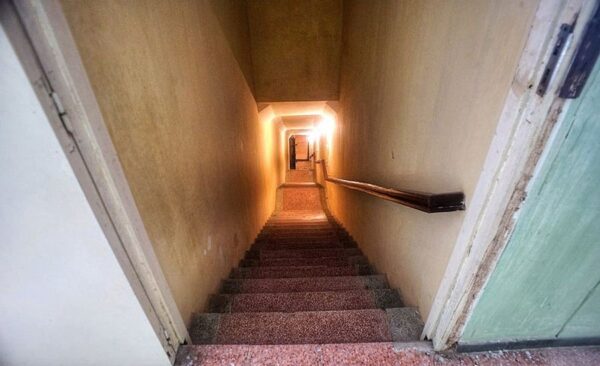
The Cryptography Bunker – General Staff Headquarters is a key component of the General Command complex within the Thang Long Imperial Citadel Heritage Site.
It forms part of the Area A bunker system of the Hanoi Citadel, constructed during the resistance war against the United States. The bunker played a vital role in enabling the Vietnam People’s Army General Command to maintain leadership, coordination, and command over military branches and battlefronts amid intense U.S. aerial bombardment of Hanoi.
Construction began on February 10, 1966, and was completed on June 30, 1966, covering a total area of 37.2 square meters. The bunker was most heavily used in December 1972.
On the occasion of the 80th anniversary of the National Day of the Socialist Republic of Vietnam, the Thang Long – Hanoi Heritage Conservation Center has undertaken research, restoration, and value enhancement of the Cryptography Bunker.
The restoration adheres to principles of respecting original elements, avoiding intervention in the original fabric, and maximizing heritage value, while applying new interpretive approaches and exhibition technologies to create stronger engagement, particularly for younger visitors.
The bunker has been restored and opened to the public for the first time during the National Day anniversary, contributing significantly to historical education and meeting visitors’ interest in gaining deeper, more concrete insights into revolutionary and resistance-era sites. This effort also supports the broader promotion of revolutionary heritage within the Thang Long Imperial Citadel.
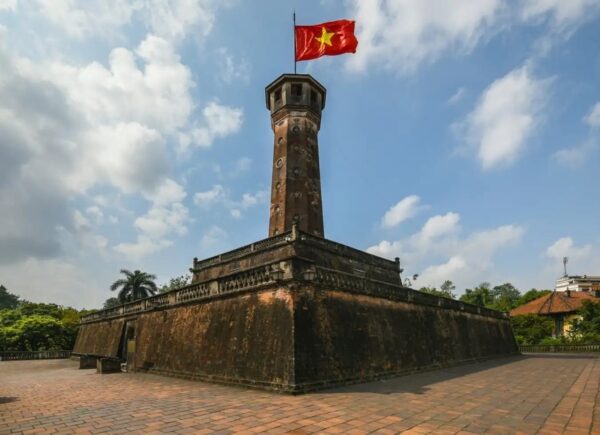
The Hanoi Flag Tower is a significant, distinctive, and singular architectural landmark of the Nguyen Dynasty citadel system.
Exhibition: “The Hanoi Flag Tower – The Fatherland and the Aspiration for Peace”
The Hanoi Flag Tower is a distinctive and important structure of the Nguyen Dynasty citadel system. Historical records indicate it was built under King Gia Long between 1805 and 1812, at the center of the southern end of the Hanoi Citadel’s main axis, on the former site of the Chu Tuoc Gate from the Le Dynasty. The tower features a three-tiered square base, an octagonal shaft, and a flagpole at the summit.
The exhibition “The Hanoi Flag Tower – The Fatherland and the Aspiration for Peace” aims to honor and promote the value of this significant historical monument, a repository of the cultural and spiritual values of Hanoi’s people and the Vietnamese nation.
The exhibition is organized into three themes: The Flag Tower under the Nguyen Dynasty; French Colonial Occupation and Transformations; and An Independent Vietnam. These themes are presented through a combination of timelines and highlight events, supported by artifacts and short films illustrating the tower’s construction history and vividly recreating the historic moment of Hanoi’s liberation on October 10, 1954.
Minh Phuong