
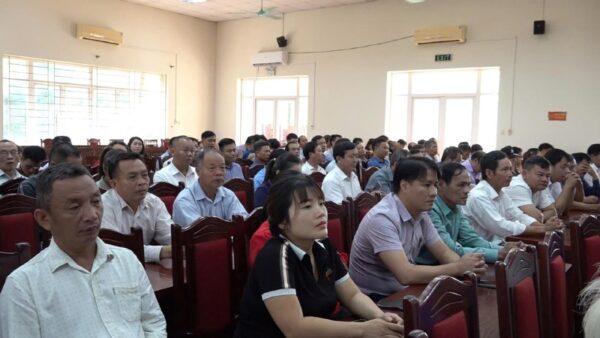
Delegates attending the training course
In his opening speech, Vice Chairman of the People’s Committee of Ba Vì District, Nguyễn Đức Anh, emphasized: “Ba Vì District is home to a total of 450 classified historical and cultural relics, a significant number that contains the traditional historical and cultural values of our nation. These relics reflect the creativity, spiritual life, and beliefs of past generations, passed down to future generations. Therefore, the work of managing and preserving historical and cultural relics, as well as festivals, is not only about preserving material products but also about enhancing the intangible cultural heritage in the process of educating, nurturing, and transmitting revolutionary traditions and cultural identities to future generations.” With the aim of ensuring that officials, particularly those in charge of managing relic sites at the commune level and the relic management subcommittees at the village level, grasp the basic content of state management on relics and festivals, the Vice Chairman of Ba Vì District requested that participants engage seriously in the training session, listen attentively to the content delivered by the instructors, and actively exchange and discuss the new and complex issues related to the management of relics and festivals in the locality. Additionally, he encouraged the participants to proactively read and familiarize themselves with relevant materials on relic and festival management, and based on that, implement these tasks in accordance with current regulations to meet the demands and requirements in the new context.
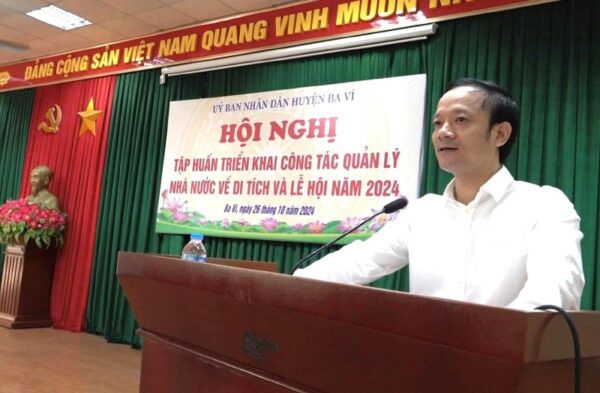
Vice Chairman of Ba Vi District People’s Committee Nguyen Duc Anh spoke at the Conference
At the training conference, the delegates listened to Mr. Nguyễn Quốc Hiệp, Deputy Head of the Department of Culture and Family Inspection, Ministry of Culture, Sports, and Tourism, who provided information on legal documents related to the management and restoration of historical and cultural relics. These included the Law on Cultural Heritage dated June 29, 2001, and the Law amending and supplementing certain provisions of the Law on Cultural Heritage dated June 18, 2009; Decree No. 98/2010/ND-CP, dated September 21, 2010, which details the implementation of certain provisions of the Law on Cultural Heritage and the amended and supplemented Law; Decree No. 166/2018/ND-CP, dated December 25, 2018, which outlines the authority, procedures, and steps for the planning, assessment, approval of plans, and projects for the conservation, restoration, and revival of historical-cultural relics and scenic spots; Circular No. 15/2019/TT-BVHTTDL, dated December 31, 2019, from the Ministry of Culture, Sports, and Tourism, which provides detailed regulations on the conservation, restoration, and revival of relics; and Circular No. 04/2023/TT-BTC from the Ministry of Finance, dated January 19, 2023, which guides the management of finances for organizing festivals and receiving donations and sponsorships for relics and festivals.
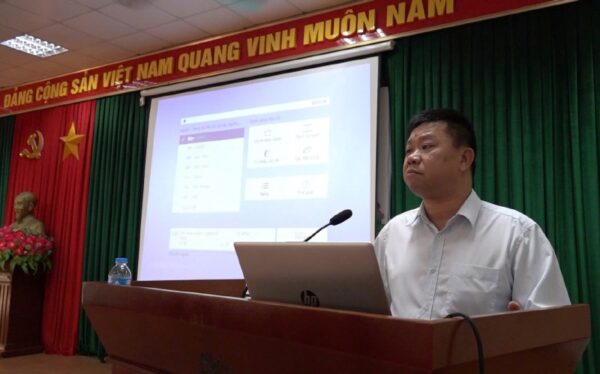
Deputy Head of the Department of Culture and Family Inspection, Ministry of Culture, Sports and Tourism Nguyen Quoc Hiep – lecturer at the training conference
During the training, the delegates gave opinions, exchanged ideas, and shared experiences, as well as difficulties and challenges in performing the tasks of managing relics and traditional festivals in their localities.
Through the training conference, the delegates were equipped with fundamental knowledge from the State, the city, and the district regarding the management of historical and cultural relics and the organization of festivals related to these relics in the area. Particularly, it helped the cultural and social officers of communes and towns enhance their skills and expertise in the management, restoration, and conservation of relics, as well as in promoting their values. It also clarified the responsibilities of local People’s Committees in managing relics, specifically in the conservation, restoration, and promotion of the relics’ values to meet the requirements and tasks in the new context.
BV