
The Hanoi Creative Design Festival 2026 will not merely be an annual cultural and artistic event, but will mark a strategic shift from “organizing a creative design festival” to “building an urban creative ecosystem.” Its scope will extend beyond culture, arts, and design products to encompass urban design, public space design, social welfare, community design, and proposals of creative solutions to address the city’s bottlenecks such as urban order, environmental pollution, urban and peri-urban flooding, and food safety. These ideas aim to enhance quality of life with people at the center, while affirming the City’s determination to position itself as a Creative City at the national, regional, and UNESCO Creative Cities Network levels.
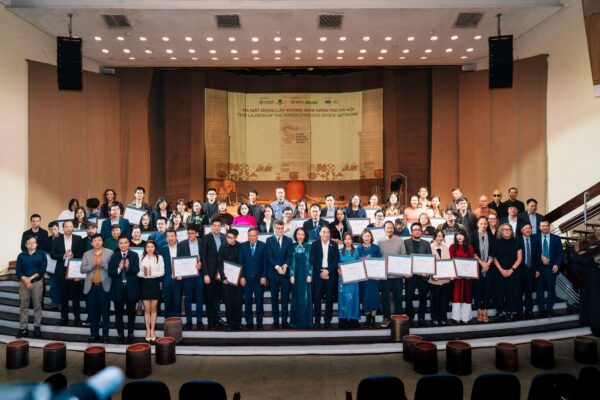
Presentation of certificates recognizing Hanoi creative cultural spaces and the launch of the Hanoi Creative Spaces Network
Accordingly, the Hanoi Creative Design Festival 2026 will focus on the following activities:
Strengthening communications on the Festival and creative design activities through diverse formats, including operating the Festival’s fanpage; developing the Festival website to register activities, connect stakeholders, and submit project proposals by fields and themes; building the Festival’s visual identity; commissioning in-depth features, news articles, videos, short promotional trailers, documentaries, and photo content.
At 4:30 p.m. on December 10, 2025, the event was officially announced at the auditorium of the Hanoi Children’s Palace, No. 5 Tran Nguyen Han Street, Hoan Kiem Ward, with 250 – 350 delegates in attendance. Participants included representatives of the UNESCO Office in Viet Nam, UN-Habitat, several embassies and international organizations; representatives of the Department of International Cooperation and the Department of Cultural Heritage (Ministry of Culture, Sports and Tourism), the Department of Urban Development and the Institute of Architecture and Urban Planning (Ministry of Construction), research institutes in urban studies, planning, and culture; representatives of the Party Committee’s Commission for Communication and Mass Mobilization, relevant departments, sectors, and units; professional associations at central and Hanoi levels; leaders of commune- and ward-level People’s Committees and socio-cultural divisions; universities; and enterprises, units, and organizations in the creative sector.
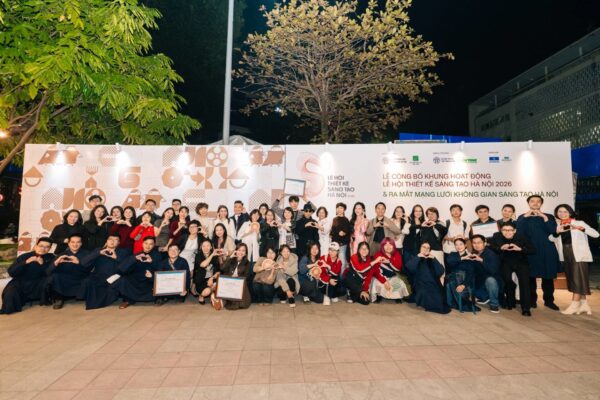
The Hanoi Creative Design Festival 2026 will officially kick off on January 10 – 11, 2026 at Dong Kinh – Nghia Thuc Square, the Octagonal House area, and locations and streets surrounding Hoan Kiem Lake.
The plan includes forming models of cultural industry centers in Dong Xuan – Bac Qua and Cua Nam Ward, and piloting selected activities.
Surveys will be conducted and results announced on “Potential Spaces to Become Creative Spaces and Cultural Industry Centers, Cultural Commercial and Service Development Areas” from June to July 2026.
The competition “Awakening Urban Spaces” and a series of talks and workshops will be launched from April to September 2026.
Creative networking activities and the strengthening of the Creative Activities Coordination Center will be implemented from March to October 2026.
Under the theme Creative Economy, the Festival will open on November 20, 2026 and conclude on December 10, 2026 across the following areas: Heritage Space (Dong Xuan – Bac Qua Market area and the Dong Xuan Cultural Industry Center); Ke Cho Space (Hanoi Old Quarter with its 36 guild streets); Future Space (the citywide park network); Ecological Space (the Red River midstream islet); and Community Space (across the entire city).
Participants include creative design communities; creative enterprises, investors, and sponsors; training institutions; experts, artists, and international partners; and the public as users of creative products.
The Department of Culture and Sports is designated as the standing agency, responsible for coordinating with the Viet Nam Association of Architects, the UNESCO Office in Viet Nam, the United Nations Human Settlements Programme (UN-Habitat), relevant departments and sectors, district-level People’s Committees, and related units to organize and implement the plan in compliance with regulations.
Minh Anh