
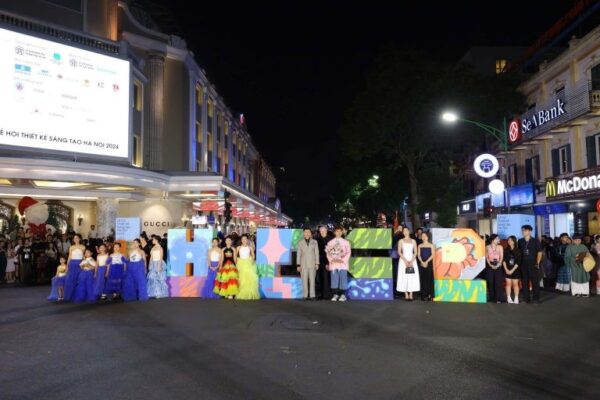
The festival was directed by the Hanoi People’s Committee and the Vietnam Association of Architects, with the Department of Culture and Sports and Architecture Magazine organizing. It was co-hosted with the support and coordination of UNESCO Hanoi Office, Sovico Group, Vietnam Prosperity Joint Stock Commercial Bank (VPBank), the People’s Committee of Hoan Kiem District, Hanoi Youth Union, various departments, districts, and other related units. The festival saw widespread participation from businesses, community groups, experts, and creative talents, etc.
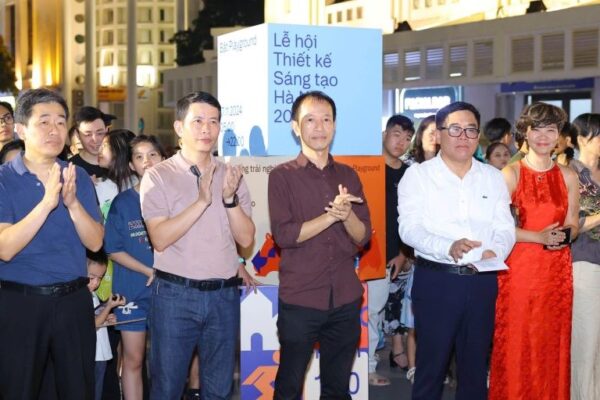
Representatives from the directing, organizing, and supporting units of the Hanoi Creative Design Festival 2024 attended.
Significant Attention
The festival received comprehensive support and direction from leaders at all levels. Various units dedicated the best resources to serve the festival, especially those directly involved along the festival route, such as the Hanoi Children’s Palace, Government Guest House (Bac Bo Phu), the National Theater, the National Museum of History, and the University of Natural Sciences – VNU Hanoi, which opened their doors to visitors for the first time.
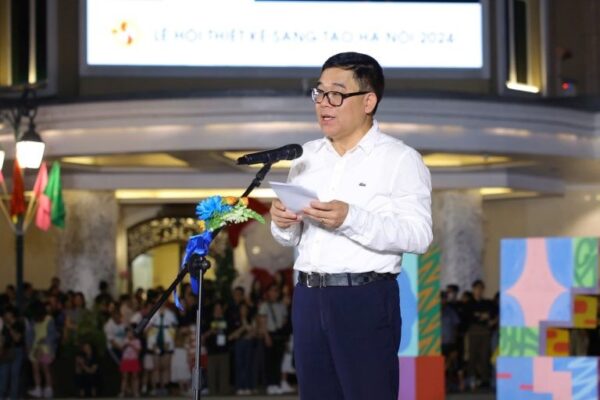
Director of the Department of Culture and Sports Do Dinh Hong delivered a speech at the closing ceremony.
The festival attracted not only the attention and participation of central and Hanoi city leaders but also welcomed representatives from embassies and international organizations in Hanoi. On November 10, Standing Deputy Secretary of the Hanoi Party Committee Nguyen Van Phong and city leaders visited the festival’s creative spaces. On November 12, a delegation of ambassadorial spouses and heads of international organizations in Hanoi took a special heritage tour. The delegates expressed surprise and admiration for the creative potential of the capital’s artists.
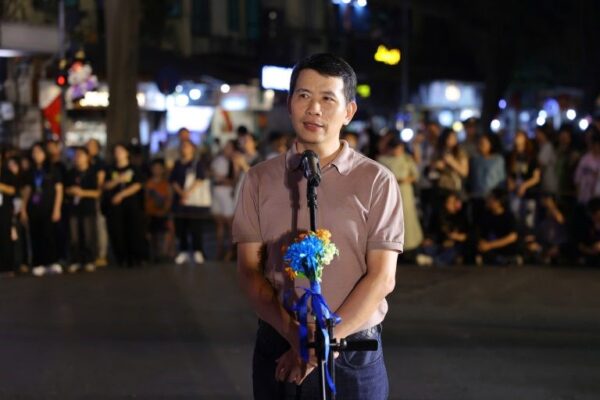
Hoan Kiem District People’s Committee Chairman Pham Tuan Long also spoke at the event.
Creative Talent
Entering its fourth year, the Hanoi Creative Design Festival 2024 expanded to over 110 activities across 12 key cultural industries such as architecture, fine arts, performance, cinema, and advertising. Highlights included creative community parades, iconic projects, creative space installations, exhibitions, artistic performances, and international and domestic symposiums. The spirit of creativity spread throughout architectural spaces, cultural heritage sites, creative spaces, craft streets, and traditional villages across Hanoi. The community organized nearly 50 creative activities to engage the public and tourists of the Capital.
The festival was likened to a “grand creative feast,” showcasing the talents of generations of Hanoi residents. Activities served as a dialogue between existing structures and new creative ideas, aiming to enhance cultural values in developing the creative industries.
The opening program, themed “Intersection,” impressively launched the Hanoi Creative Design Festival 2024. It re-enacted the “Long Van Khanh Hoi” and “Market Street Parade” with a grand scale blending traditional and modern elements, offering a unique artistic experience that captivated and received enthusiastic support from the audience.
Three iconic projects: the “Innocent Corridor” Pavilion, “The Stream,” and “Dragon Snake Up the Cloud,” were positioned to interact with architectural heritage, unlike in previous years. Two major exhibitions, “Indochina Sensibility” at the University of Natural Sciences and “Hanoi Children’s Palace – Nostalgia for the Future,” affirmed the boundless creativity of artists and architects through innovative installations while maintaining harmony with traditional values.
The symposiums and workshops provided new insights into creative activities in Hanoi, such as the “Creating Hanoi’s Image in Cinema Through the Ages” discussion and the “Tradition from the Perspective of Contemporary Architecture” workshop. These events invited a systematic perspective from cultural, historical, artistic, and architectural researchers, contributing to a new knowledge community.
Highly Participative
The festival’s space spanned nearly 3 kilometers, but it did not hinder exploration for visitors. For the first time, locations like the Hanoi Children’s Palace, Government Guest House, National Theater, National Museum of History, and the University of Natural Sciences opened their doors as architectural heritage sites alongside their usual functions, becoming key highlights.
This year’s festival was noted for its high participation and inclusivity. More than 500 units and over 1,000 creators, including many young talented artists, participated. The disabled community and other marginalized groups actively contributed as professional creators. Their activities not only helped the public understand their world better but also demonstrated the positive spirit of every Hanoi citizen in building a dynamic, creative and well-developed city.
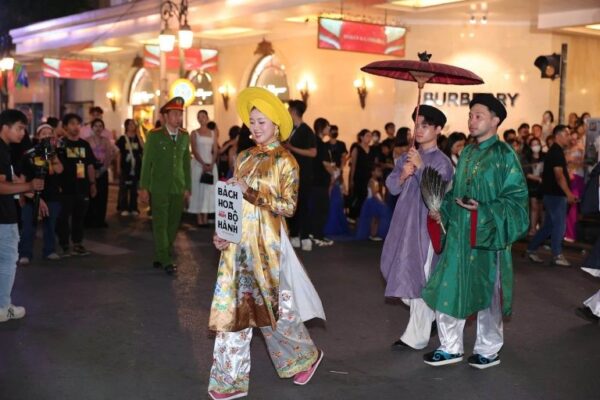
The event received strong response from the community.
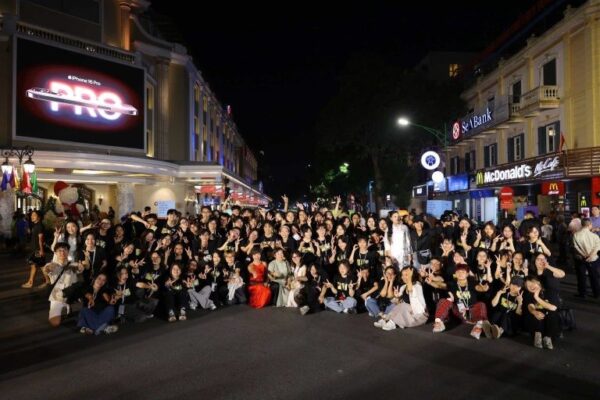
The festival received strong support from the community, with nearly 300 young volunteers assisting in organizing and guiding visitors.
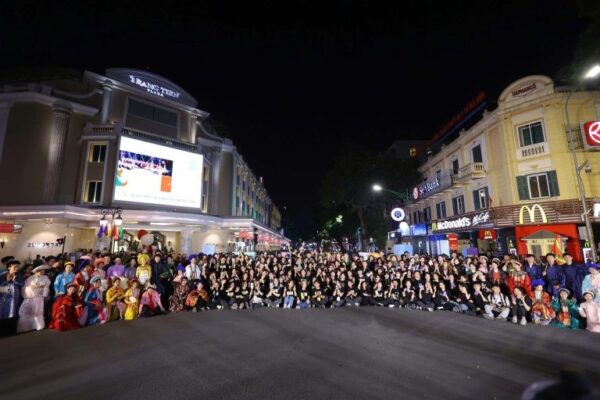
After nine days, the festival achieved unprecedented success, creating a lasting impression and garnering widespread support from residents and tourists. Over 300,000 visitors attended, with nearly 60,000 in a single day during the weekends. The public eagerly queued, excited to explore.
More than 200 journalists produced over 1,200 articles, promoting public engagement with culture and creativity. Social media saw over 2,000 content creators share multimedia products, guiding audiences on how to participate optimally and spreading pride in Hanoi. The official festival fan page posted 500 high-quality articles, reaching over 1 million public interactions.
With the three pillars of Design – Creativity – Community, at the Hanoi Creative Design Festival 2024, the community became the core of the Festival. They not only visited and experienced but also interacted and harmonized with the activities and events. From community activities, exhibitions, performances, to seminars and discussions, all attracted a large number of residents and tourists. In some activities, such as the Creative Parade, artists actively involved the community as part of the event, while community activities at the Hanoi Children’s Palace, flower gardens, and Trang Tien Street targeted the public and visitors. Business households and residents in Hoan Kiem District demonstrated the spirit of “hosts,” proactively supporting locals and tourists during their visits. Every individual participating was enthusiastic, interacted, voiced their opinions, and found creative joy at the Festival.
New Pilot Routes
The Festival not only piloted a creative economy experience route for the city’s future.
This year, the Festival enabled travel agencies to pilot the sale of “Creative Tours,” which recorded thousands of online payments daily.
The trial of technology applications allowing the public to choose and hire a “trip assistant” to design their tours also attracted the public, especially international tourists.
Creative experts also participated in piloting “curator tours,” “architect tours,” and “artist tours” to maximize audience’s information accessibility.
The pilot exhibition of Creative Design Ideas at the 93 Dinh Tien Hoang Exhibition House was well-received by the community. Ideas from individuals, businesses, and creative organizations across the country were displayed, turning the Exhibition into a platform for sharing and promoting the spirit of courageous creativity, while aiming to connect supportive resources (sponsors, potential investors…) to bring creative initiatives into real life.
These new features created uniqueness, increased the Festival’s appeal, and contributed to its success, suggesting various ways to exploit new service products, thereby promoting the development of Hanoi’s creative economy. These successful pilots also paved the way for preparing the launch of the Hanoi Creative Activities Coordination Center. Millions of joys have created a creative atmosphere filled with the capital city of Hanoi in recent days. Everyone dedicated their efforts, passion, and love to contributing to the success of the Festival, and more importantly, to realizing Hanoi’s initiatives as it joins the UNESCO Creative Cities Network.
© Architectural Journal