

Within the framework of the Thang Long – Hanoi Festival 2025, the Hanoi Department of Culture and Sports and the Vietnam Heritage Association organized an event to commemorate the 10th anniversary of the Tug-of-War Rituals and Games being inscribed on the Representative List of the Intangible Cultural Heritage of Humanity by UNESCO
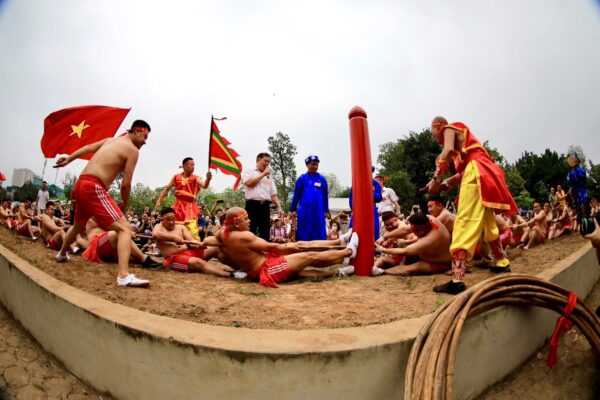
The commemorative program includes two main activities. The international seminar, A Decade of Safeguarding and Promoting the Tug-of-War Rituals and Games, brought together over 250 delegates from within the country and abroad, including representatives of international organizations and agencies, managers, researchers, experts, and heritage-holding communities from various localities such as Hanoi, Bac Ninh, Lao Cai, Phu Tho, Hung Yen, and Ninh Binh. This was an occasion to look back on ten years of preserving, transmitting, and promoting the heritage values, sharing experiences in cooperation, creativity, and safeguarding this multinational heritage.
Alongside the seminar was an exchange and performance program of the Tug-of-War Rituals and Games. The event featured the participation of the Gijisi Tug-of-War Association (Dangjin City, South Korea) and eight exemplary tug-of-war communities from Vietnam, alongside drum and lion dances performed by artists from Sehan University (South Korea).
Notably, within the program, the launch ceremony of the Vietnam Tug-of-War Heritage Community Network took place, marking a new development in the journey of connecting, promoting, preserving, and developing this precious intangible cultural heritage of the nation. The commemorative program will be held on November 15 and 16, 2025.
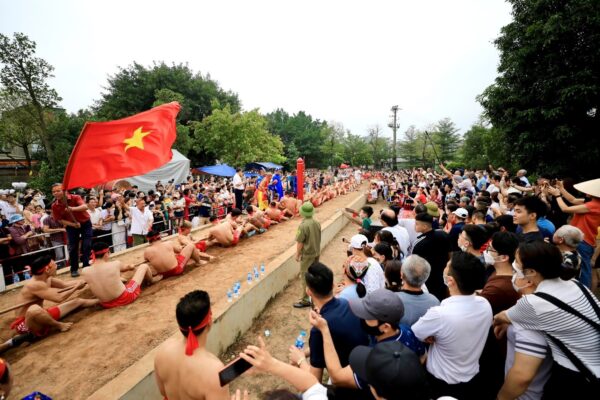
On December 2, 2015, at the 10th session of the Intergovernmental Committee for the Safeguarding of the Intangible Cultural Heritage (UNESCO) held in Windhoek, Namibia, the Tug-of-War Rituals and Games of Vietnam, Cambodia, South Korea, and the Philippines were officially recognized as representative intangible cultural heritage of humanity. The Vietnamese localities with inscribed heritage in 2015 included Lao Cai, Vinh Phuc, Bac Ninh, and Hanoi.
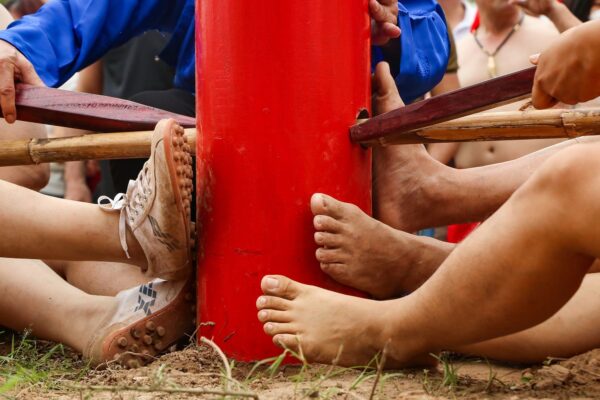
The Tug-of-War Rituals and Games are an ancient cultural practice, widespread in many Asian countries, especially in regions with developed agricultural civilizations. In Vietnam, this game exists in many regions, from the Red River Delta and North Central region to the northern mountainous areas, with diverse forms and names such as tug-of-war, seated tug-of-war, beak-pulling, double rope pulling, shoulder-fast, shoulder-matching, and na bai. Each region has its own organizing methods, types of ropes, and pulling postures, reflecting the creativity and unique identity of each community.
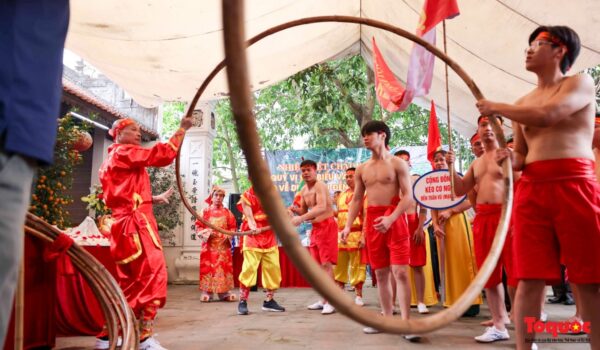
The recognition of the Tug-of-War Rituals and Games as representative intangible heritage of humanity not only brings pride to the localities but also raises social awareness of the importance of preserving and promoting the nation’s cultural ident.
Nhu Mai