

On the morning of December 5, at the Hanoi Department of Culture and Sports headquarters, the Hanoi Department of Culture and Sports collaborated with the Department of Tourism and the Women’s Union to organize the Conference “Evaluating Results of Building and Implementing the Model of Promoting Historical and Cultural Sites as Safe and Attractive Destinations”.
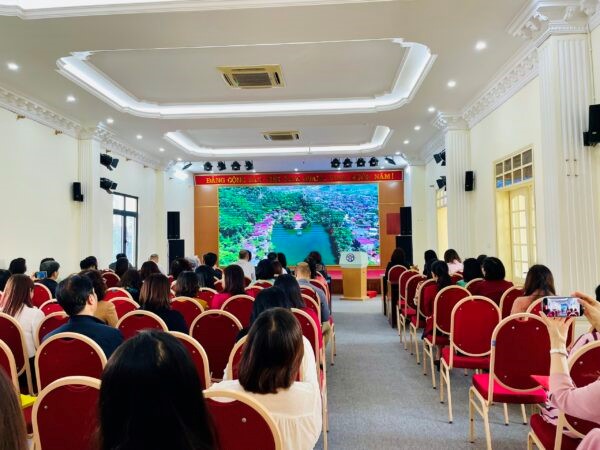
Conference scene
Attending the conference were distinguished delegates: Vi Thanh Hoai, Deputy Director of the Basic Culture Department (Ministry of Culture, Sports and Tourism); Hoang Thu Hong, Head of the Propaganda Department of the City Women’s Union; Tran Thi Van Anh, Deputy Director of the Hanoi Department of Culture and Sports; Tran Trung Hieu, Deputy Director of Hanoi Tourism Department; representatives from the Heritage Management Office, Cultural and Family Lifestyle Development Office, Hoa Lo Prison Management Board, Van Mieu – Quoc Tu Giam Cultural and Scientific Activities Center, Scenic Sites Management Board; heads of Culture and Information offices; Presidents of Women’s Unions; Deputy Chairpersons of commune-level People’s Committees where recognized sites are located; and representatives from recognized sites and destinations.
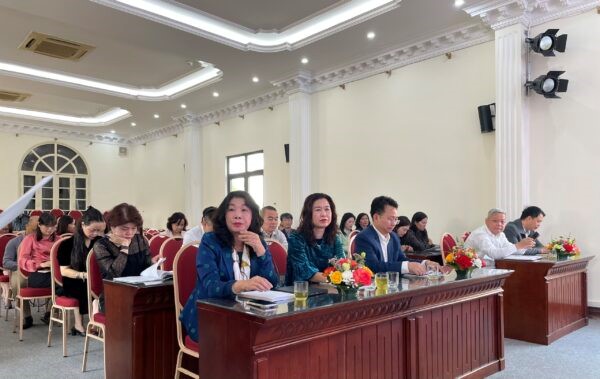
Conference delegates
Implementing the Public Conduct Code within the city, the Hanoi Women’s Union initiated the “Model Historical Landscapes/Historical Sites” model to develop civilized behavioral culture at scenic and historical sites, transforming them into attractive destinations. Recognizing women’s role and organizational responsibility in implementing the Public Conduct Code, cultivating refined and civilized Hanoi residents, and elevating awareness and behavior modification among capital city women, the Hanoi Women’s Union has been proactive since 2022. The organization advised the City People’s Committee to issue Plan No. 210/KH-UBND on August 5th, 2022, regarding women’s public conduct code promotion and mobilization, specifically operationalizing the plan through guidelines for deploying the “Model Historical Landscapes/Historical Sites” pilot model. The City Women’s Union selected five pilot sites: Ba Tam Temple-Pagoda Complex, Giong Temple, Bat Trang Pottery Village (Gia Lam district); Soc Temple, Giong Statue Monument (Soc Son district). Actively responding to the model, numerous organizational units and affiliated associations have independently researched and implemented the model across various locations: Co Loa Temple (Dong Anh District), Noi Binh Da Temple (Thanh Oai district); Hung Long Pagoda, Linh Quang Pagoda (Thanh Tri district); Hung Phuc Pagoda (Hoai Duc district); Doi Hoi Pagoda, To Hien Thanh Shrine (Dan Phuong district). Currently, 50 “Model Historical Landscapes/Historical Sites” models have been deployed across the city. These initiatives simultaneously guide organizational and individual behavioral attitudes, habits, and civilized interactions during tourism activities at historical sites, while constructing safe, attractive historical site images and contributing to preserving and developing the beautiful thousand-year traditions of the capital city.

Tran Trung Hieu, Deputy Director of Hanoi Department of Tourism, speaking at the Conference
According to Tran Trung Hieu, Deputy Director of Hanoi Department of Tourism, Hanoi currently has approximately 133 tourist attractions and sites. Implementing the 2017 Tourism Law, the City People’s Committee has recognized 50 tourism sites and zones at the city level, including 42 tourism sites and 8 tourism zones. Effective management and exploitation of these destinations have significantly contributed to the tourism sector’s robust growth. The projected number of tourists visiting Hanoi in 2024 is estimated at around 27 million visitors, a 9.2% increase from 2023, comprising 5.5 million international tourists (a 16.4% increase) and 21.5 million domestic tourists (a 7.5% increase). Total tourism revenue is expected to reach approximately 103.74 trillion Vietnamese dong, representing an 11.1% growth compared to 2023.
The Capital’s Tourism Sector continues to solidify its position, image, and brand both regionally and globally. In 2024, Hanoi was honored with awards for “Top Asian City Destination” and “Top Asian City Destination for Short Vacations”. Notably, 2024 marked Hanoi’s first victory in the “Top Cultural Destination in Vietnam” category, acknowledging the city’s cultural, historical, and traditional values – a repository of numerous tangible and intangible cultural heritages preserved and developed over centuries, making it an ideal destination for culture and history enthusiasts.
Tourism sites in Hanoi are highly rated by tourists for their resource value, cultural significance, and conservation efforts. The friendliness of local communities has left a profound impression on tourists, contributing to Hanoi’s image as a peaceful and hospitable destination. Several tourism sites have innovated night-time experiences, enhanced public-private partnerships, implemented destination management autonomy, invested in infrastructure, developed quality services, and applied information technology for electronic ticketing and promotional strategies on websites and social media. Standout examples include the National Special Historical Site Van Mieu – Quoc Tu Giam, Hoa Lo Prison Historical Site, the World Cultural Heritage Site of Thang Long Imperial Citadel, Hoan Kiem Lake Area and Hanoi Old Quarter (which is being guided to become a national tourism zone).

Tran Thi Van Anh, Deputy Director of Hanoi Department of Culture and Sports, speaking at the Conference
The conference heard numerous contributions from districts such as Bac Tu Liem, Cau Giay, and communes including Dong Anh, Gia Lam, and Me Linh. Delegates shared experiences and best practices in implementing and executing the model.



Delegates expressing opinions at the Conference
Bac Tu Liem District was the first locality in the city to implement the model, demonstrating numerous innovative initiatives during its implementation. The district boasts 133 historical sites, with 58 ranked as historical and cultural landmarks. Implementing the “Historical and Cultural Sites – Safe and Attractive Destinations” Conduct Code Model is a continuation of efforts to cultivate refined, civilized Hanoi residents and transform historical sites into safe, attractive destinations. This initiative contributes to preserving and promoting the noble cultural traditions of Hanoi in general and Bac Tu Liem District in particular.
The implementation process at the Ba Tam Temple-Pagoda Complex in Duong Xa Commune received strong leadership and guidance from the District Party Committee, District People’s Committee, Commune Party Committee, and Commune People’s Committee, along with widespread support from various sectors and local residents. In 2021 and 2022, the Women’s Union, together with Thuan Tien and Duong Xa villages, initiated mural paintings with diverse themes around the historical site. The Site Management Board, in collaboration with the Commune Women’s Union, deployed several models within the site, such as categorized trash bins with reminder slogans and recycled flower baskets made from used plastic containers, conveying environmental messages. Female officials and union members regularly clean and maintain the site. At the main gate, the Site Management Board installed and displayed “Public Conduct Code” signs to gradually establish cultural norms for individual visitors and businesses. The Commune Women’s Union assigned five members as site guides, supporting tour groups with site introductions when needed. During women’s holidays like March 8 and October 20, and during festivals and traditional celebrations, they organize cultural exchanges, ao dai photography contests, and activities celebrating the traditional dress at the historical site to propagate beautiful images to people from all corners.
Cau Giay District Women’s Union has three models: Women building model community groups, women participating in creating civilized markets at Dong Xa and Nghia Tan markets, and women contributing to developing model historical sites implementing public conduct rules. When implementing the model historical site project, they conducted meticulous reviews with high consensus from site management and local residents. All activities ensure the site’s dignity and value, with particular emphasis on maintaining environmental hygiene and guiding tourists.
In her concluding remarks, Tran Thi Van Anh, Deputy Director of Hanoi Department of Culture and Sports, acknowledged the achieved results in model implementation. She affirmed that the “Historical and Cultural Sites – Safe and Attractive Destinations” promotional model has yielded positive outcomes. The model plays a crucial role in preserving and promoting site and heritage values. Hanoi, with its thousands of years of history, is a culturally rich locality. Its 5,922 historical and cultural sites are testimonies that enrich the capital’s culture and preserve educational values for future generations. These sites represent a cultural industry resource unique to Hanoi – a tremendous asset unmatched by other localities. The city has implemented numerous proactive promotional models. However, propaganda and implementation must be continuous, innovative, attractive, practical, and integrative across various activities. “In the upcoming period, localities must organize comprehensive assessments, identifying strengths to promote and replicate, and weaknesses to address. We need exemplary models to share and expand, demonstrating the effectiveness of site value promotion. This also reflects the Capital’s Cultural Sector’s role in the new era – an era of development and growth for the capital and the nation,” emphasized Tran Thi Van Anh.
Minh Duc