
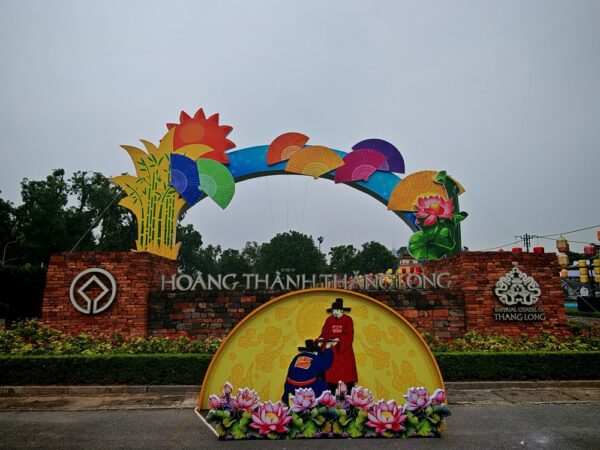
According to the Thang Long – Hanoi Heritage Conservation Center, Doan Ngo Festival (the 5th day of the 5th lunar month) was once celebrated by royal dynasties with solemn ceremonies and distinctive court rituals. Historical records state that during the Le Trung Hung period, Doan Ngo Festival was an occasion for the king and the royal family to offer tributes to their ancestors and parents. In the regular court ceremonies held at Can Chanh Palace, royal princes and civil and military mandarins of the fourth and fifth ranks all participated. The king sat on the dragon throne while his subjects offered congratulations. Notably, to emphasize loyalty and benevolence and to care for the people’s well-being, the king often composed poems on fans as advice. On this occasion, in addition to banquets, the king also bestowed fans – essential items during the hot season – to the mandarins.
Although Doan Ngo Festival customs differed between the royal court and the common people, both served as occasions for descendants to return to their roots and honor the merits of their ancestors.
Among the people, Doan Ngo Festival carries many unique customs, such as offering summer harvest products to ancestors, consuming foods believed to “eliminate pests” in the body, picking herbs to make medicinal teas, wearing five-colored amulets, dyeing fingernails and toenails with Mong leaves, wearing dau shirts, applying hung hoang wine on children, hanging zodiac figures from mugwort, and inspecting plants. These folk practices are closely linked to agriculture and weather patterns.
To preserve and promote the cultural values of traditional festivals, the Thang Long – Hanoi Heritage Conservation Center presents a series of activities on the occasion of Doan Ngo Festival and International Children’s Day on June 1.
The exhibition “Doan Ngo Festival – Past and Present” consists of two main themes: traditional folk Doan Ngo Festival and Doan Ngo Festival in the royal court during the Le Trung Hung period.
The traditional folk Doan Ngo Festival space (at Exhibition Area 19C, Hoang Thanh Thang Long) recreates distinctive customs such as ancestor worship, offering summer harvest products, “eliminating pests” with glutinous rice wine, boiled eggs, tro cakes, and ke sweet soup. Adults drink hung hoang wine or decoctions of bone tea herbs to detoxify, while children wear five-colored amulets and have strings tied around their wrists to ward off evil.
A highlight is the zodiac figure of the snake – representing the At Ty year – crafted from familiar leaves. This is a unique work of art and has become an impressive photo spot for visitors.
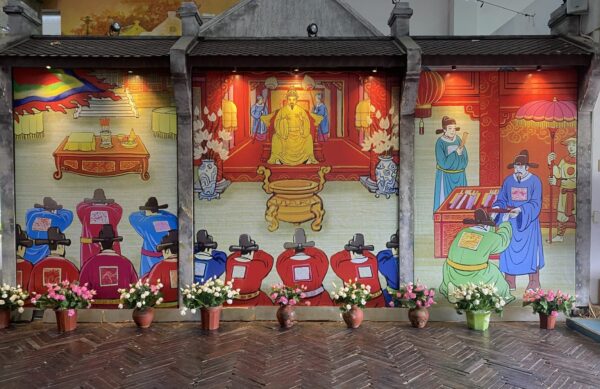
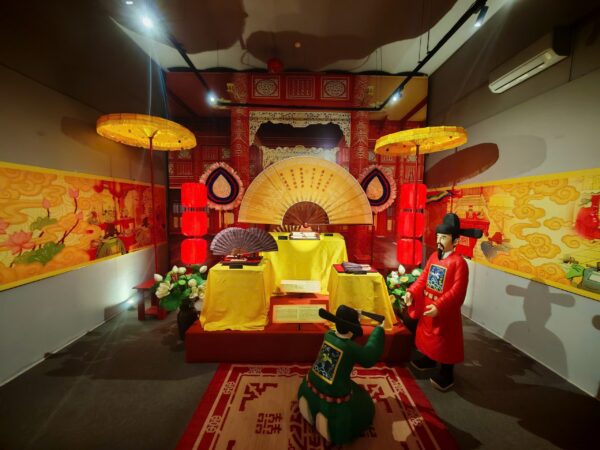
The royal court Doan Ngo Festival space during the Le period (at House N14 – Hoang Thanh Thang Long Heritage Site) is presented through paintings and reconstructed artifact models: ceremonies for ancestor worship, court audiences, fan bestowal, and banquet offerings are recreated using paintings based on historical documents. A model of a large fan inscribed with a poem is reconstructed to commemorate the event when King Le Hien Tong (1498-1504) composed poems on fans during Doan Ngo Festival to express his thoughts and concerns about governance and ruling the country.
To bring heritage closer to the community, create opportunities for public access to heritage, “heritage practice,” and preserve and promote intangible cultural values, the Thang Long – Hanoi Heritage Conservation Center collaborates with artisans to organize performance and interaction programs on themes such as calligraphy on fans and leaf art shaping. During the program, artisans will share valuable knowledge about calligraphy and leaf art, bringing understanding and joy to visitors and children.
V.H