
According to the Proposal, the Trade and Cultural Development Zone of the Bat Trang Ancient Village Ecological Museum covers a total area of approximately 300 hectares, located along the left bank of the Red River, and represents the largest traditional ceramics center in Viet Nam.
The core zone comprises 23 ancient houses, 16 ancestral houses, and a characteristic system of alleys, gates, brick walls, and moss-covered walls. This area serves as the primary space for heritage tourism and experiential activities. It is home to around 350 households with approximately 1,100 residents, most of whom are directly engaged in pottery production and community-based tourism.
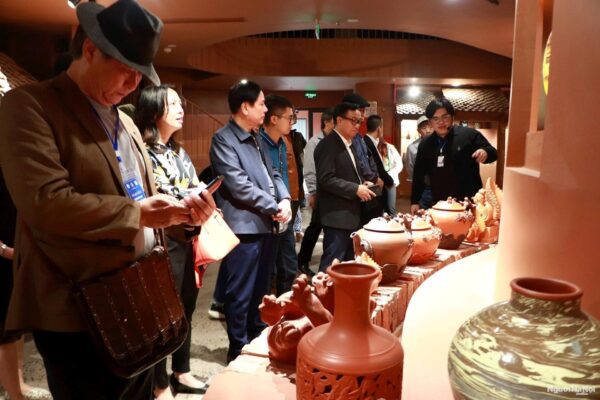
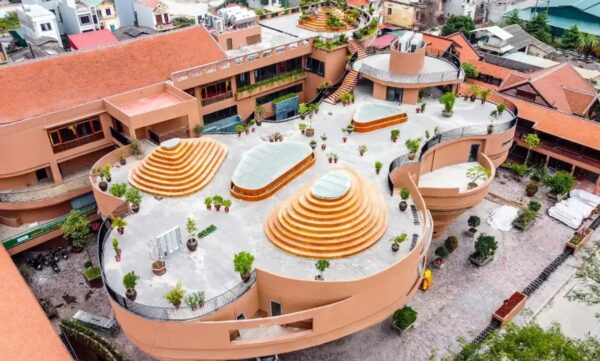
The buffer zone includes Bat Trang Hamlet 2, Giang Cao, the Vietnam Craft Village Quintessence Center, Kim Lan pottery village, a tourism port, a bridge across the Bac Hung Hai River, parking areas, and riverside routes along the Red River. This zone supports production, trade, and tourism, while also functioning as an ecological landscape and key infrastructure area. The population is approximately 650 households with 2,800 residents, engaged in production, business, trade, and services. The area features a pottery market with about 400 stalls, the Vietnam Craft Village Quintessence Center, and welcomes 200,000 – 300,000 visitors annually.
The area currently has three nationally recognized intangible cultural heritages, including Bat Trang pottery craft, the Bat Trang village festival, and Bat Trang ceremonial cuisine knowledge. It also contains four tangible cultural heritages ranked at the city level: Bat Trang Communal House, Kim Truc Pagoda, Bat Trang Van Chi, and Bat Trang Mother Goddess Temple. In addition, the village preserves 23 ancient houses and 16 ancestral houses built with Bat Trang bricks, along with approximately 30 heritage-value sites such as ancestral houses, scholarly family residences, representative traditional houses, houses from different historical periods, and community tourism sites.
In terms of customs and practices, notable traditions include intergenerational transmission of pottery skills within clans, worship of the craft ancestors, the Bat Trang village festival, the early-year “fire-seeking” ritual, village conventions dating back to the 17th century, and ancestor and craft-ancestor worship closely associated with community life.
The Bat Trang Commune People’s Committee proposes that the City approve the development of infrastructure-related components, including: transforming the riverside landscape into a riverside tourism street; exploiting the Bat Trang river tourism port to develop tourism activities; permitting the construction of the Bat Trang village gate, alley gates along tourism routes, and the installation of artworks in public spaces.
It also proposes simplifying administrative procedures related to licensing for artistic performances, exhibitions, and other cultural activities within the trade and cultural development zone.
Regarding the 1/500 detailed planning project for the conservation and development of the traditional craft village combined with tourism at Bat Trang pottery village, the commune requests that the City instruct the Department of Planning and Architecture and relevant units to accelerate the preparation, appraisal, and approval of the planning project.
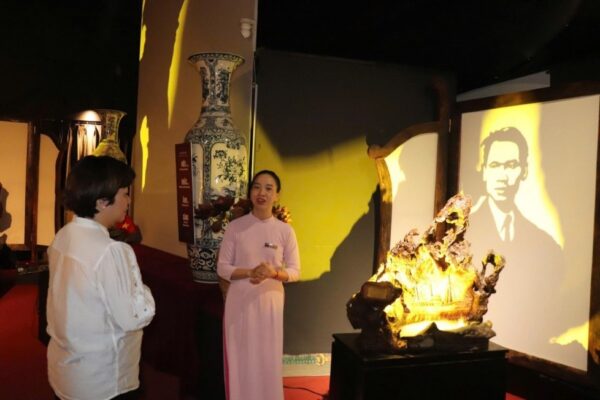
The Vietnam Craft Village Quintessence Center welcomes between 200,000 and 300,000 visitors each year.
The commune further proposes that the City allow research and investment in the Red River Riverside Road (width 21 – 23 m) in accordance with the master plan, from the foot of Thanh Tri Bridge (Long Bien Ward) to the former Bat Trang commune area, to ensure integrated transport connectivity and promote local economic and tourism development. It also requests approval for investment in the Red River Riverside Road and a bridge across the Bac Hung Hai River in Kim Lan and Van Duc areas (formerly), connecting Bat Trang Ancient Village with Kim Lan craft village to support local economic and tourism development.
Regarding the Bat Trang Tourism Port and Pier, the commune proposes that the City assign the Department of Construction to advise on, report, and develop management mechanisms, partnership models, and contractual arrangements to operate and effectively exploit the pier once the Proposal is implemented.
For the operation of electric vehicles within the Trade and Cultural Development Zone of the Bat Trang Ancient Village Ecological Museum, the commune requests that the City instruct the Department of Construction to advise on and grant permits for passenger transport services using electric vehicles in the area.
Speaking at the conference, Mr. Le Hong Son, Standing Vice Chairman of the Hanoi People’s Committee, acknowledged the efforts of the entire Bat Trang political system in implementing the Project from its initial stages, including cooperation with consulting groups and experts in research and surveys, formulation of the Proposal, organization of multiple seminars and workshops introducing the “Bat Trang Ancient Village Ecological Museum” model, and conferences to gather feedback on the Trade and Cultural Development Zone Proposal and the design of the riverside tourism street.
To ensure early implementation, the Standing Vice Chairman instructed Bat Trang commune to urgently complete the Proposal dossier and submit it to the City People’s Committee for approval at the earliest possible time, so that the Trade and Cultural Development Zone of the Bat Trang Ancient Village Ecological Museum can be implemented and put into operation soon.
Diep Anh