
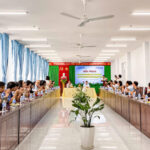
Receiving the delegation from the Hanoi Department of Culture and Sports were Mr. Vo Thanh Huy, Deputy Director of the Lam Dong Department of Culture, Sports and Tourism, along with representatives from the state management divisions and affiliated units of the Department.
On the side of the Hanoi Department of Culture and Sports were Mr. Pham Xuan Tai, Deputy Director of the Department, representatives of the leadership from divisions under the state management sector, affiliated public service units, and wards and communes with well-developed cultural industry models.
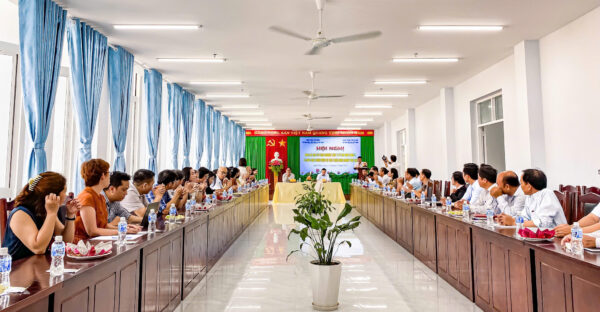
Overview of the working session
At the meeting, the delegation was briefed on the overall activities supporting the development of the cultural industry in the eastern region of Lam Dong. This was followed by presentations on promoting the effectiveness of cultural institutions managed by the Dak Nong Cultural Center and Geopark Management in connection with developing the cultural industry in Eastern Lam Dong; on management, training, and human resource development as well as communication and promotion in performing arts cultural industry models by the Lam Dong Art Theater; on management, training, human resource development, and mobilizing financial and human resources from organizations and enterprises to develop elite sports in Lam Dong by the Lam Dong Provincial Sports Training and Competition Center; and on inter-sectoral, regional, and international cooperation in promoting creative spaces for culture, tourism, and sports in Lam Dong by the Lam Dong Tourism Promotion Center.
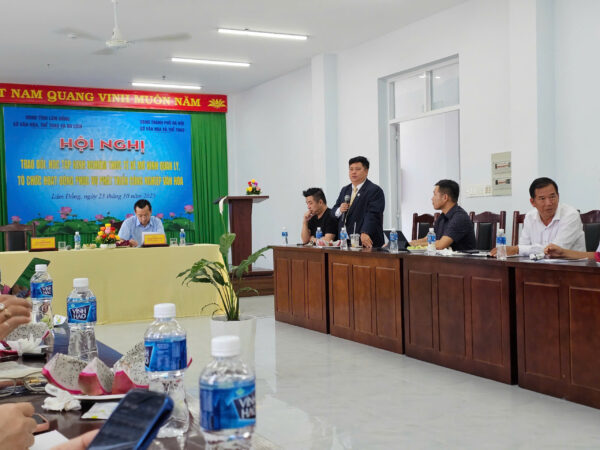
Director of the Mui Ne Antiquities Museum shares experience in developing the cultural industry
In the context of limited budget resources, mobilizing social resources is an inevitable approach for sustainable development of elite sports. In Lam Dong, businesses, social organizations, and sports enthusiasts mainly participate by coordinating and supporting the organization of tournaments and sports events. Through these activities, businesses promote their brands while contributing to the community’s spiritual life.
Sports federations and associations not only serve as a bridge between state management agencies, enterprises, and citizens but also directly coordinate the organization of grassroots tournaments, and at the same time, mobilize sponsorships for athletes and training equipment. This system has created a widespread socialization network, helping to reduce the budget burden, while increasing autonomy and social responsibility in sports development.
Identifying elite sports development along the lines of professionalism – sustainability – and deep socialization, Lam Dong Province is focusing on developing high-quality human resources. The province continues to plan, train, and foster coaches and athletes toward professionalism; build mechanisms encouraging long-term commitment and support for athletes after retirement; promote the exemplary and inspirational roles of outstanding coaches and athletes; while strengthening socialization and mobilizing businesses to accompany the sports sector.
In the field of performing arts, the Lam Dong Art Theater shared many experiences in management, training, and human resource development, while actively promoting and communicating cultural industry development models.
In recent years, the Theater has always attached importance to promotion and communication in developing performing arts cultural industry models. It has proactively sought new partners, expanded performance areas, increased revenue, and boosted marketing activities to introduce artistic products and promote its brand to organizers and audiences nationwide (through the unit’s media channels and social networks such as Facebook and YouTube). It has developed plans and organized art exchange performances through the “Quota Swap for Non-revenue Political Service” approach with other provincial art troupes across the country. This approach not only allows residents and visitors to enjoy new types of performances, enriching the public’s cultural experience, but also helps the Theater understand audience preferences, thereby promoting and marketing its programs to organize more diverse art forms.
In addition, the Theater regularly organizes street music performances at central venues and tourist areas to serve residents and visitors to the province, thereby attracting more tourists and contributing to local tourism promotion and socio-economic development.
The Theater also collaborates to sign contracts for performing arts services with agencies, units, enterprises, and event companies, providing opportunities for actors to rehearse and perform in art programs serving political events across provinces and cities nationwide under performance contracts. It has also cooperated with Seagull Company to produce the show “Legend of the Fishing Village”, regularly performed at the Ancient Fishing Village stage (in Mui Ne, formerly Binh Thuan Province), offering a tourism service product for visitors. Each show attracts an average audience of over 800 tourists, contributing to tourism and socio-economic development in the province.
At the same time, the unit actively explores the traditional folk-art heritage of ethnic groups in the province to create new cultural and artistic values. In addition to promoting its mainstream tradition of “Ethnic and Traditional Arts,” the Theater selectively absorbs artistic essences from around the world and maximizes other art forms to build more diverse and content-rich performance programs. This helps the Theater reach a wider audience and effectively meet the needs of political performance tasks and its partners’ requirements.
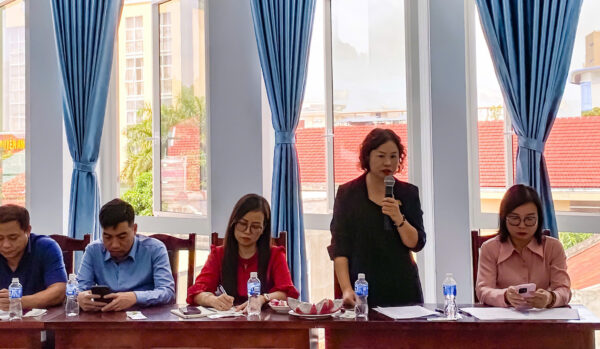
Ms. Pham Thi Lan Anh, Head of the Heritage Management Division, Hanoi Department of Culture and Sports, shares experiences in developing cultural industry models in Hanoi.
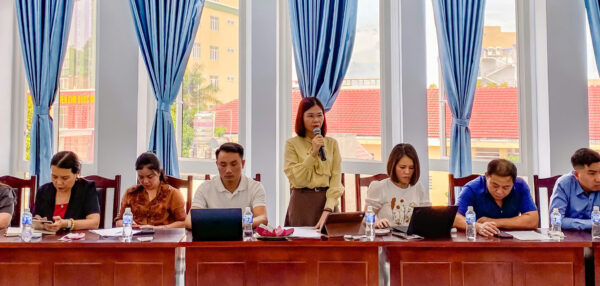
Ms. Tran Thi Hai, Head of the Socio-Cultural Division of Bat Trang Commune, shares experiences in developing the cultural industry in Bat Trang Pottery Village.
At the working session, Ms. Pham Thi Lan Anh, Head of the Heritage Management Division, Hanoi Department of Culture and Sports, shared experiences in building cultural industry development models in Hanoi. Ms. Tran Thi Hai, Head of the Socio-Cultural Division of Bat Trang Commune, shared experiences in developing the cultural industry in Bat Trang Pottery Village.
Mai Quyen