
With the aim of honoring Hanoi’s culinary culture, transforming cuisine into an attractive cultural tourism product, and contributing to the development of the Capital’s cultural industry, from December 19 to 21, the Hanoi Department of Culture and Sports will organize the Hanoi Food and Culture Festival 2025 under the theme “Hanoi – A Culinary Journey Connecting Creativity” at Thong Nhat Park. This year’s festival features many new and appealing elements and is expected to stimulate tourism in the Capital toward the end of the year.
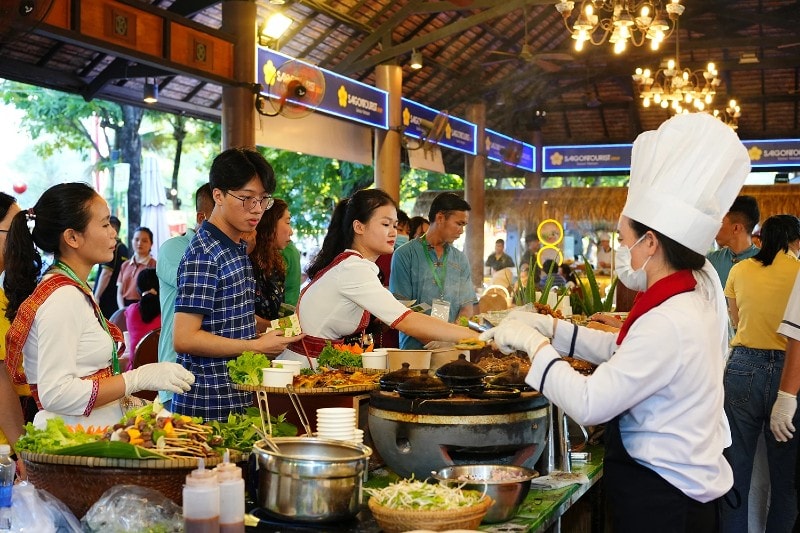
The Hanoi Food and Culture Festival 2025 takes place from December 19 to 21. Photo: M.H
A Resource for Cultural Industry Development
The Hanoi Food and Culture Festival is an annual event assigned by the Hanoi People’s Committee to the Department of Culture and Sports, in coordination with relevant units. Notably, since 2022, the Hanoi Party Committee has issued Resolution No. 09-NQ/TU dated February 22, 2022, on developing the Capital’s cultural industry for the period 2021-2025, with orientation toward 2030 and a vision to 2045, in which cuisine is identified as one of the key fields contributing to the development of the city’s cultural industry.
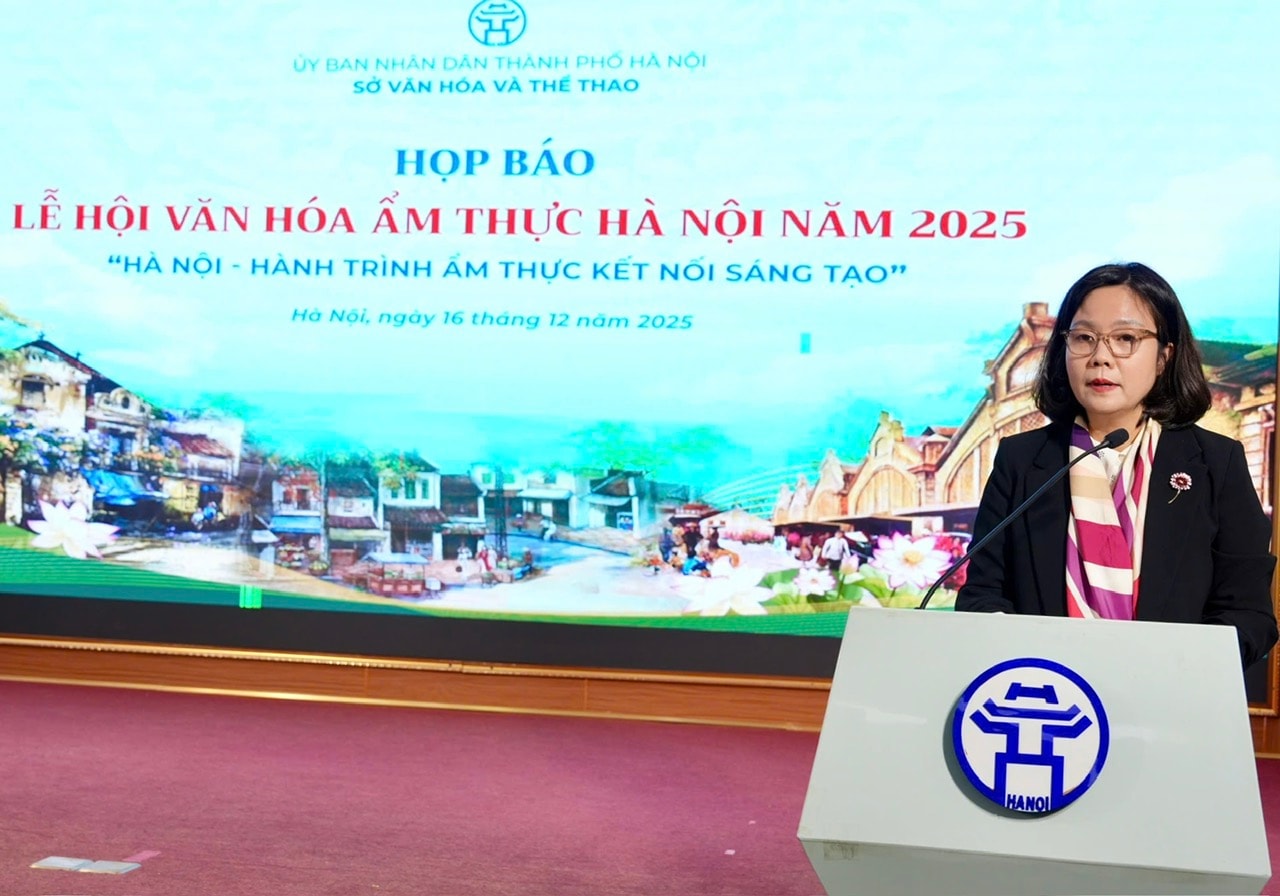
Le Thi Anh Mai, Deputy Director of the Hanoi Department of Culture and Sports, delivers remarks. Photo: H.L
According to Ms. Le Thi Anh Mai, from the traditional 36 streets of Hanoi to an expanded Hanoi following administrative boundary adjustments, infused with the essence of Xu Doai culture, Hanoi’s culture in general and its cuisine in particular have become increasingly rich and diverse. Since 2014, the city has conducted inventories of intangible cultural heritage, through which hundreds of culinary heritages have been identified and included in the city’s heritage list.
“The inscription of intangible cultural heritage on the national list is not only an act of honoring heritage values, but also an effective solution to safeguard, promote, and transform heritage into assets and sustainable resources for cultural industry development, thereby contributing to improved local livelihoods,” Ms. Mai emphasized.
According to the Hanoi Department of Culture and Sports, to date, Hanoi has seven culinary heritages inscribed on the National Intangible Cultural Heritage List, including: Hanoi pho; Me Tri green rice making (Tu Liem Ward); Quang An lotus tea making (Tay Ho Ward); Phu Thuong sticky rice making (Phu Thuong Ward); Thanh Tri steamed rice rolls (Vinh Hung Ward); and the knowledge of preparing ceremonial feasts in Bat Trang (Bat Trang Commune).
At the opening ceremony on the evening of December 19, the Organizing Committee will announce the decision of the Ministry of Culture, Sports and Tourism to inscribe “The Knowledge of Preparing and Enjoying Cha Ca La Vong (Hanoi City)” on the National Intangible Cultural Heritage List. On this occasion, residents and visitors will meet members of the Doan family lineage and hear the story of six generations who have preserved this iconic dish deeply embedded in the collective memory of Hanoians.
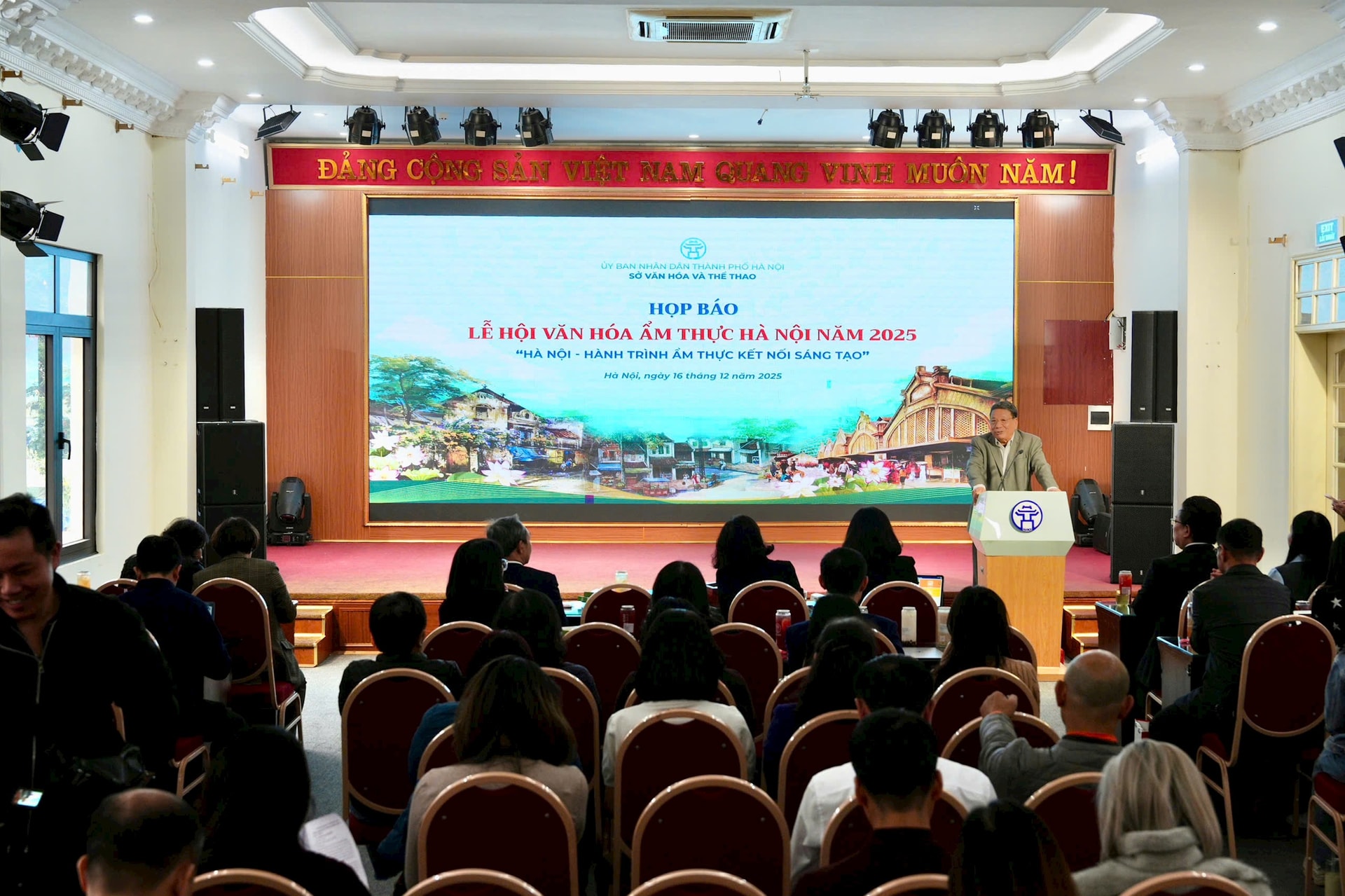
Press conference on the Hanoi Food and Culture Festival 2025. Photo: H.L
Assessing the potential of culinary heritage in cultural industry development, Dang Van Bai, Vice Chairman of the National Council for Cultural Heritage, stated that 81% of tourists are willing to spend money to experience a destination’s culinary culture. This demonstrates that cuisine is not only a cultural resource but also a unique tourism product, playing an important role in promoting Hanoi’s cultural industry and shaping national cultural identity.
The Appeal of Hanoi Cuisine
According to the Organizing Committee, the Hanoi Food and Culture Festival 2025 not only offers a creative cultural space to honor the quintessence of Hanoi cuisine, but also serves as a platform for culinary artisans to tell their stories and connect with the younger generation. The festival features a wide range of activities, with 60 culinary spaces introducing Hanoi cuisine and regional food products, enabling visitors and residents of the Capital to enjoy numerous distinctive dishes from Hanoi and other localities, honoring traditional culinary heritage values and affirming the “Hanoi Cuisine” brand associated with elegance and refinement.
According to Pham Thi Lan Anh, Head of the Heritage Management Division (Hanoi Department of Culture and Sports), in addition to exhibition and cultural display spaces, the festival also includes a thematic seminar titled “Exchange on Enhancing Human Resource Quality – Developing Culinary Culture.” Within the festival framework, there will also be many artisan performances and quick competitions among students from various schools in the field of culinary preparation.
Visitors to the festival will also enjoy a variety of artistic performances such as circus acts, chau van singing, xam singing, street performances, and art forms combining tradition and modernity; a photo exhibition featuring 40-50 works promoting Vietnamese culture, tourism, and cuisine; a mobile book exhibition introducing 200 titles on culture, arts, tourism, and cuisine; and live demonstrations of culinary heritage including making banh chung, preparing Bat Trang ceremonial feasts, scenting West Lake lotus tea, the green rice-making process, cooking Phu Thuong sticky rice, cold snail noodle soup, making candied fruits and jams, and cooking “chao se.”
Providing information on new highlights of the Hanoi Food and Culture Festival 2025, Shimamura Masafumi, Marketing Director of Acecook Vietnam Joint Stock Company, said that a key highlight is the check-in space titled “A Thousand Words of Pride,” where residents and visitors can share their messages and pride in Vietnamese pho.
“We believe that when everyone contributes a word of pride, pho will not only be a familiar dish, but will become a shared source of pride, collectively preserved and spread to the world,” Mr. Shimamura Masafumi shared.
With many new highlights, the Hanoi Food and Culture Festival 2025 is expected to become a culturally rich weekend destination. Creative connection activities will help enhance the attractiveness of heritage, enabling cuisine to become a driving resource for the development of the Capital’s cultural industry.
– In implementing Resolution 09 of the Hanoi Party Committee, the city is piloting mechanisms and policies to transform cuisine into a cultural industry in line with UNESCO’s perspective. Accordingly, the festival aims toward a “State – Enterprise – Community” linkage model, taking culinary heritage as its foundation and promoting creativity alongside preservation, thereby creating sustainable livelihoods for the community and making practical contributions to the Capital’s socio-economic development.
– Acecook Vietnam is the official partner in protecting and promoting the value of pho culinary heritage and developing Hanoi’s cultural industry.
According to: https://hanoimoi.vn/le-hoi-van-hoa-am-thuc-ha-noi-nam-2025-ton-vinh-tinh-hoa-van-hoa-ha-noi-727057.html?gidzl=fyRe3ZkH6Nwfs-uDDOWSSA_KwG0hr1Xqvz7i1tc26NQsq-a49OSRTRRJwWDwWnXmuTFlKJcgPCP4F94OUW