
Local communities have the right to supervise monument restoration and are consulted for their opinions
The Ministry of Culture, Sports and Tourism stated that the above-mentioned Circular applies to Vietnamese organizations and individuals, as well as foreign organizations and individuals, when conducting activities related to the conservation, restoration, and rehabilitation of monuments (hereafter referred to as “monument restoration construction”); and to the preparation of cost estimates and project budgets for conservation, restoration, and rehabilitation projects on the territory of Vietnam.
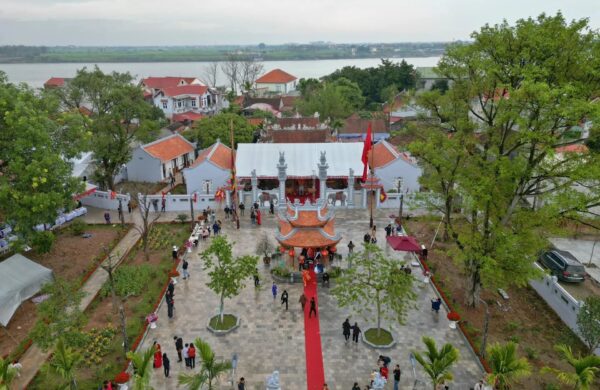
Thinh Thon National Historical and Cultural Monument (Cam Thuong Commune, Ba Vi District, Hanoi) after restoration and refurbishment.
The Circular detailing certain provisions on the conservation, restoration, and rehabilitation of monuments; and the economic-technical norms for these activities aims to specify certain articles of the 2024 Cultural Heritage Law, including: detailed regulations of Clause 1, Article 35 on economic-technical norms for monument conservation, restoration, and rehabilitation (hereafter referred to as “economic-technical norms for monument restoration”) and detailed regulations of Point d, Clause 2, Article 35 on monument conservation, restoration, and rehabilitation.
The economic-technical norms for monument restoration define the consumption levels of materials, labor, construction machinery, and other equipment required to complete a unit of restoration work, from preparation to the completion of a monument restoration project, for use in production, construction, or project cost estimation. Monument disassembly refers to the activity of removing all or certain components and architectural elements of a monument for conservation or restoration purposes while preserving the integrity of these components and elements to the maximum extent.
The Circular also emphasizes that traditional construction techniques refer to methods previously used to build the monument. Technical standards for monument restoration are the fundamental principles, standards, and technical requirements that must be observed in the design and execution of restoration works.
Regarding monument restoration, the Circular on detailed regulations for monument conservation, restoration, and rehabilitation and economic-technical norms requires that restoration activities comply with five key principles:
First, adhere to the approved construction drawings for conservation, restoration, and rehabilitation, or to the approved conservation design drawings; comply with regulations on quality management, progress, construction volume, security, labor safety, and other relevant laws. Second, prioritize traditional construction methods, apply traditional technical processes, and preserve original elements of the monument, protecting components and architectural elements throughout the restoration process.
Third, conduct work under the supervision of local communities; regularly consult witnesses, experts, artisans, and the local community where the monument is located. Fourth, in cases of adjustments to restoration design drawings, the project owner must consider adjusting the restoration timeline to ensure the quality of the project. Fifth, fully record all activities performed on-site in the Construction Diary and Final Project Documentation.
Strengthening the Responsibility of Monument Restoration Project Owners
The Circular specifies preparation for monument restoration, requiring the project owner to coordinate with the restoration organization and the local commune People’s Committee to agree on the protection plan and implementation schedule; organize public awareness activities for local residents and skilled artisans participating in the restoration regarding the value, objectives, scope, and content of the project.
The project owner is responsible for coordinating with the restoration organization to receive the site for the project; organize the construction site to meet security and safety requirements; build protective structures and storage houses for components (if disassembly is required); and implement measures to protect artifacts. The project owner must also establish principles, procedures, and technical contingency solutions for preserving components and architectural elements in case of disassembly, and prepare materials, labor, equipment, and other related work.
During restoration, the project owner establishes a Monument Evaluation Council and issues its working regulations. The Council consists of the project owner, representatives of organizations involved in project planning, restoration design, construction, supervision, community investment monitoring, the Department of Culture, Sports and Tourism, and other relevant specialists.
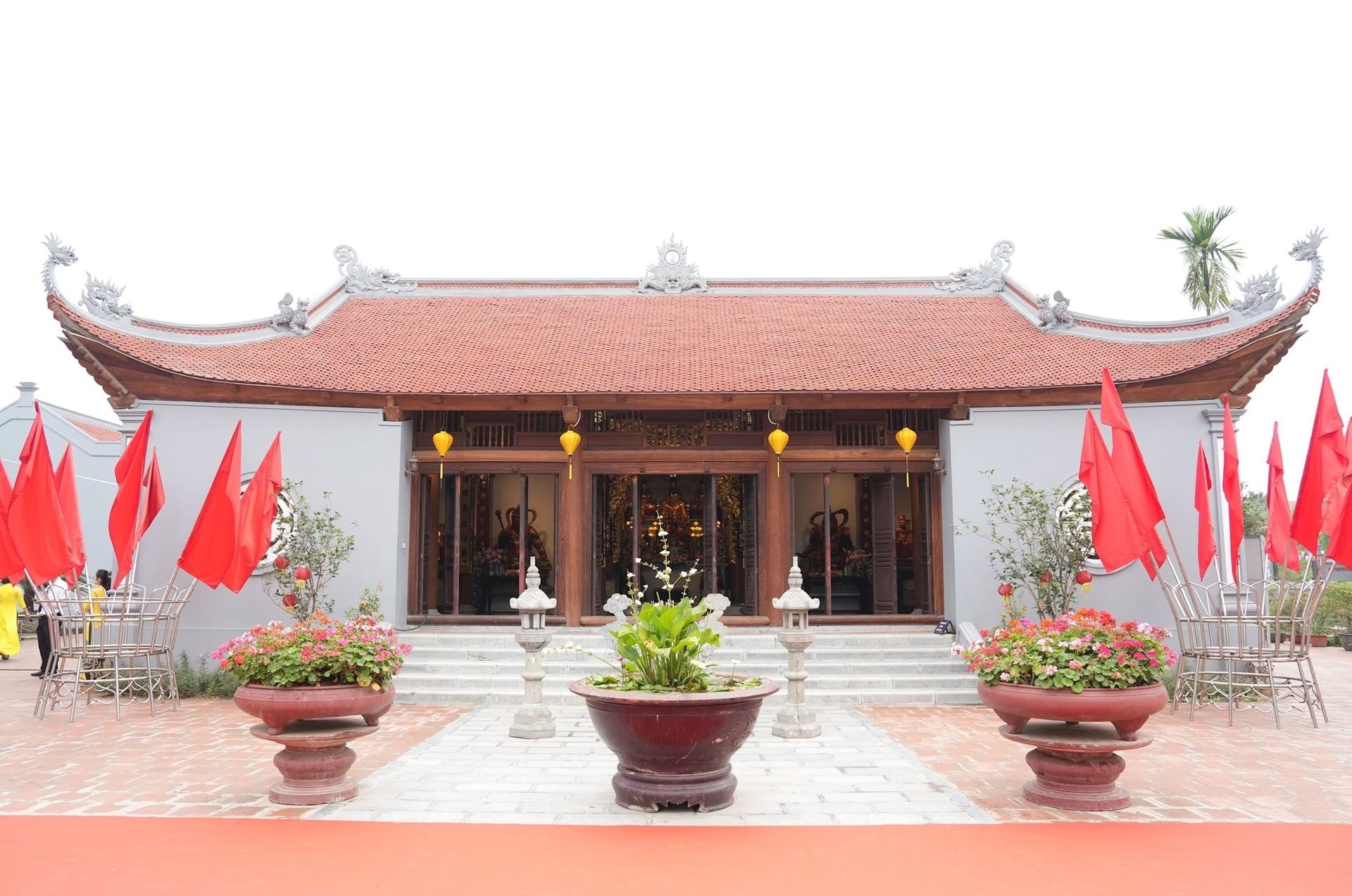
Tinh Quang Pagoda, a Historical and Architectural – Artistic Relic in Giang Bien Ward, Long Bien District, just completed its renovation and restoration in April 2025. This pagoda embodies great historical value, architectural art, and the cultural imprint of Vietnamese Buddhism
If adjustments or additions to the restoration design are required, the project owner coordinates with the Department of Culture, Sports and Tourism and the relevant authorities to classify, select, and preserve components with historical value that are severely deteriorated and cannot be reused, ensuring they are preserved and displayed at the monument or a state museum. The project owner also coordinates with the restoration organization and relevant entities for acceptance, handover, and putting the monument into use according to construction law regulations.
The Circular also regulates restoration work in cases where components are not disassembled or partially disassembled, requiring coverage of the areas under restoration for safety. Components and architectural elements must be marked on drawings and physically labeled, with marking methods not affecting the characteristics or value of the elements, protected throughout restoration, and easily removable afterward. Photographs and recordings must be taken after marking.
The project owner coordinates with the Monument Evaluation Council to inspect, assess the technical condition of components and elements, and determine specific treatment solutions. Restoration work must follow the approved restoration design, Council minutes, or approved adjusted designs.
Quynh Chi