
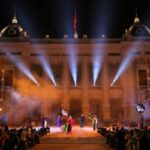
On the evening of November 9, the Hanoi Creative Design Festival 2024 officially commenced at the August Revolution Square. The event, directed by the Hanoi People’s Committee, was jointly organized by the Hanoi Department of Culture and Sports, the Architectural Journal, and other collaborating units. This festival is a key activity in Hanoi’s collaboration with UNESCO to promote the city’s status as a Creative City. This marks the fourth time Hanoi has hosted the festival.
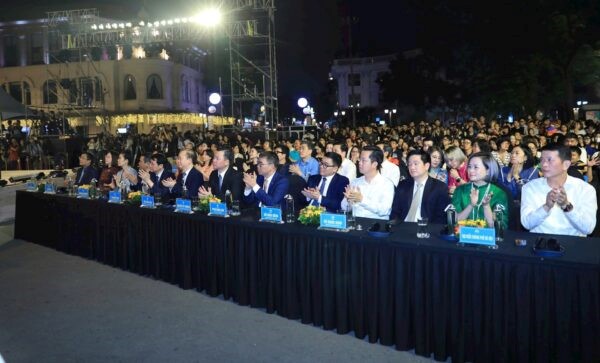
Distinguished guests attend the ceremony.
Photo: Quang Thai
The opening ceremony was attended by several prominent figures, including: Nguyen Minh Vu, Alternate Member of the Party Central Committee and Permanent Deputy Minister of Foreign Affairs; Hoang Dao Cuong, Deputy Minister of Culture, Sports, and Tourism; Pham Qui Tien, Vice Chairman of the Hanoi People’s Council; Vu Thu Ha, Vice Chairwoman of the Hanoi People’s Committee; Dr. Architect Phan Dang Son, Chairman of the Vietnam Association of Architects; Do Dinh Hong, Director of the Hanoi Department of Culture and Sports; Tran Thi Van Anh, Deputy Director of the Hanoi Department of Culture and Sports; Nguyen Sy Truong, Permanent Vice Chairman of the Vietnam Fatherland Front Committee in Hanoi; Jonathan Wallace Baker, Head of the UNESCO Office in Vietnam; Pauline Tamasis, United Nations Resident Coordinator in Vietnam; Also in attendance were ambassadors, heads of diplomatic missions, international organizations, scientists, creators, as well as a large number of citizens and visitors.
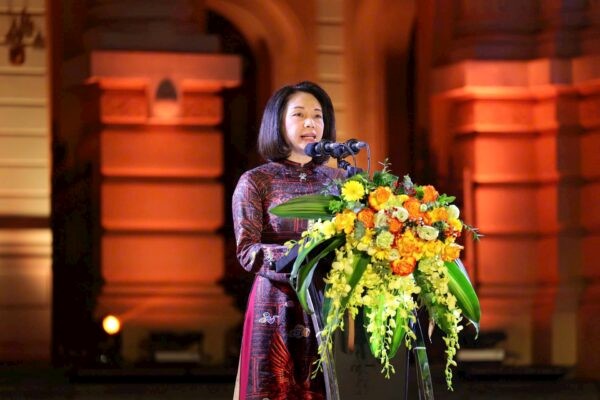
Vice Chairwoman of the Hanoi People’s Committee Vu Thu Ha delivers opening remarks.
Photo: Organizing Committee
In her opening speech, Vu Thu Ha, Vice Chairwoman of the Hanoi People’s Committee, highlighted that the capital had recently commemorated significant milestones: the 70th Anniversary of Hanoi’s Liberation (October 10, 1954 – October 10, 2024), the 25th Anniversary of Hanoi’s recognition as a UNESCO City for Peace, and the 5th Anniversary of its designation as a Creative City. She emphasized that these commemorative activities celebrated the heroic history of the Vietnamese nation, particularly the contributions of Hanoi’s people and armed forces. They also reaffirmed the city’s determination to harness all resources to build a “Civilized, Cultured, and Modern Capital” with global connectivity. Since joining UNESCO’s Creative Cities Network nearly five years ago, Hanoi has implemented numerous initiatives to honor its commitments, gradually solidifying its position as one of Asia’s most dynamic and creative capitals. The city has actively promoted creative design activities and strengthened cooperative opportunities with other cities in the network.
In 2024, the city established a Council of Expert Advisors, created innovative spaces, and developed criteria for such spaces to foster creativity. Preparations are underway for the launch of the Hanoi Creative Activities Coordination Center, which aims to connect organizations, individuals, experts, artists, and community groups in the creative design sector. This initiative seeks to attract and integrate local and international creative resources, introduce and share pilot projects for new ideas, and lay the groundwork for a talent incubator in creative design fields.
The theme “Creative Crossroads” will be showcased along seven iconic historical heritage sites in Hanoi, featuring over 100 creative activities across 12 cultural industries, including architecture, design, visual arts, performance, film, advertising, handicrafts, and publishing. The festival also provides a platform for more than 500 entities, creators, architects, artisans, and particularly young artists from various design sectors to unleash their creativity, bringing innovative ideas and tangible benefits to local communities.
“‘Creative Crossroads’ not only offers a roadmap for Hanoi’s future creative economy but also highlights the city’s creative potential. It fosters connections, awakens the creative spirit of Hanoi’s generations, and showcases the city as a hub of innovation and cultural dynamism,” emphasized Vu Thu Ha, Vice Chairwoman of the Hanoi People’s Committee.
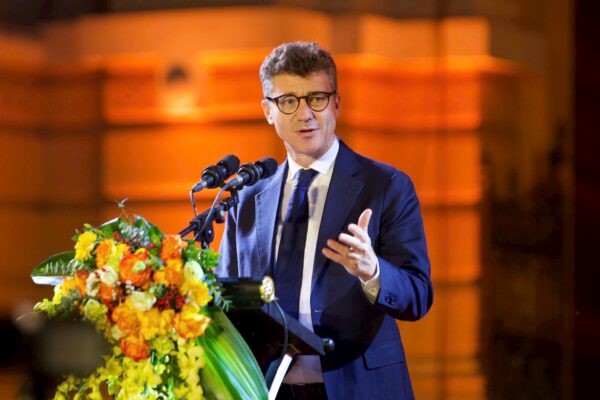
Mr. Jonathan Wallace Baker, Chief of UNESCO Representative Office in Vietnam spoke at the ceremony.
Photo: Organizing Committee
Speaking at the event, Jonathan Wallace Baker, Chief of UNESCO Representative Office, praised Hanoi’s efforts in establishing its brand as a “Creative City.” He remarked, “In recent years, Hanoi has played a pivotal role in Vietnam’s collaboration with UNESCO. Five years ago, Hanoi joined UNESCO’s Creative Cities Network, underscoring its remarkable creative potential. I deeply appreciate Hanoi’s dedication to hosting innovative activities that honor cultural heritage while fostering the young creative community in Vietnam.” He highlighted the Hanoi Creative Design Festival as a prime example of the city’s progress in realizing its vision of becoming Vietnam’s leading Creative City and a regional innovation hub. The festival theme, “Creative Crossroads,” underscores how Hanoi’s talents converge to amplify the creative spirit. During this special week in November, public exhibitions, workshops, panel discussions, art performances, and numerous activities across the city offer fresh perspectives on how creativity and innovation can reshape familiar environments. The festival not only celebrates the power of creativity but also provides a unique opportunity for residents and visitors to come together and honor these achievements. The festival serves as a bridge between Hanoi’s significant architectural landmarks and the everyday lives of its people, bringing history closer to the community in innovative and meaningful ways.
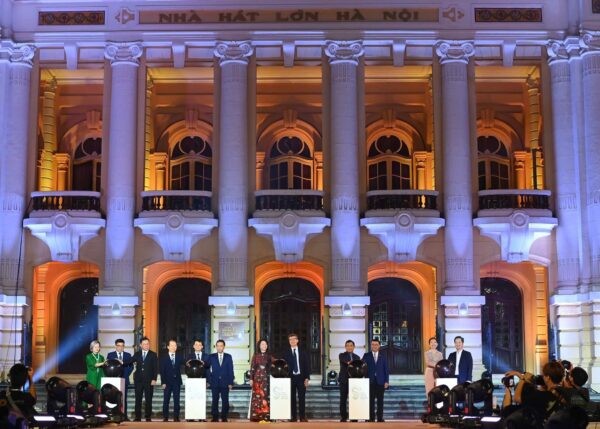
Delegates press button to open the festival.
Photo: Organizing Committee
The Hanoi Creative Design Festival 2024, themed “Creative Crossroads,” takes place from November 9 to 17, 2024. The festival attracts over 500 entities, creators, architects, artisans, and especially young artists from various design fields. Spanning seven iconic historical heritage sites in Hanoi, the festival features more than 100 creative activities across 12 cultural industries, including architecture, design, visual arts, performance, film, advertising, handicrafts, and publishing. Residents and visitors can explore creative spaces along the route from August Revolution Square, through Ly Thai To and Le Thanh Tong Streets, to the Bac Co Slope – Trang Tien Street axis. Notable heritage sites along the route include Hanoi Children’s Palace, the National Museum of History, Vietnam National University (formerly Hanoi University), and cultural spaces around Hoan Kiem Lake, Ly Thai To Statue Garden, Dien Hong Garden, Co Tan Garden, 19/8 Garden, and Tao Dan Garden.
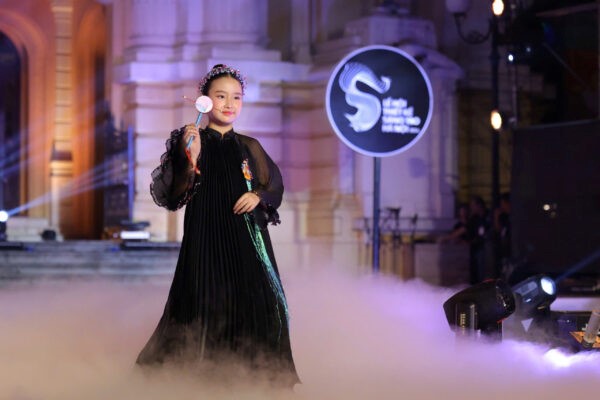
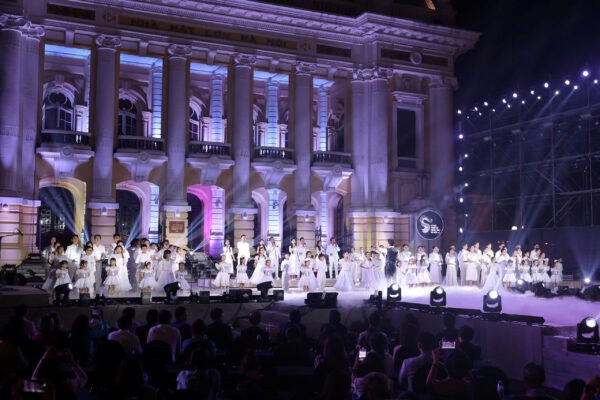
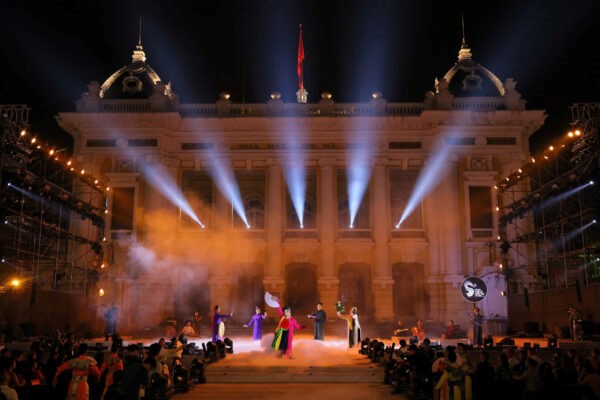
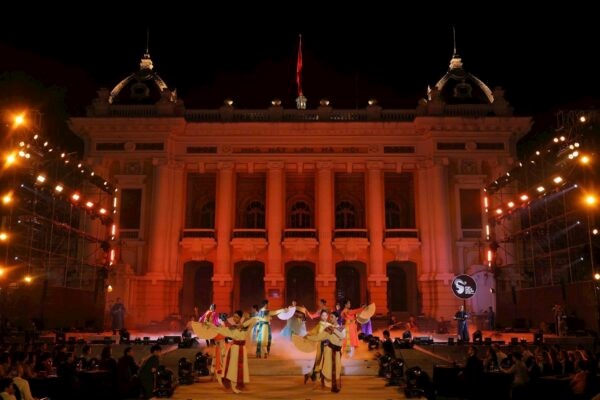
Art Performances highlight the festival.
Photo: Organizing Committee
At the Hanoi Children’s Palace, more than 40 activities will take place, including exhibitions, film screenings, architectural installations, and performances.
At Vietnam National University (formerly General University), the interactive art exhibition “Indochine Sensation” will showcase over 20 unique interactive artworks.
The festival also includes three signature pavilion installations: “Innocent Corridor” at Hanoi Children’s Palace; “Flow” at Dien Hong Garden and the former Northern Governor’s Office; “The Dragon and Snake Rise” at the National Museum of History
These iconic installations are designed to interact with Hanoi’s heritage sites, connecting creativity with the past and harmonizing tradition with modernity. For the first time, visitors can explore renowned architectural landmarks like the Vietnam National Museum of History, the former Northern Governor’s Office, and Hanoi University as part of the festival.
The festival will feature over 20 workshops and discussions on topics such as design, art, film, photography, fashion, technology, and publishing. A key highlight is the collaboration with travel agencies to design cultural tourism tours that integrate festival activities, bringing visitors closer to Hanoi’s unique cultural heritage and architectural landmarks.
In addition, residents and tourists can enjoy exhibitions, street art performances, and ao dai parades along Trang Tien Street and at Exhibition House (45 Trang Tien Street). Traditional art performances will also be held at the Workers’ Theater and other venues.
From November 9 to 17, activities to celebrate and support the festival will take place in all 30 districts, towns, and suburbs of Hanoi. These activities aim to connect creativity with cultural traditions and promote the development of Hanoi’s cultural and creative industries.
Minh Duc