
The Ministry of Culture, Sports and Tourism has issued Official Dispatch No. 6358/BVHTTDL-DSVH regarding the appraisal of the task to formulate the master plan for the preservation, restoration, and conservation of the Hat Mon Special National Historical Site, Hat Mon Commune, Ha Noi City.
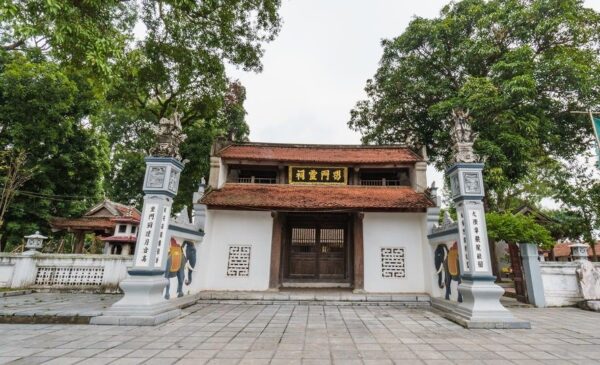
The planning approach must be aligned with the specific characteristics of the site, emphasizing dynamic conservation to comprehensively safeguard and promote its values; innovation and the application of technology to develop cultural products that enhance the site’s value; and ensuring consistency, harmony, and connectivity with related master plans.
The objective is to contribute to the major goals set out in the National Target Program on Cultural Development for the 2025-2035 period, Phase I from 2025 to 2030, including Task Group No. 4 on the preservation and promotion of national cultural heritage values.
Based on the site’s tangible and intangible values, it is necessary to establish appropriate spatial arrangements and develop essential facilities to support the promotion of the site’s values; to clearly define the cultural heritage space of the Hat Mon Temple Festival, its main ceremonial routes, regional linkages, and connections to tourism points and routes. This will serve as a basis for proposing expansion areas while avoiding negative impacts on the environmental landscape or spatial encroachment that could diminish the site’s value. In addition, the relationship between the Hat River and the expanded heritage space should be analyzed.
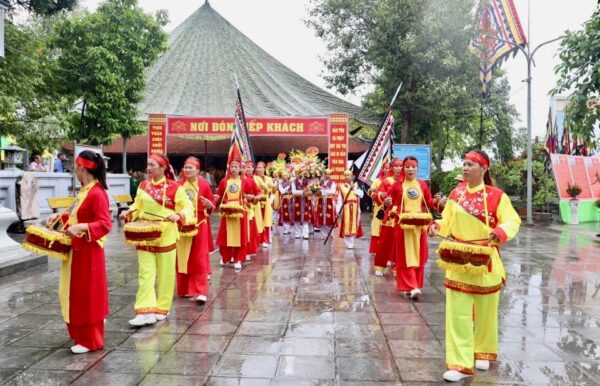
The assessment of the current conditions within the planning area must accurately and comprehensively evaluate the site’s distinctive features and outstanding values, including: historical value associated with the first uprising against Northern domination initiated by Hai Ba Trung; cultural value, exemplified by traditional festivals linked to the worship of national female heroes; and architectural and artistic value, reflected in a rich collection of artifacts and antiquities diverse in type, material, and tourism resource value. The planning task should also include a survey report on the site’s current condition, clarifying the overall landscape space, its relationship with neighboring sites, component monuments, artifacts and antiquities, as well as a general assessment of technical condition and conservation status, serving as a basis for proposing orientations and solutions for preservation, restoration, and conservation in the subsequent master plan.
Furthermore, appropriate solution orientations are required, covering: conservation of the site’s values; protection of the environmental landscape; preservation of intangible cultural heritage; and conservation associated with tourism development. Archaeological research should be included to provide materials strengthening the scientific basis concerning the ancient Hat River, where the Hat Mon Oath Ceremony took place, and traces related to the Hai Ba Trung Uprising; preservation and protection of artifacts, antiquities, documentary heritage, and intangible cultural heritage. At the same time, the task should avoid proposing overly specific or detailed contents at this stage of planning.
Regarding the implementation roadmap and plan, it is necessary to develop a program for researching and collecting documents related to the Hai Ba Trung Uprising; original materials on the historical periods of the site’s existence; original documents, artifacts, and archaeological materials (and, where necessary, propose exploratory surveys or excavations during plan implementation). Content on site management under the two-tier local government model should also be added.
Kim Anh