
In 2019, Hanoi officially became the first city in Vietnam and one of the first three capitals in Southeast Asia to be honored by joining the UNESCO Creative Cities Network (in the field of Design). Since then, Hanoi has continuously strived to implement initiatives and solutions that transform creative potential into a development resource, effectively fulfilling the city’s commitments to UNESCO.
Issuing Multiple Mechanisms and Policies
Becoming a Creative City has provided Hanoi with a favorable opportunity to position its brand and promote its image across all cultural and creative sectors, fulfilling the assigned objectives. At the same time, it marks an important first step toward enhancing the city’s stature and creating a new, attractive image. To realize this, the Hanoi People’s Committee has issued multiple mechanisms, policies, and plans to promote the development of a creative city. In 2020, the city collaborated with the UNESCO Office in Vietnam to organize a high-level seminar, “Consultation on Hanoi – Creative City Initiatives,” to exchange ideas with reputable domestic and international experts, investors, and enterprises on initiatives supporting Hanoi in building long-term strategies and plans, maximizing its role as a creative city and attracting domestic and international attention and support.
The city also issued Plan No. 102-KH/UBND on “Implementing Initiatives to Join the UNESCO Creative Cities Network by 2025”; the Municipal Party Committee issued Resolution No. 09-NQ/TU “On the Development of Cultural Industries in the Capital for 2021-2025, with Orientation to 2030 and Vision to 2045”; and coordinated with relevant parties to organize numerous programs and activities to realize initiatives and commitments to UNESCO. Notably, Hanoi is the first locality in Vietnam to issue a separate resolution on developing cultural industries.
In addition, the city has prioritized the effective implementation of investment programs to preserve, restore, renovate, and promote the value of historical sites; invested in major cultural projects and new cultural works with distinctive landscapes reflecting the capital, combined with promoting cultural tourism, building new rural areas, and civilized urban areas. Hanoi has also initiated effective utilization of public walking spaces, contributing to the creation of cultural and handicraft creative spaces throughout the city.
Regarding intangible cultural heritage, on December 8, 2022, the Hanoi People’s Council issued Resolution No. 23/2022/NQ-HDND stipulating the regimes of reward and support for “People’s Artists,” “Meritorious Artists,” exemplary artisans, and clubs in the city’s intangible cultural heritage sector. Hanoi also maintains and develops increasingly practical and effective international cooperation, expanding cultural diplomacy, exchanges, and partnerships with other cities and capitals worldwide, including members of the UNESCO Creative Cities Network, while actively linking and cooperating with provinces and cities nationwide.
Creativity Spirit Spreads Across All Fields
Hanoi has become a diverse cultural center with numerous prominent art events, a proliferation of public spaces, and street art. The spirit of creativity has inspired startup activities, particularly efforts to innovate cultural and artistic activities in the capital, bringing new vitality to local heritage sites. Notable examples include the “Sacred Night” at Hoa Lo Prison relic site; night tours with 3D mapping under the theme “The Essence of Confucianism”; the 3D mapping film “Stone Inscription of Fame” at the National Special Relic Van Mieu – Quoc Tu Giam; and the tour “Decoding the Thang Long Imperial Citadel” at the Thang Long Imperial Citadel heritage site. These are exemplary models combining modern creativity with the preservation of precious traditional values.
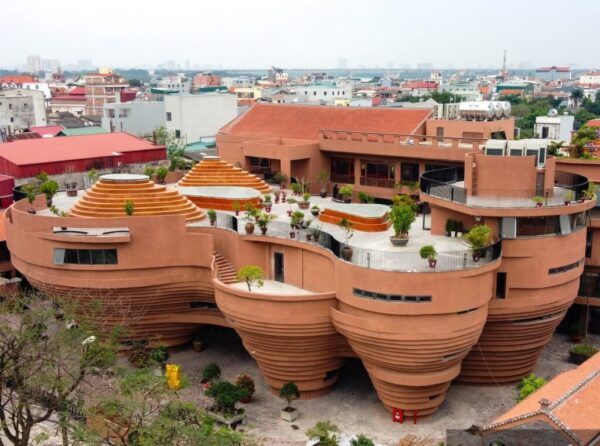
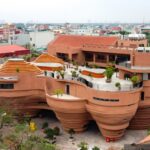
Vietnamese Craft Village Excellence Center – a unique, innovative architectural work in Hamlet 5, Bat Trang Ancient Village, Gia Lam, Hanoi.
Photo: Nguoi Lao Dong
Hanoi has also gradually become a leading destination for international art events: the Monsoon Music Festival, Hanoi International Film Festival, and performances by BlackPink, Kenny G, and Bond, truly establishing the city as a regional and global hub for international arts.
To bring creative activities into daily life, spread the spirit of creativity among all citizens, and mobilize community participation, Hanoi has coordinated with relevant parties to organize numerous creative competitions contributing to urban redevelopment and sustainable development for all citizens, focusing on the younger generation, such as: “Designing Hanoi’s Creative Spaces,” “Designing Km Zero,” “Sketching Van Mieu – Quoc Tu Giam,” “Creative Hanoi,” and “Hanoi Public Art Design.”
The spirit of creativity also spreads across every street and alley in Hanoi. Residents in many neighborhoods, residential areas, and villages actively engage in voluntarily beautifying their communities and streets. Across the city, hundreds of streets are decorated with flowers, cultural houses are maintained “green, clean, beautiful – blooming all year round,” and thousands of square meters of mural paintings have been created. This spirit of creativity has contributed to greener, cleaner, and more livable spaces throughout Hanoi, including its rural areas.
Formation of Creative Centers
In fulfilling its UNESCO commitments, Hanoi has invested significantly in creative infrastructure. The city has promoted the development of cultural and creative spaces, shaping urban identity, enhancing attractiveness, inspiring community creativity, and revitalizing urban areas. Hanoi has approximately 60 creative spaces, including 7 co-working spaces and 42 cultural-artistic spaces. Arts centers, creative spaces, and tech hubs have been developed to provide ideal conditions for artists, designers, and startup founders. Notable examples include Ho Guom Theater, Vincom Center for Contemporary Art, Toong Co-working Space, To Chim Xanh, O Kia Hanoi, Hanoi Creative City, 22 Hang Buom Cultural-Art Space, and the Vietnamese Craft Village Excellence Center. In addition, numerous exhibitions are organized at the Hanoi Museum, Thang Long Imperial Citadel, and Van Mieu – Quoc Tu Giam.
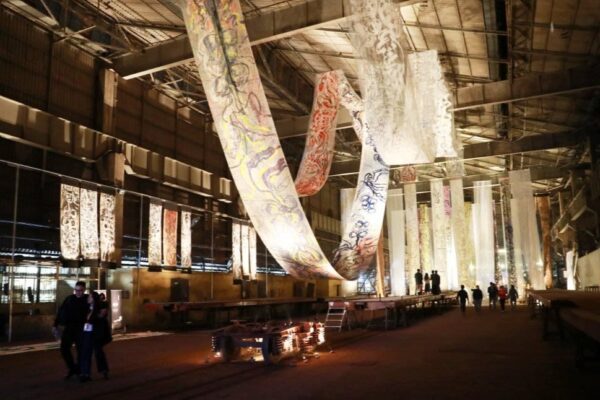
Installation Art Exhibition “The Call” by Artist Tran Thi Thu Dispels the Dim Atmosphere of Workshop 3B1 (Gia Lam Locomotive Factory), Hanoi Creative Design Festival 2023.
Photo: Hanoimoi.com.vn
Positioning the Creative City Brand
Among Hanoi’s activities to fulfill its UNESCO commitments, the annual Creative Design Festival is identified as a key highlight to position Hanoi’s Creative City brand. Starting with the 2021 Creative Inspiration Week, the event evolved into the 2022 Creative Design Festival and was established as an annual event, playing a pivotal role in building and developing a network of young designers, connecting diverse supporting resources, and promoting the city’s creative industry. Each year, the themes and scale of the Hanoi Creative Design Festival expand, becoming a nationwide celebration for those passionate about innovation. The festival is one of the most meaningful activities for positioning and consolidating Hanoi’s creative city brand in the context of effectively implementing its “creative commitments” upon joining the UNESCO Network.
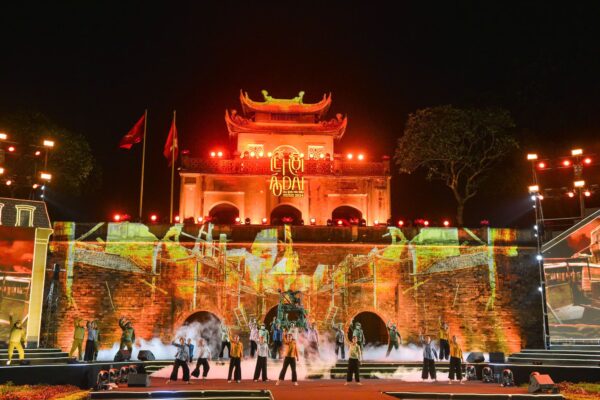
The Ao Dai Tourism Festival is a Special Highlight in Hanoi’s Creative Journey.
Photo: Nhan Dan Newspaper
The 2024 Hanoi Creative Design Festival was held under the theme “Creative Crossroads.” It was the largest edition to date, gathering over 500 units and more than 1,000 talented creators, especially young innovators from Gen Z. The festival took place along seven iconic heritage sites in Hanoi and expanded to over 110 activities across 12 key cultural industry fields, including architecture, fine arts, performance, cinema, and advertising. Highlights included creative community parades, iconic structures, creative space installations, exhibition and display activities, artistic performances, experiential activities, and international and domestic seminars. Additionally, nearly 50 response activities from creative spaces contributed to a vibrant festival atmosphere citywide. The festival attracted 4.7 million social media interactions and over 300,000 onsite visitors.
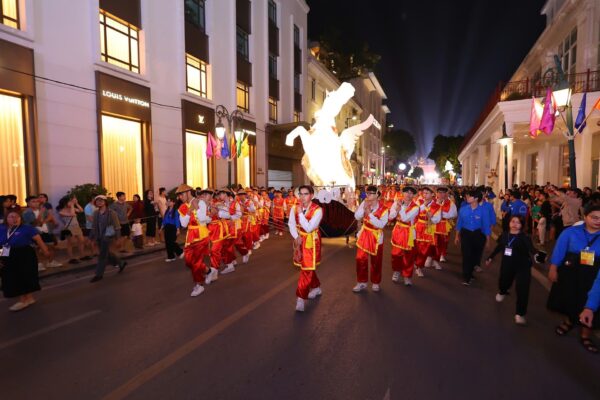
Highlight of Performances at the 2024 Creative Design Festival: “Market Street Parade.”
Photo: Organizing Committee
Becoming a Creative City offers Hanoi an opportunity to catch up with global trends, innovate toward a smart and sustainable creative city, with heritage, young talent, and design thinking as foundations. Hanoi has successfully positioned its Creative City brand and established solid foundations to continue achieving new successes in the journey ahead.
Binh Minh