

Village gates are unforgettable memories for everyone. They are simple and modest, yet deeply imbued with the soul and identity of each rural village – a source of pride and affection for every person. A house has a roof, a village has a gate – this belief has always been deeply rooted in people’s consciousness: The village gate bids us farewell as we set off to places far away, and then warmly welcomes us home to our family and homeland.
In the past, village gates served as defensive architectural structures. Today, although they are mainly symbolic, they remain familiar to everyone. In some places, village gates also functioned as community markets and trading spaces, such as in Kieu Ky (Gia Lam) and Duyen Yet (Phu Xuyen).
Hanoi currently has more than 1,300 villages and streets, and almost every one of them has a village gate.
Village gates can take various architectural forms: one-level gates with a main passageway; two-level structures featuring an upper pavilion known as “thuong gia ha mon” or a watchtower; single-entrance gates called “nhat mon”; or three-entrance gates known as “tam quan” or “tam mon.” The name of the village is often inscribed in large characters on the gate’s facade.
Several notable village gates in Hanoi can be mentioned, such as: The Mong Phu Village Gate in Duong Lam Commune, Son Tay Town, built several centuries ago. Surrounding the gate is a spacious and airy landscape. Designed in the style of “thuong gia ha mon” – the gate below and a roofed structure above – it is roofed with terracotta tiles and features distinctive edge decorations. Closely integrated with the village’s historical and architectural setting, this gate has become renowned both domestically and internationally.
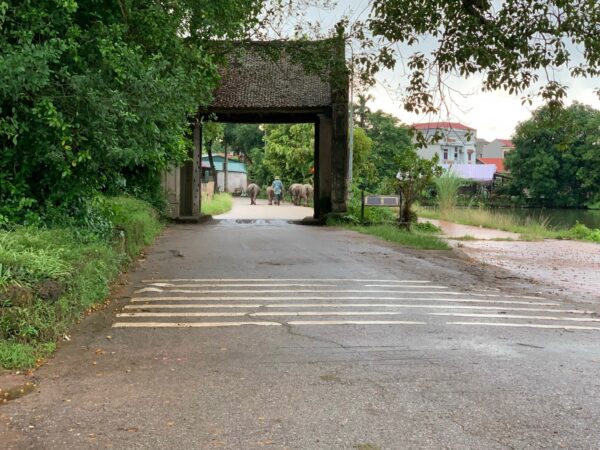
The Duc Tu Village Gate features a three-entrance triple gate structure. The central gate includes a watchtower, and two stone pillars on either side are inscribed with parallel sentences reflecting the village’s cultural traditions.
The Co Loa Village Gate, located in the ancient capital of King An Duong Vuong and King Ngo Quyen, is honored as the “First Ancient Gate of Heaven and Earth.” It is a triple gate with an eight-roof watchtower – solemn and time-worn in appearance.
The Cuu Village Gate in Van Tu Commune, Phu Xuyen District features a single main passageway with an upper watchtower. The tower’s roof consists of eight curved layers, decorated with motifs such as “two dragons paying homage to the moon” and the four sacred animals. Two pairs of pillar posts stand on each side – one tall, one shorter. The gate is considered the most beautiful in Vietnam by tourism organizations. Cu Village is also ranked among the three most beautiful villages in Hanoi.
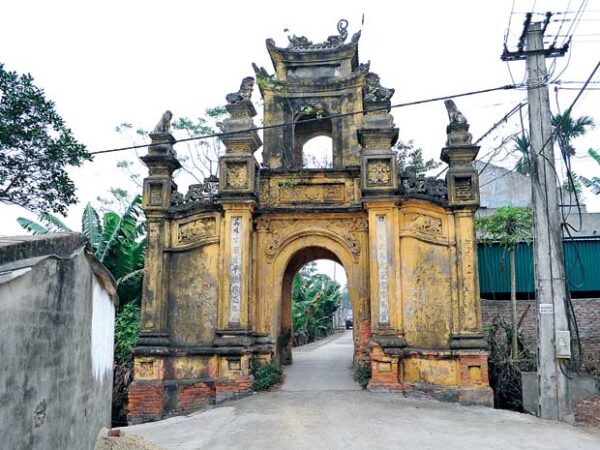
Cuu Village
After passing through the village gate lies the community – family ties, rural landscapes, and the essence of Vietnamese village life. Therefore, village gates hold an important role in both everyday life and the spiritual culture of the Vietnamese people. They are regarded as the “face” of the village, symbolizing the character and way of life of its residents.
In the past, the village gate would open in the morning for people to head to the market or go to work, and close in the evening, forming a secure world together with bamboo fences – “internal movements restricted, external access controlled”.
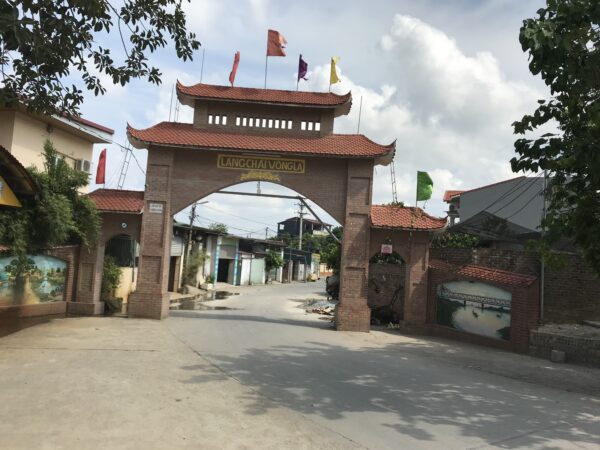
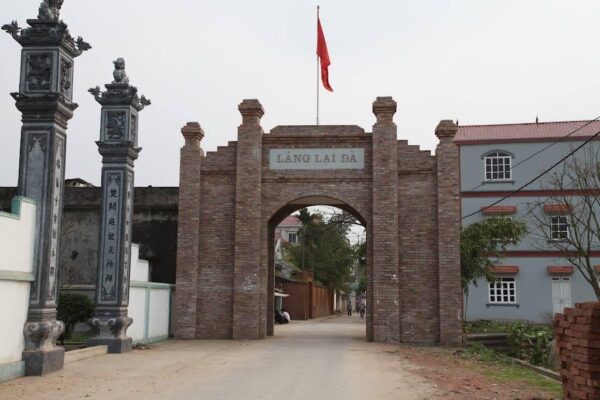
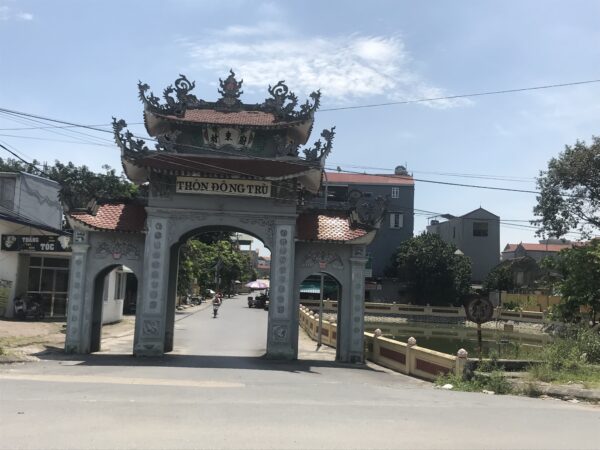
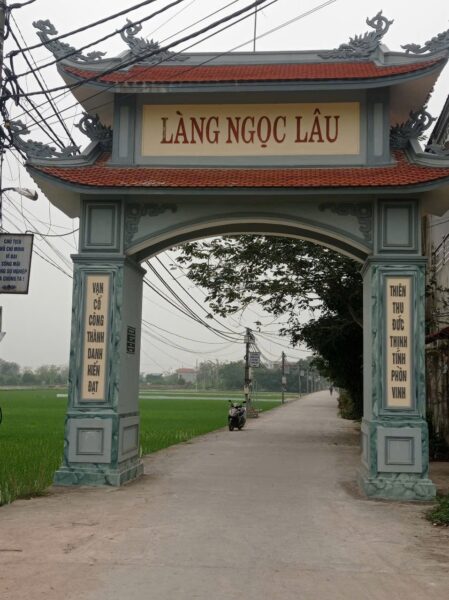
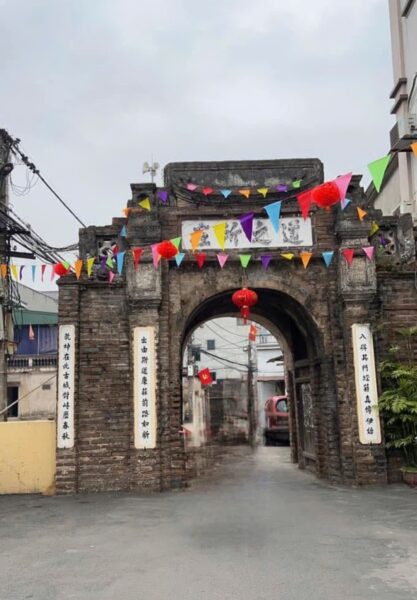
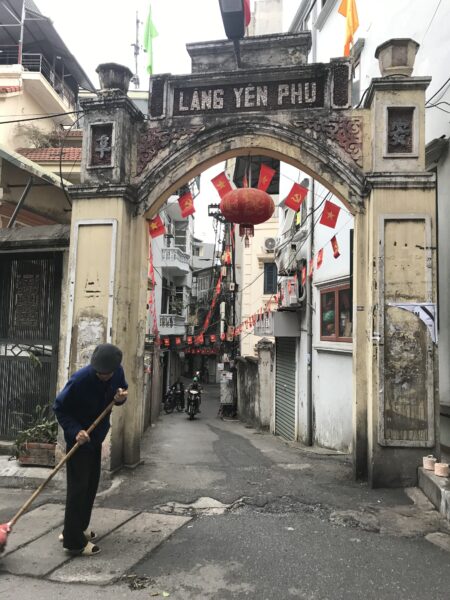
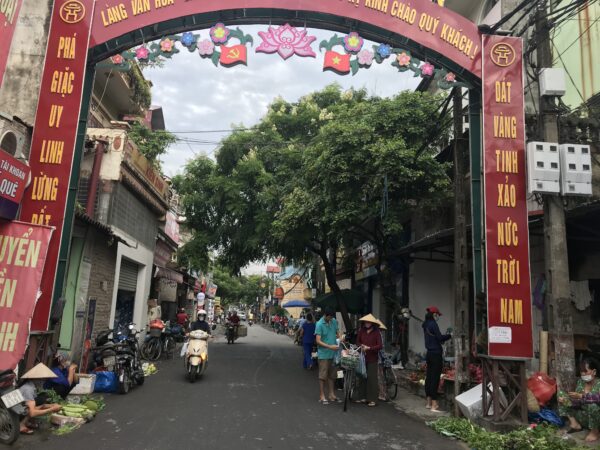
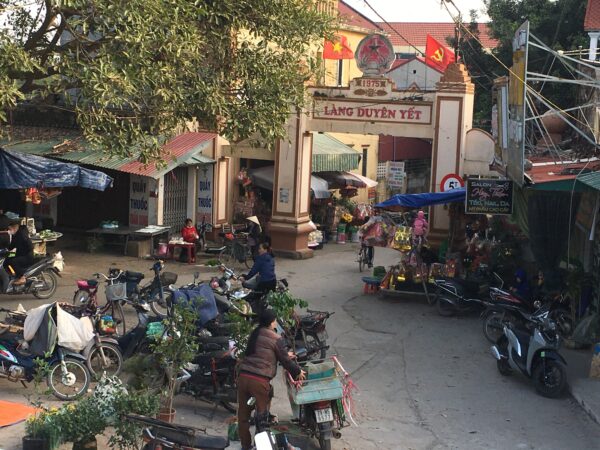
Some village gates
Hanoi not only has village gates in rural areas; uniquely, the capital also has village gates in urban neighborhoods, preserving the cultural essence of the ancient Thang Long citadel. Examples include the Yen Thai Village Gate, where a plaque reading “My Tuc Kha Phong” hangs – a royal honor bestowed by King Tu Duc; and the Dong Xa Village Gate in Thuy Khue, once accessed via five steps, still bearing the inscription “An Dong Chinh Lo,” marking traditional cultural values of old villages.
Village gates also embody artistic architectural values through the use of common traditional materials such as laterite, clay bricks, tiles, stones, and lime mortar.
They are places where the spirit of the village is preserved – linked to its formation, development, and cultural heritage. Behind the gate lies family lineage, neighborhood connections, community customs, and local cultural identity. With that understanding, many localities have restored their village gates to maintain and honor these values.
Thanh Quy (Compiling)