
On the afternoon of November 15, the seminar and talk show titled “Architectural Heritage from the Subsidy Period – Preservation and Development” took place at the Khan Quang Do Theater, Hanoi Children’s Palace (36-38 Ly Thai To Street, Hoan Kiem District). The event, part of the Hanoi Creative Design Festival 2024, drew significant attention from urban and heritage managers, architectural experts, and researchers focused on urban redevelopment.
The panel of speakers and program coordinators included Architect Le Thanh Vinh, former Director of the Institute of Monuments Conservation, who has led numerous preservation projects such as Van Mieu – Quoc Tu Giam, Chu Quyen Communal House, the Hanoi Opera House, and My Son Sanctuary; Architect and Artist Vu Hiep, known for his research on architectural and artistic theory; and Dr. Architect Nguyen Duc Vinh, a lecturer at Hanoi University of Civil Engineering specializing in the redevelopment of public buildings from the subsidy period in Hanoi. Notably, the event featured Architect Le Van Lan, the designer of the Hanoi Children’s Palace.
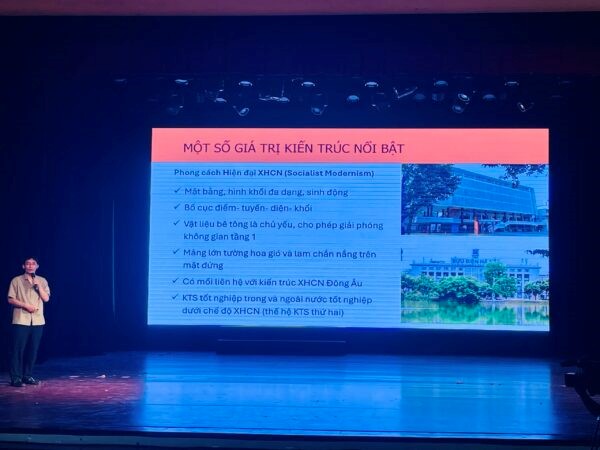
Architect cum Artist Vu Hiep
In the opening session, the speakers and audience discussed the values these structures hold in the modern context, ranging from cultural and historical significance to new potential uses in contemporary life. The speakers then proposed suitable preservation methods aimed at maintaining and developing these structures in the new era while preserving the essence of the subsidy period.
Architect and Artist Vu Hiep highlighted the notable buildings constructed during the subsidy period (1954-1986) in Hanoi, such as Kim Lien, Trung Tu, and Thanh Cong housing complexes, along with major factories and public buildings like Hanoi University of Science and Technology, Ho Chi Minh National Academy of Politics, Hang Day Stadium, Hanoi Children’s Palace, and Hanoi Post Office. These structures, integral to cultural, educational, communication, and sports activities, played a crucial role in the country’s development towards socialism. The architecture from this era embodies historical, scientific, and social significance, reflecting a time of modern and progressive principles. Given their substantial contributions, the subsidy period’s architectural heritage deserves thorough study to ensure it is not wasted in the contemporary context.
According to Architect and Artist Vu Hiep, around 60-70% of subsidy-period architectural structures have been restored, preserving their original image, while others have been altered or replaced. He shared experiences from other countries, such as China, Russia and the UK, on handling architectural heritage.
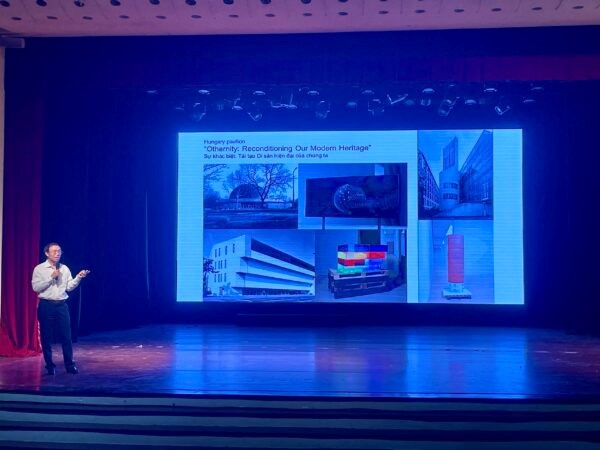
Architect Le Thanh Vinh
Architect Le Thanh Vinh pointed out the core values of subsidy-period architectural heritage: historical significance, social memory, functional utility, and their role in urban spaces. He identified the current state of these heritage structures, noting their declining relevance, severe degradation, and differing opinions on their preservation priority within the broader cultural heritage landscape. He proposed directions and solutions for maintaining and developing these heritage structures, including preserving key elements that embody historical and social memory, adapting their functions to modern needs, and integrating them into the contemporary and future urban ecosystem to ensure socio-economic feasibility.
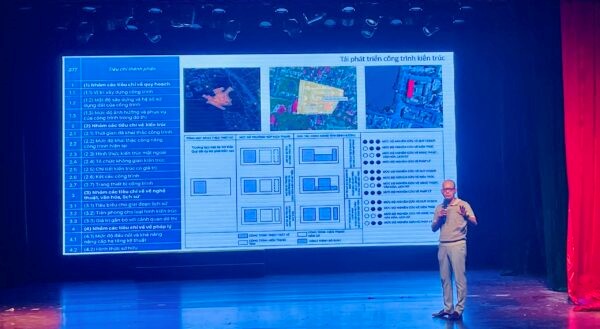
Dr. Architect Nguyen Duc Vinh
According to Dr. Architect Nguyen Duc Vinh, a lecturer at Hanoi University of Civil Engineering, when discussing the preservation and promotion of heritage values, the economic aspect is often overlooked or forgotten. In reality, many buildings from the subsidy period were initially located in suburban areas, but as Hanoi expanded, these structures found themselves in central locations. The socio-economic development has raised several issues, particularly the increased real estate value, creating significant pressure for renovation. These factors must be considered in the process of preserving and promoting this architectural heritage. According to him, there are different approaches to dealing with subsidy-period architectural heritage: preservation, renovation, value enhancement, adaptive reuse, and sustainable redevelopment. Sustainable redevelopment involves a balanced combination of preservation and renovation solutions, aiming to both maintain the specific assessed values of the structures and offer flexible adaptation possibilities to ensure their effective use in both the present and the future.
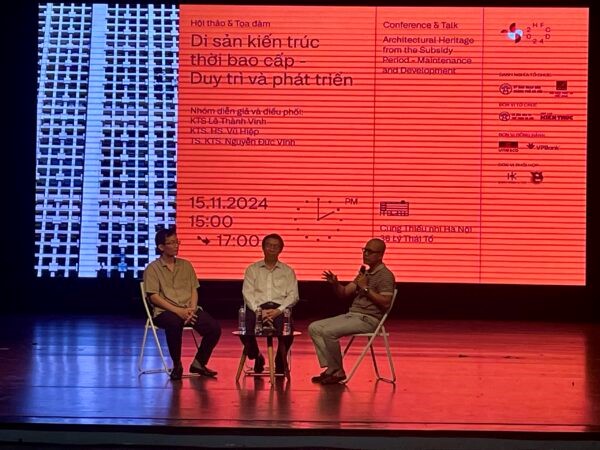
During the talk show, the three speakers addressed numerous questions from architects, students, and those interested in subsidy-period architectural heritage
At the seminar and talk show, Architect Le Van Lan shared insights into designing the Hanoi Children’s Palace, and Architect Nguyen Huy Anh recounted touching memories associated with the Palace.
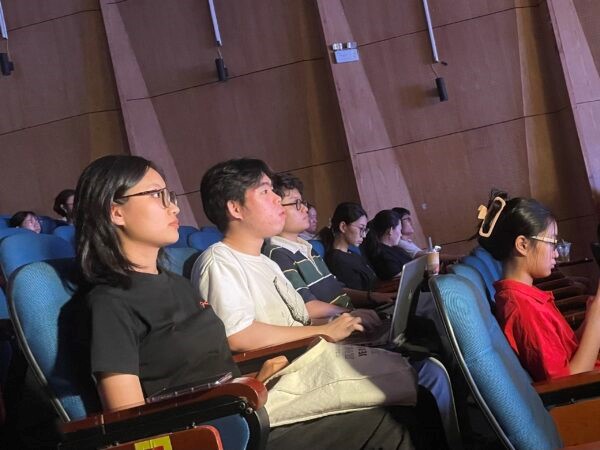
The event attracted the attention of many young people.
The seminar and talk show successfully provided a platform for experts and the public to reassess the values of subsidy-period architectural heritage and explore suitable paths for preservation and sustainable redevelopment in the future.
Nguyen Tam