

Participating in the survey and experience exchange delegation were Mr. Luong Duc Thang, Deputy Director of the Department of Grassroots Culture; Ms. Tran Thi Van Anh, Deputy Director of the Hanoi Department of Culture and Sports; and representatives from the Cultural and Information Departments of several districts. From the Hai Phong Department of Culture and Sports, Mr. Do Thanh Binh, Deputy Director, along with leaders from various departments and units under the department, attended.
This activity aims to implement the Resolution of the 13th National Party Congress, the conclusion of General Secretary Nguyen Phu Trong at the National Cultural Conference in 2021, and the Cultural Development Strategy until 2030. It continues to effectively realize the objectives and views outlined in the Hanoi City Party Committee’s Action Program No. 29-CTr/TU on implementing the Central Committee’s Resolution No. 33-NQ/TW, dated June 9, 2014, on “Building and Developing Vietnamese Culture and People to Meet the Requirements of Sustainable National Development.” It also follows Program 06-CTr/TU of the Hanoi Party Committee and “Developing Culture; Enhancing Human Resource Quality; Building Elegant, Civilized Hanoians for 2021-2025” and Directive No. 30-CT/TU of the Hanoi Party Committee on “Strengthening Party Leadership in Building Elegant, Civilized Hanoians.” The activity concretizes the tasks outlined in the Ministry of Culture, Sports, and Tourism’s Plan No. 2074/KH-BVHTTDL, dated May 17, 2024, to implement solutions for propagating national values, cultural values, family values, and Vietnamese human standards in the new era.
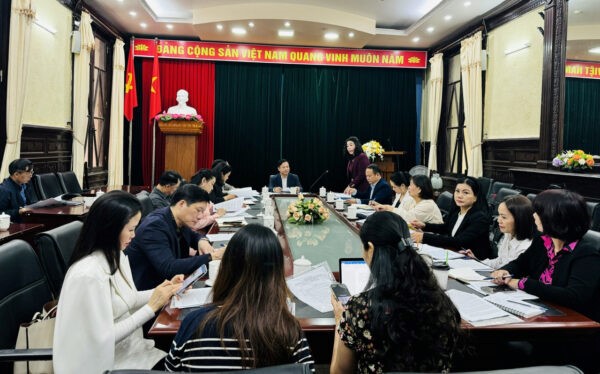
The scene of the working session at the Hai Phong Department of Culture and Sports
In an open and receptive spirit, the two sides exchanged valuable experiences in proposing solutions to implement the propaganda of cultural values, family values, and Vietnamese human standards in the new era. These include cultural values: National, democratic, humanistic, scientific; family values: Prosperous, happy, progressive, civilized; and Vietnamese human standards: Patriotic, united, resilient, compassionate, honest, responsible, disciplined, and creative.
As two cities with many similarities, Hanoi and Hai Phong have implemented various solutions to integrate Vietnamese values into all activities managed by the culture and sports sectors. They have incorporated these values into the “All People Unite to Build a Cultural Life” movement and developed models for practicing Vietnamese values across different fields and areas. They have diversified the content and methods of cultural, artistic, physical training, and sports activities to meet the people’s needs for cultural values, contributing to building a healthy cultural environment.
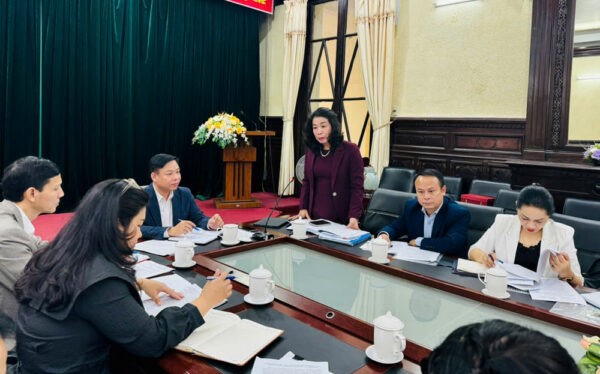
Deputy Director of the Hanoi Department of Culture and Sports Tran Thi Van Anh shared at the working session.
Speaking at the experience exchange meeting, Deputy Director Tran Thi Van Anh of the Hanoi Department of Culture and Sports said: “The Hanoi Party Committee has specifically directed the development of culture and the construction of Vietnamese people to meet sustainable national development requirements through Program 06-CTr/TU ‘Developing Culture; Enhancing Human Resource Quality; Building Elegant, Civilized Hanoians for 2021-2025,’ and recently Directive 30-CT/TU ‘Strengthening Party Leadership in Building Elegant, Civilized Hanoians. “The implementation is uniformly carried out from the city to the grassroots to build a sophisticated, elegant, compassionate, and civilized Hanoi.” Hanoi has also held seminars and discussions on building family values in the capital and the standards of elegant and civilized Hanoians. The criteria for Hanoians are achievable and contribute to making Hanoi a model city for lifestyle and behavior. Van Anh emphasized that the exchange of experiences helps the two departments better understand their advisory roles, contributing to the development of values that enrich cultural development in general.
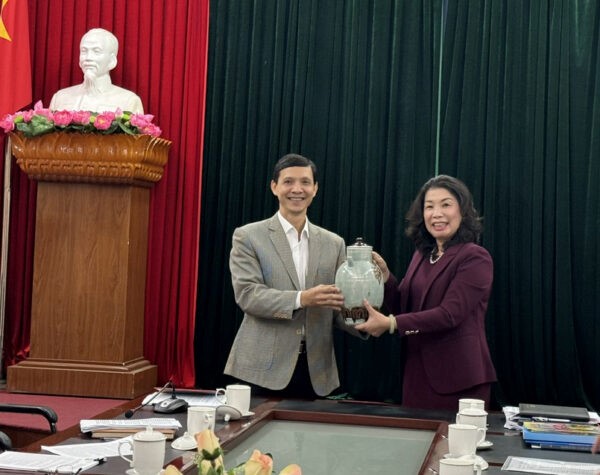
Deputy Director of the Hai Phong Department of Culture and Sports Do Thanh Binh received a souvenir from Deputy Director of the Hanoi Department of Culture and Sports Tran Thi Van Anh
With the goal of developing Hai Phong into a cultural, sports, and tourism center in the northern coastal region, Hai Phong consistently directs efforts toward building cultural values, family values, and standards for Hai Phong people in the new era. The city sets objectives and orientations for cultural development, guiding cultural, artistic, and sports activities toward education in humanity and community, building a healthy cultural environment. The city has 15/15 district cultural, information, and sports centers (100%); 190/217 commune, ward, and township cultural-sports centers (87.5%); 1,186/1,761 village and neighborhood cultural houses, sports areas, and community centers (63.7%); 1,739 cultural clubs, 2,730 sports clubs, and 1,355 community art teams, all contributing to meeting people’s cultural enjoyment needs, promoting and enhancing cultural values, and laying a crucial foundation and motivation for the rapid, sustainable development of Hai Phong in today’s deepening integration context.
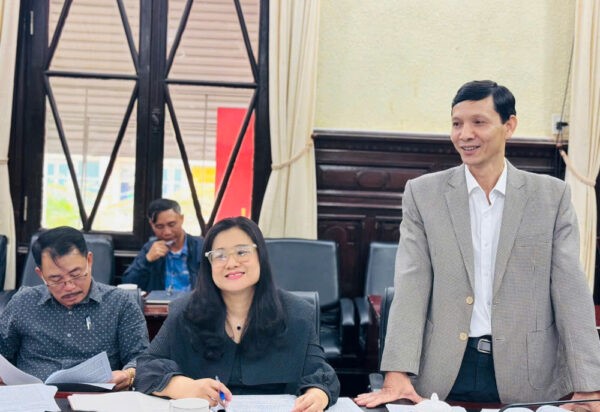
Deputy Director of the Hai Phong Department of Culture and Sports Do Thanh Binh spoke.
According to Deputy Director Do Thanh Binh, with the unique advantage of a coastal city, Hai Phong has drafted criteria for Hai Phong people with notable values like compassion, loyalty, creativity, and innovation. However, the construction of these criteria in the current new situation also presents many challenges, with the most significant difficulty being human resources.
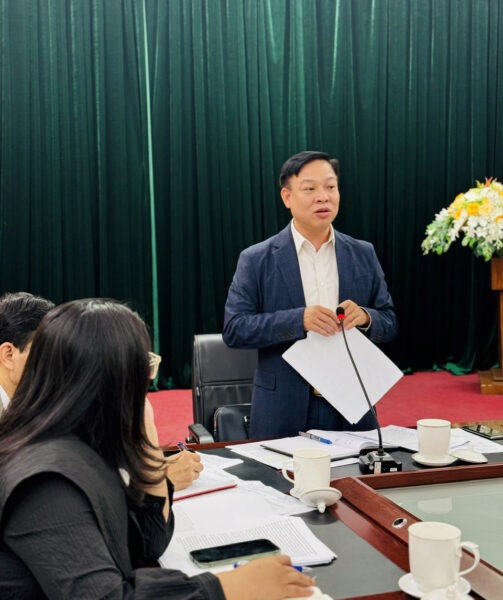
Deputy Director of the Department of Grassroots Culture Luong Duc Thang spoke at the experience exchange meeting.
Highly appreciating the significance of the Hanoi Department of Culture and Sports’ survey, exchange, and learning activities, Deputy Director Luong Duc Thang of the Department of Grassroots Culture affirmed: “Hanoi is very open in building criteria for elegant, civilized Hanoians. Hanoi seeks to exchange and learn experiences from other provinces and cities to integrate the most refined elements into the capital.” Thang noted that in building their criteria, localities should identify the essence of their regions, supplementing the common values with specific regional values, avoiding impracticality.
According to the plan, the survey and experience exchange delegation will continue working in Nam Dinh and Thai Nguyen on November 27-2.
V.H