
The three exhibitions include: D67 House and Bunker – The Journey to Total Victory (Phase 1); Promoting the Value of the Revolutionary Site – Cipher/Communications Bunker of the General Staff; Hanoi Flag Tower – Homeland and the Aspiration for Peace.
D67 House and Bunker Exhibition – Witness to Historical Decisions
D67 House and Bunker, secretly constructed in 1967 during the height of the U.S. bombing campaign, hosted numerous crucial meetings of the Politburo, the Central Military Commission, the Commander-in-Chief, and the Chief of the General Staff of the Vietnam People’s Army. Strategic plans and decisive orders were formulated here, contributing to the great victory of liberating the South and reunifying the country.
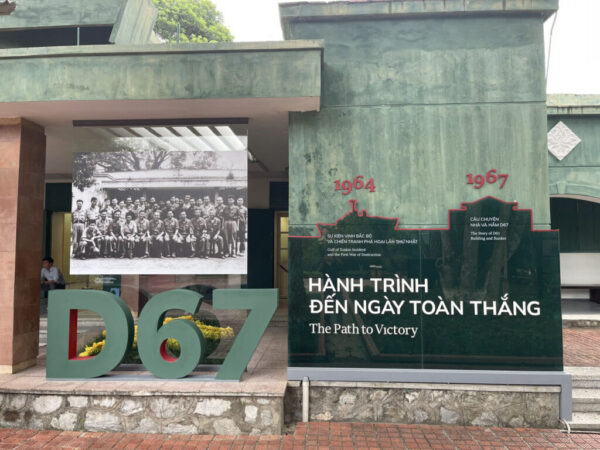
The exhibition “D67 House and Bunker – The Journey to Total Victory” presents over 300 valuable documents and images, divided into four themes: Gulf of Tonkin Incident and the First U.S. Bombing Campaign – depicting the context from August 1964, when the U.S. staged the Gulf of Tonkin Incident to start bombing Northern Vietnam, forcing the country from peacetime to wartime; The Story of D67 House and Bunker – detailing its secret construction process and its role during the decisive period of the anti-U.S. resistance; Defeating “Vietnamization” and the Second Bombing Campaign – recounting the heroic achievements from the Tet Offensive 1968 to the signing of the Paris Peace Accords in 1973; The Spring 1975 Victory – from rapid, bold, unexpected, and sure decisions to the historic moment at 11:30 a.m. on April 30, 1975, when the South was fully liberated.
The exhibition uses modern technology and vivid imagery to give viewers the sense of witnessing these historical moments firsthand.
Cipher/Communications Bunker – General Staff Exhibition: Protecting the Command Lifeline under Bombardment
Located in Area A of Hanoi’s Imperial Citadel, the Cipher/Communications Bunker of the General Staff was started on February 10, 1966, and completed on June 30, 1966, covering 37.2 m². It served as the communications “heart” of the headquarters during the most intense years of the anti-U.S. resistance, especially in December 1972 during the “Battle of Dien Bien Phu in the Air” campaign.3
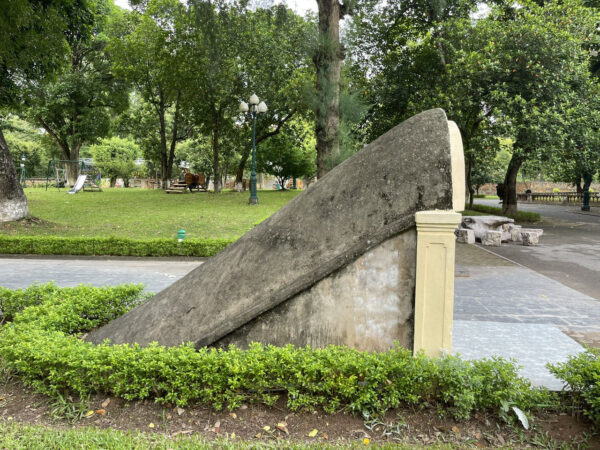
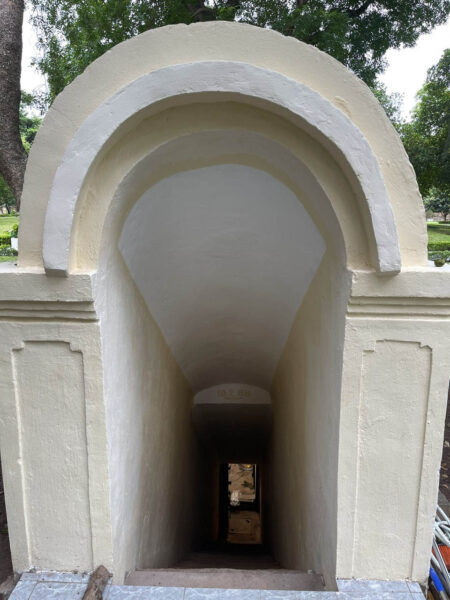
The bunker has been restored with strict respect for original elements. The interior layout, lighting, and sound create an authentic historical experience. Documentary films, panels, and automated explanations guide visitors to explore the General Staff’s role in ensuring communications and command from 1972 to 1975.
Opening the Cipher/Communications Bunker to the public for the first time is especially meaningful, both to honor past generations and to inspire and educate the younger generation.
Hanoi Flag Tower Exhibition – From Sovereignty Symbol to Aspiration for Peace
Constructed between 1805–1812 under King Gia Long, Hanoi Flag Tower is a unique architectural work with three square-tiered bases and an octagonal column topped by a flagpole. Once a symbol of a peaceful and strong nation, it was occupied by the French in 1882 and turned into a military observation post with the French flag flying.
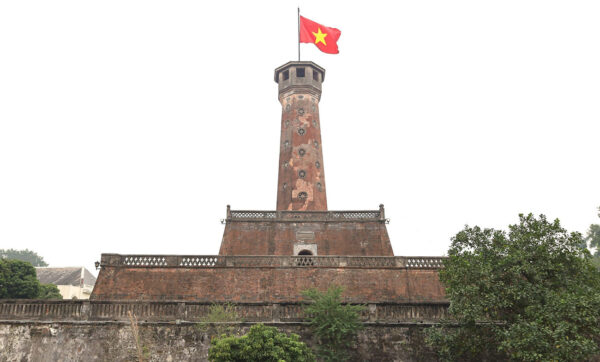
On October 10, 1954, the red flag with a yellow star was raised atop the tower for the first time, marking the liberation of the capital. During the anti-U.S. resistance, it served as a strategic observation post to detect and report air attacks.
Over 200 years, the Flag Tower has stood proudly, bearing the national flag – an enduring symbol of independence, heroism, and the aspiration for peace. The exhibition “Hanoi Flag Tower – Homeland and the Aspiration for Peace” is divided into three sections: Flag Tower under the Nguyen Dynasty – detailing its construction and role; French Occupation and Transformations – showing changes in function and meaning under colonial rule; Independent Vietnam – highlighting the historic moment of October 10, 1954, and the journey to preserve this national symbol through subsequent war
These three exhibitions are not merely cultural and historical events but also provide the public, especially the younger generation, with deeper understanding of the values of peace, independence, and freedom. Every artifact, photo, and film tells a story and offers a valuable lesson in patriotism, resilience, and national solidarity.
The D67 House and Bunker, Cipher/Communications Bunker exhibitions will open on August 19, 2025, and the Hanoi Flag Tower exhibition will open on September 1, 2025, at the Thang Long Imperial Citadel Heritage Site, 19C Hoang Dieu, Ba Dinh, Hanoi.
V.H