
The Prime Minister’s issuance of Decision 2486/QD-TTg on November 14, 2025, approving the Strategy for the Development of Cultural Industries until 2030, with a vision to 2045, opens an important strategic direction for the country’s development in the new era. As the capital with a thousand-year cultural heritage, and the cultural, political, educational, and creative center of the nation, Hanoi has full conditions to take the lead in implementing this strategy.
Over the past years, the City has proactively issued strong policies, such as Resolution 09-NQ/TU of the City Party Committee on the development of cultural industries, integrating many priority provisions in the 2024 Capital Law, alongside a series of resolutions by the City People’s Council on piloting, establishing, and developing cultural industry zones. From national vision to local action, Hanoi is facing a major opportunity to emerge as Vietnam’s “creative hub” and a regional destination for cultural industries.
The moment to “unlock” cultural momentum in the new era
The Strategy for the Development of Cultural Industries until 2030, with a vision to 2045, is not merely a state management document; it is a statement affirming that Vietnam is entering a new stage of development where culture is recognized as a driving force, a soft power resource, and a key pillar of growth. The goal of having cultural industries contribute 7% of GDP by 2030 is a significant leap compared to current realities, yet it is fully in line with global trends, where culture, creativity, technology, and markets intersect to form new economic models.
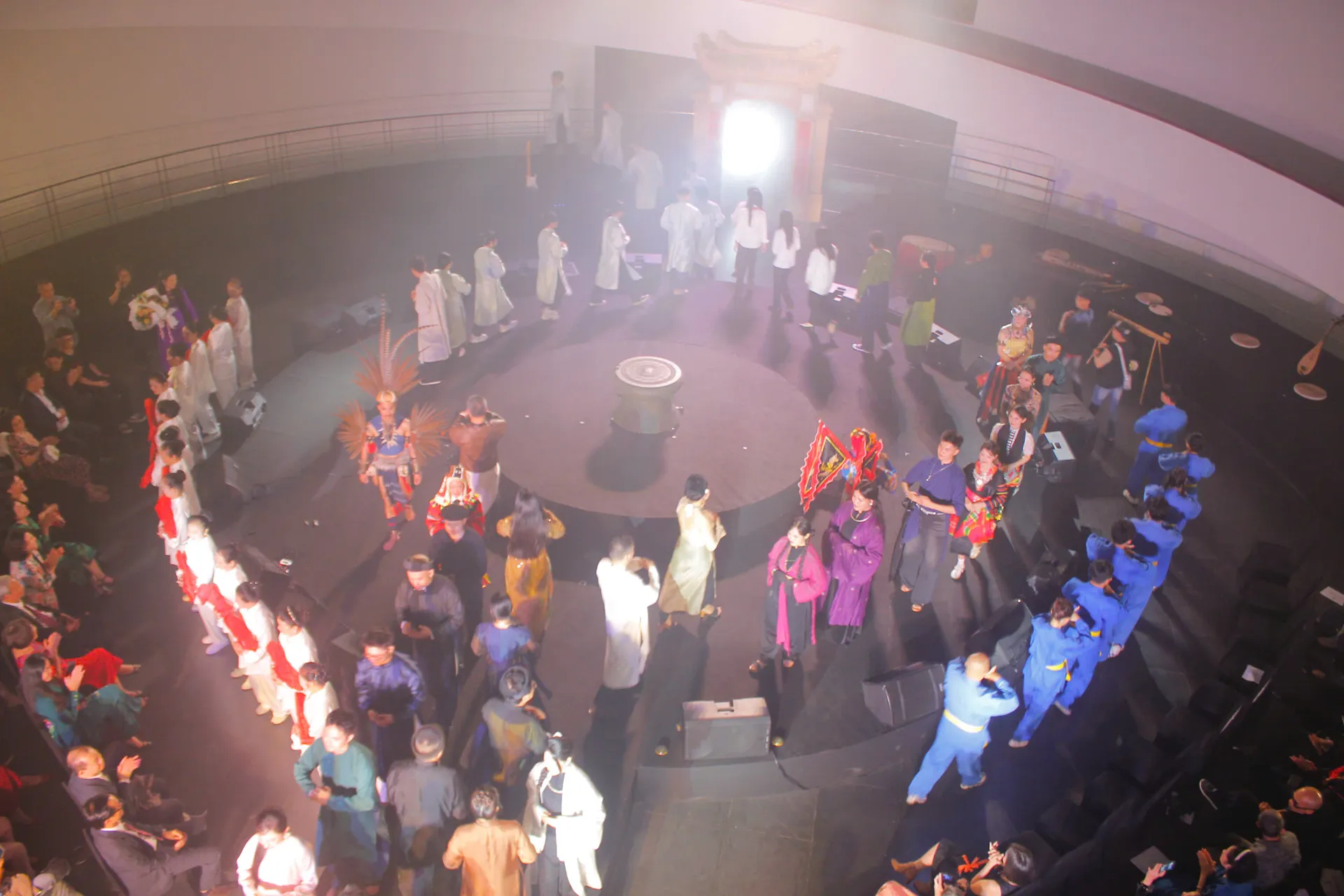
Creative art space at Hanoi Museum.
In this context, Hanoi is not just a locality benefiting from policies. Hanoi is expected to take the lead. From a thousand-year cultural legacy, a vast heritage system, a large community of artists and intellectuals, to major universities, a young workforce, and an open, integrated environment, the capital has full conditions to become the strongest cultural industry hub in the country.
It is noteworthy that Hanoi did not wait for Strategy 2486 to be issued before taking action. As early as 2022, the Hanoi Party Committee issued Resolution 09-NQ/TU on the development of cultural industries for the 2021-2025 period, with orientations to 2030, identifying cultural industries as one of the “new development drivers” of the capital. This was among the first provincial-level resolutions nationwide to address cultural industries directly and comprehensively, demonstrating Hanoi’s forward-looking vision.
As a result, the City’s creative sectors have made clear progress: from design, cinema, advertising, software and gaming, handicrafts, fashion, to cultural tourism. The title of UNESCO Creative City in Design is clear evidence of the creative vitality rising in the capital.
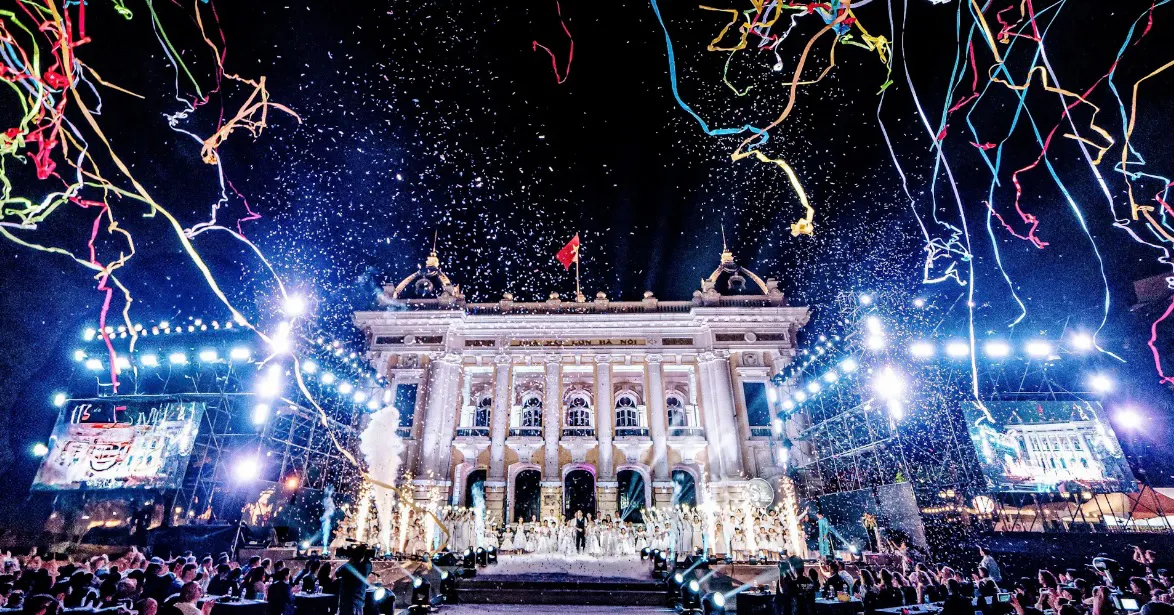
Hanoi creative design festival 2024.
With Strategy 2486 setting goals and priority industry groups, Hanoi enters a stage capable of “two-way connection”: from national strategy to local planning, from thousand-year heritage to contemporary creative aspiration, from central policies to the special conditions granted by the amended Capital Law.
“Taking the Lead” through mechanisms, spaces, and creative resources
If potential is the root, mechanisms and resources are the wings that enable the cultural industry sector to soar. The experience of creative cities worldwide – such as Seoul, Montreal, Berlin, Busan, or Barcelona – shows that no city becomes a creative hub without open mechanisms, investment resources, and large-scale creative spaces.
In Hanoi, these three factors are becoming increasingly clear. First, the 2024 Capital Law has created a special legal framework for Hanoi in developing creative spaces, prioritizing investment in cultural industries, piloting new financial mechanisms, attracting creative talent, and especially implementing the cultural industry zone model – a feat many other localities in the country cannot yet achieve. Open regulations on decentralization and delegation, use of public assets for creative purposes, and investment and licensing procedures are an important foundation for Hanoi to truly take off in this field.
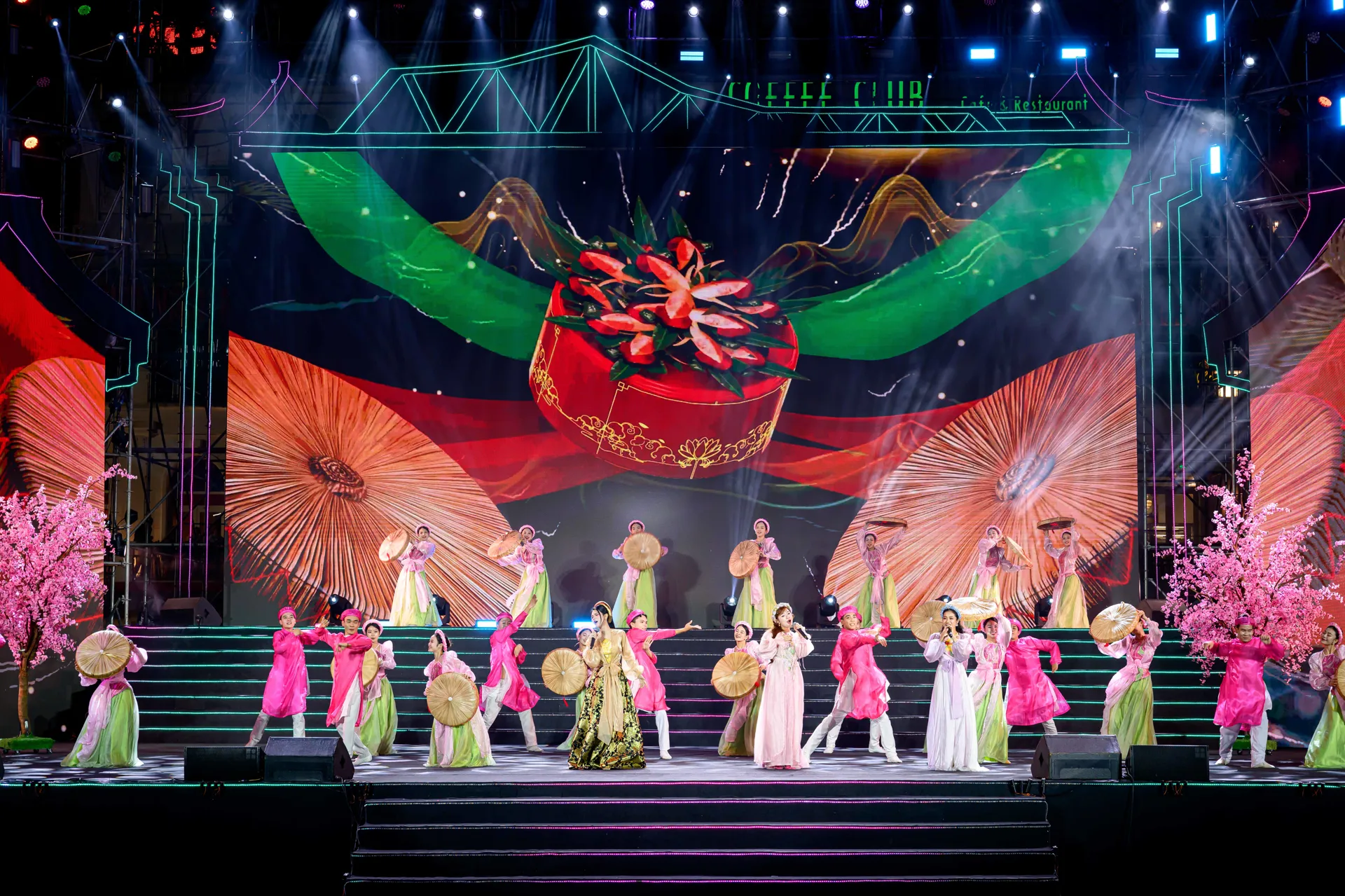
Impressive stage at Thang Long – Hanoi Festival 2025.
Second, the Hanoi People’s Council has recently issued a series of important resolutions concerning institutions, spaces, and cultural industry zones. Many localities such as Gia Lam, My Dinh, Tay Ho, Hoang Mai, Son Tay… have been studied and surveyed to establish creative complexes, film centers, design and fashion performance zones, traditional culinary-art spaces, or innovation areas integrating digital technology. These are “cultural growth poles” which, once operational, will generate significant revenue, new jobs, and sustainable creative value chains.
Third, Hanoi is proactively reconnecting the creative ecosystem by strongly developing community creative spaces, encouraging cultural and artistic enterprises, and promoting the “Government-School-Enterprise” linkage. Models such as the Hanoi Creative Design Festival, inner-city creative spaces, arts festivals, and heritage restoration-revival projects combined with technology are generating a very clear creative flow in urban life.
Particularly, the combination of digital transformation and cultural industries opens a strategic direction. From heritage data, digital copyrights, online performance platforms, to multimedia products, Hanoi can create new economic value from its existing cultural treasures. This is an opportunity for the capital to make breakthroughs in sectors such as film, digital content, design, advertising, and art technology.
Making Hanoi the new cultural center of the region
Mechanisms and infrastructure are necessary conditions, but the sufficient condition is the creative aspiration of the community. Hanoi has a special advantage few cities in the region can match: the convergence of a thousand-year tradition with the vibrant life of a young metropolis. This is the “golden material” for creating high-value cultural products with a clear identity.
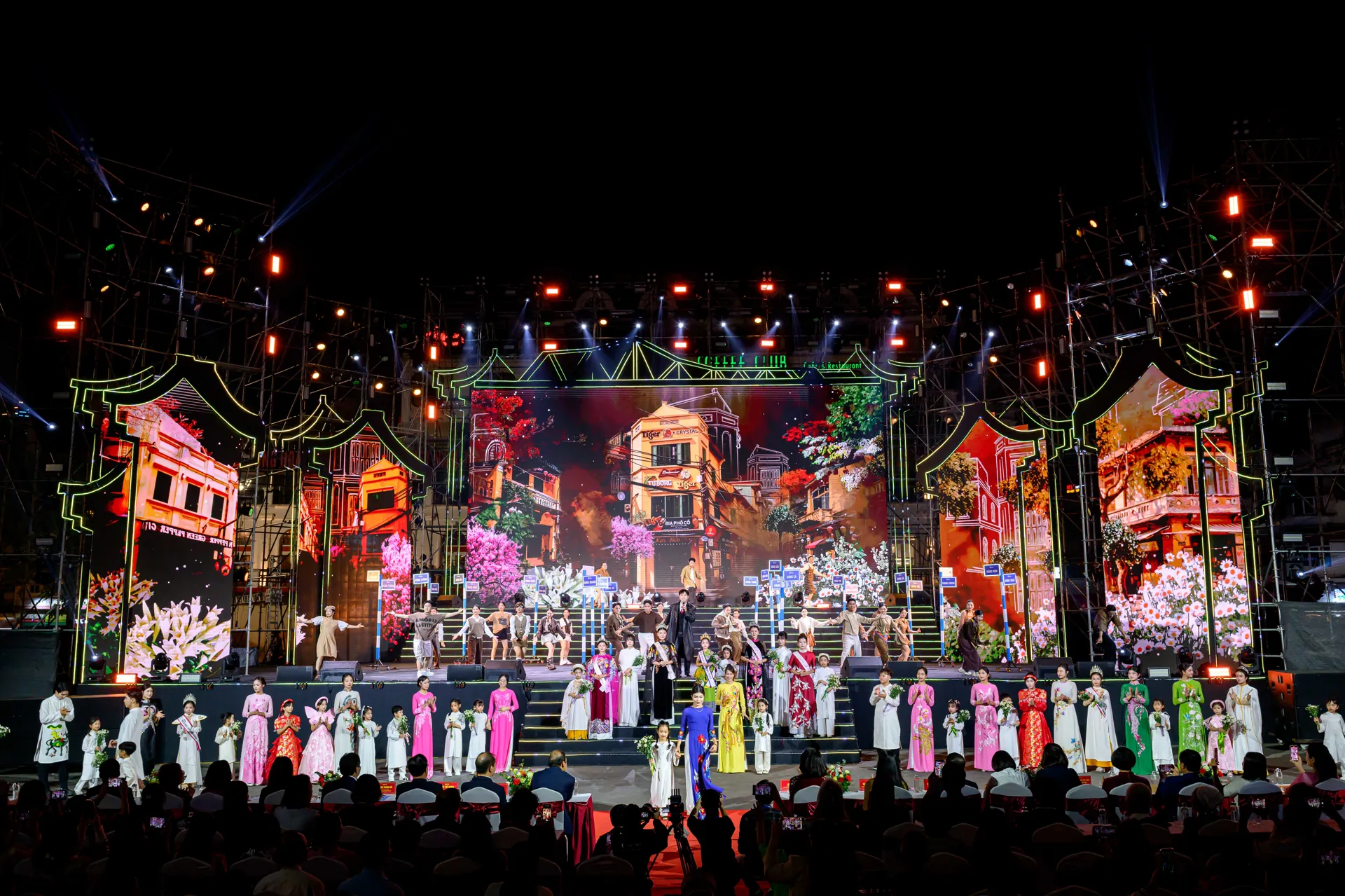
Hanoi is affirming its role as a national cultural industry hub
In recent years, the number of creative spaces, art festivals, international exchange programs, and design, fashion, film, and music events in Hanoi has increased like never before. Festivals such as the Thang Long – Hanoi Festival, Hanoi Creative Design Festival, Ao Dai Festival, art weeks, handicraft performances, street art exhibitions, as well as activities at the Thang Long Imperial Citadel, Ho Guom area, pedestrian streets, and cultural spaces at Trang Tien – Ba Dinh Square… are transforming the perceptions of both residents and visitors, presenting Hanoi as a creative, open, beautiful, and energetic city.
With the support of Strategy 2486, Hanoi has the opportunity not only to lead domestically but also to expand regionally. The world already has Seoul with K-pop and cinema, Paris with fashion, Busan with film festivals, Montreal with design, and Melbourne with theater. So why not Hanoi – a city rich in history and intellect? Pillars such as heritage, design, cuisine, handicrafts, performing arts, cinema, and cultural tourism can fully develop into regional-scale economic sectors within the next 10-15 years.
The combination of national vision (Strategy 2486), special legal conditions (2024 Capital Law), the City’s political determination (Resolution 09-NQ/TU), along with concrete actions by the People’s Council and various departments, will create a strong driving force. If Hanoi leverages this opportunity effectively, the capital will become Vietnam’s “creative hub” – a place where policies are piloted, successful models are scaled, and culture is transformed into soft power, economic strength, and international integration capacity.
Thus, Decision 2486/QD-TTg represents a rare opportunity for Hanoi to assert its role as the country’s cultural and creative center. Hanoi already has the cultural foundation, the people, the identity, and strategic vision, and now it has an additional special legal framework and strong support from the Central Government. When these resources are connected through innovative thinking and creative aspiration, Hanoi can fully become the leading cultural industry driver of Vietnam and a creative destination in Asia in the near future.
Assoc. Prof. Dr. Bui Hoai Son – Standing Member of the National Assembly’s Committee on Culture and Social Affairs
The Aspiration to Make Hanoi the Cultural Industry Hub of the Regionhttps://kinhtedothi.vn/khat-vong-dua-ha-noi-tro-thanh-trung-tam-cong-nghiep-van-hoa-cua-khu-vuc.910863.html