
Under Resolution No. 25/2025/NQ-HĐND, the city has approved the controlled pilot implementation of new ideas, products, services, business models, technologies, and creative cultural activities within designated trade and cultural development zones.
Controlled piloting of new creative cultural activities
Pursuant to Clause 8, Article 21 of the Capital Law, the Hanoi People’s Council issued Resolution No. 25/2025/NQ-HDND on trade and cultural development zones across the city. The resolution sets out specific and detailed provisions, establishing a legal framework for the formation and development of such zones.
A trade and cultural development zone is defined as a functional space established within existing neighborhoods, streets, craft villages, or rural residential areas to mobilize social resources for investment in trade, culture, tourism, heritage conservation and promotion, and to create momentum for a creative ecosystem.
According to the resolution, these zones may be established in areas with advantages in commercial location and cultural space, with priority given to locations within TOD areas as prescribed by the Capital Law.
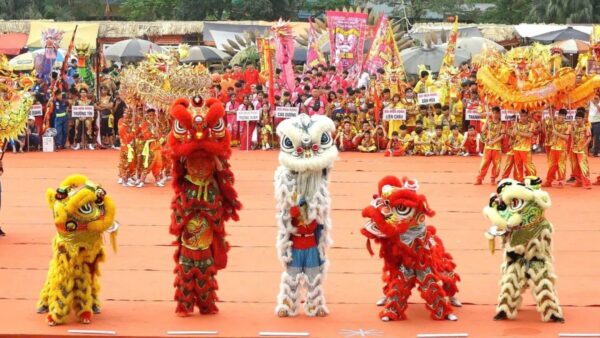
Distinctive cultural festivals attract residents and visitors.
Trade and cultural development zones will be subject to higher standards than general regulations in terms of business culture, security and order, food safety and hygiene, and environmental protection. This is intended to foster cultural and creative activities aligned with sustainable economic development, the preservation and promotion of cultural values and traditional crafts, and the attraction of tourism.
Resolution No. 25/2025/NQ-HDND also allows for the controlled piloting of new ideas, products, services, business models, technologies, and creative cultural activities within these zones, under clearly defined limits on space, duration, target groups, and responsibilities.
According to Associate Professor Dr. Bui Hoai Son, a full-time National Assembly deputy at the Committee on Culture and Society, Hanoi is demonstrating a proactive, open-minded, and highly serious approach to implementing cultural policies set out in the Capital Law 2024. The city has swiftly translated the law into concrete projects and action programs, reflecting a forward-looking vision of culture, not only preservation, but also development, creativity, and dissemination.
In his view, trade and cultural development zones will provide spaces where cultural values can be “lived,” “consumed,” and “exchanged” within market dynamics, while still preserving the essence and spirit of Thang Long – Hanoi.
National Assembly Deputy Duong Minh Anh, a part-time member of the National Assembly Committee on Culture and Society, shared that through voter engagement, she has observed strong public appreciation for Hanoi’s proactive steps in institutionalizing the Capital Law, particularly in the cultural sector, widely regarded as a key pillar in building the capital’s identity and competitiveness amid deep international integration.
The recent adoption by the Hanoi People’s Council of a series of major resolutions on cultural development, including the resolution on trade and cultural development zones, signals a new approach, shifting from administrative cultural management to viewing culture as a creative economic sector that directly contributes to sustainable growth and improves residents’ quality of life.
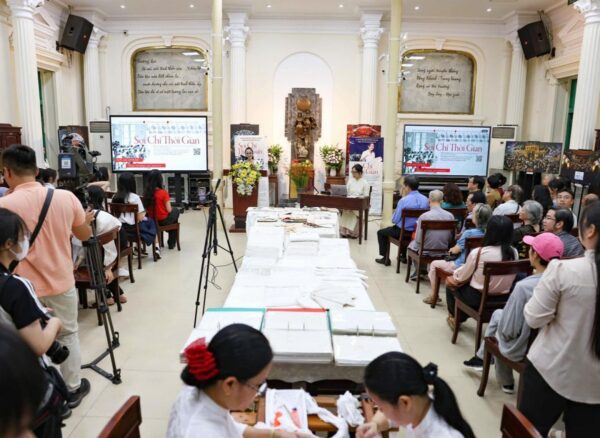
The “Thread of Time” event within the “Cua Nam Convergence” exhibition attracts many young visitors. Photo: P.CN
Driving Tourism, Preserving and Promoting Cultural Values
Policies on trade and cultural development zones are being actively implemented across the city, notably in Cua Nam Ward, selected as a pilot area for Hanoi’s cultural industry development.
With 23 heritage sites, including 10 historical, cultural, architectural, and artistic sites (communal houses, temples, pagodas) and 13 revolutionary and resistance sites (five ranked and eight marked), Cua Nam is among Hanoi’s richest areas in cultural, historical, and revolutionary values.
Cua Nam also has the city’s largest concentration of villas, totaling 423, including 76 Group 1, 143 Group 2, and 204 Group 3 villas, and hosts the headquarters of eight ministries and ministerial-level agencies.
According to Trinh Ngoc Tram, Vice Chairwoman of the Cua Nam Ward People’s Committee, the ward has all the conditions in place to implement the City People’s Council’s resolutions and the City People’s Committee’s directives on developing the cultural industry.
Trade and cultural development zones will be established to mobilize social resources for investment in trade, culture, and tourism in areas with strong commercial and cultural advantages, attracting tourism, preserving and promoting cultural values, and advancing innovation, digital transformation, and green transition.
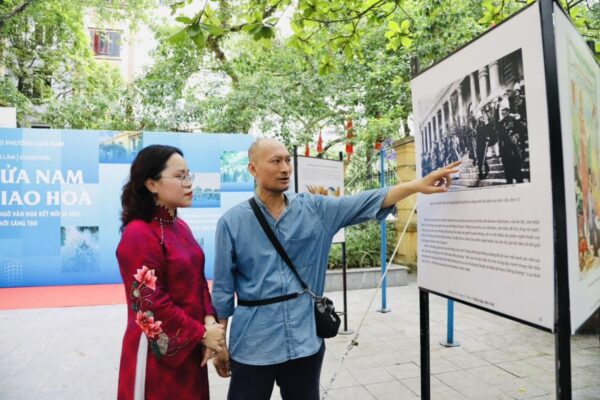
The “Cua Nam Convergence” exhibition draws large numbers of residents and visitors. Photo: P.CN
These zones will also create distinctive night-time economy highlights for Cua Nam, improve urban aesthetics, generate stable revenues, enhance residents’ living standards, and optimize land use beyond administrative hours.
At the same time, they will harmonize urban heritage conservation with contemporary culture to shape a unique tourism identity for Cua Nam; ensure security, environmental hygiene, and solid infrastructure to improve living quality and visitor experience; and diversify experiences, including culinary offerings, festivals, workshops, and shopping, to extend visitor stays and spending.
To develop trade and cultural development areas into attractive creative destinations, the ward proposes a coordinated set of solutions focused on public art, spatial design, cultural programming, and tourism experiences, tailored to each area to preserve distinct identities while creating renewed appeal. Measures include street art and creative spaces; improved landscape and public-space design; cultural events and community festivals; signature tourism products and support services; and branding and communications.
Overall, the Capital Law and Resolution No. 25/2025/NQ-HĐND provide a clear legal framework and operating mechanisms that encourage creativity and innovation in culture, contributing to economic development grounded in the capital’s cultural strengths.
Phuong Thao
According to LDTD